
Papdi is one of the simplest snacks in Indian cooking, yet it carries more than its share of the work. It is the crunchy base of papdi chaat, a handy tea time nibble and a regular on party platters. Good papdi snaps cleanly, tastes lightly savoury and stays crisp under yoghurt and chutney. Poor papdi turns soft and chewy within minutes.
So what actually makes papdi crispy and full of flavour? This guide explains the role of flour, semolina, fat, rolling and frying, compares flat and puffed papdi, and shows how to choose the best chaat papdi in the UK for your next chaat night.
What Is Papdi?
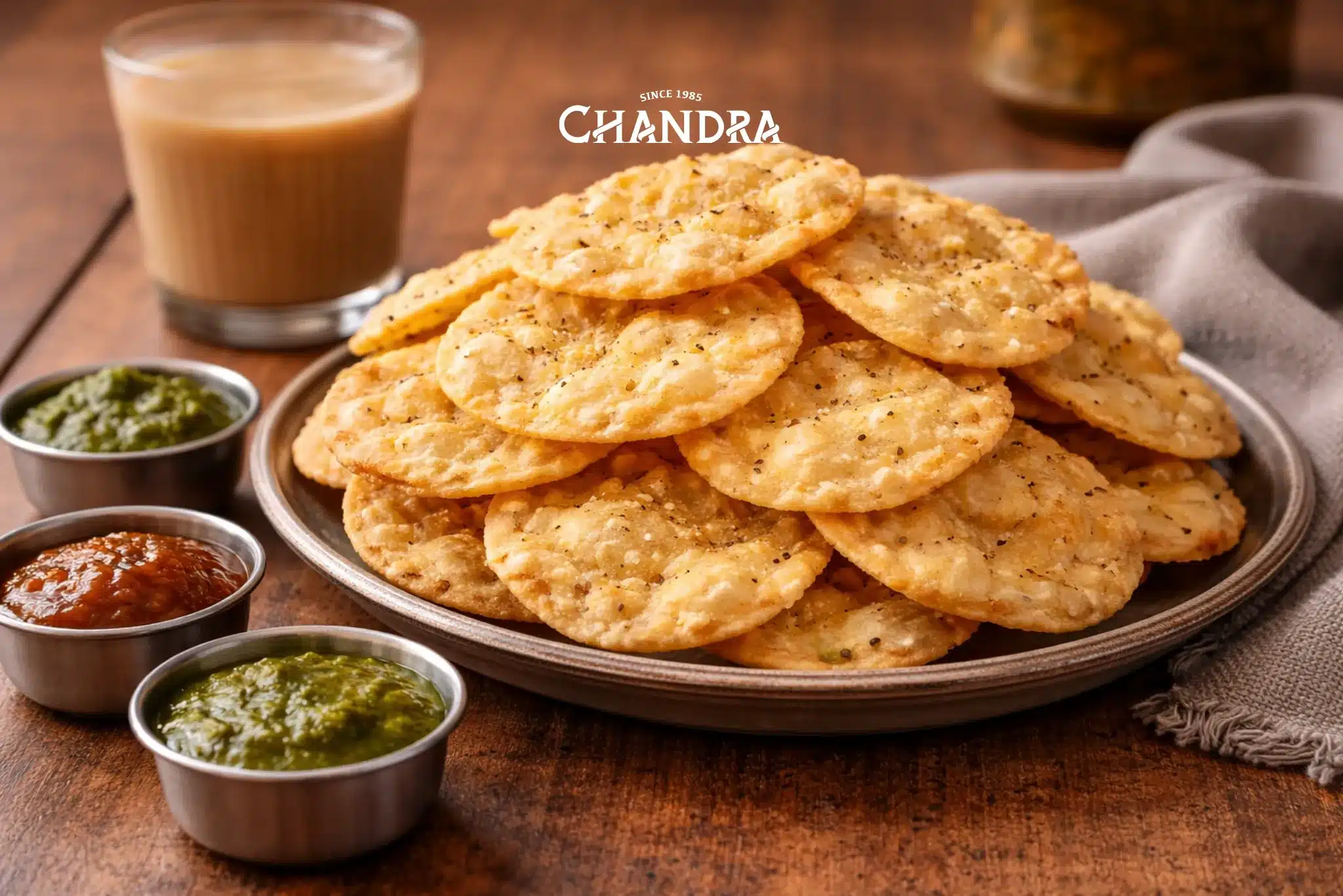
Papdi (also spelt papri) is a small, thin disc of fried dough. Chaat papdi is usually made from plain flour and semolina, while Gujarati-style papdi is often made from gram flour. Both are rolled thin and fried until golden and crisp.
In chaat, papdi is the structure. It carries boiled potato, chickpeas, yoghurt, tamarind and mint chutneys, sev and chaat masala, so it needs to be crisp enough to crunch and strong enough not to collapse. That is why the right papdi chaat ingredients start with the papdi itself.
The Science of Crispy Papdi
Crispness comes down to one thing: removing moisture while building a firm, short structure. Five factors decide whether papdi ends up crunchy or chewy.
1. The Flour Blend
Plain flour (maida) gives papdi a smooth, even texture. Some recipes add wholewheat flour (atta) for a nuttier taste. The flour holds the dough together, but on its own it can produce a softer bite, which is why most good flat chaat papdi also includes semolina.
2. Semolina for Extra Crunch
Semolina (sooji) adds coarse granules to the dough. These break up the smooth flour structure and create tiny pockets that fry into a sturdier, crunchier bite. Papdi made with semolina resists sogginess for longer, which makes it ideal for chaat. Our Flat Chaat Papdi is made with semolina and plain flour for exactly this reason.
3. Fat in the Dough (Moyan)
Rubbing oil or fat into the flour before adding water is called adding moyan. The fat coats the flour particles and limits gluten development. Less gluten means a short, flaky snap instead of a chewy, bread-like bite. Too little fat makes papdi hard; too much makes it crumble.
4. A Firm Dough, Rolled Thin
Papdi dough should be stiff, smooth and not sticky. A soft dough absorbs more oil and fries up greasy. After a short rest, the dough is rolled thin and evenly so every piece cooks at the same speed. Pricking each disc with a fork stops it from puffing, which keeps flat papdi flat.
5. Slow, Steady Frying
Papdi is fried in medium-hot oil, not smoking hot. Hot oil browns the outside before the centre dries out, leaving it chewy. Cooler oil makes it greasy. Steady frying lets the moisture escape as steam, which creates the crunch, while gentle browning (the Maillard reaction) adds a toasty, savoury flavour.
Where Papdi Gets Its Flavour
Papdi flavour comes from three places: the seasoning in the dough, the browning during frying, and the toppings you add. Chaat papdi is deliberately mild, with salt as the main seasoning, so it does not compete with chutneys and chaat masala. Snacking papdi is seasoned more boldly, with turmeric, black pepper, carom seeds or a masala blend, so it tastes great straight from the pack.
Flat Papdi vs Puffed Papdi
| Flat Chaat Papdi | Puffed Chaat Papdi | |
|---|---|---|
| Shape | Thin, flat disc (pricked before frying) | Light, hollow puff |
| Texture | Dense, firm crunch | Airy, delicate crunch |
| Best for | Papdi chaat, sev puri, dahi papdi | Dahi puri-style chaat, quick snack plates |
| Holds toppings | Very well – stays crisp longest | Well – best eaten quickly |
| Shop | Flat Chaat Papdi | Puffed Chaat Papdi |
The Chandra Foods Papdi Range
Chandra Foods has made Indian snacks in London since 1985. Our papdi range covers both chaat papdi and ready-to-eat snacking papdi:
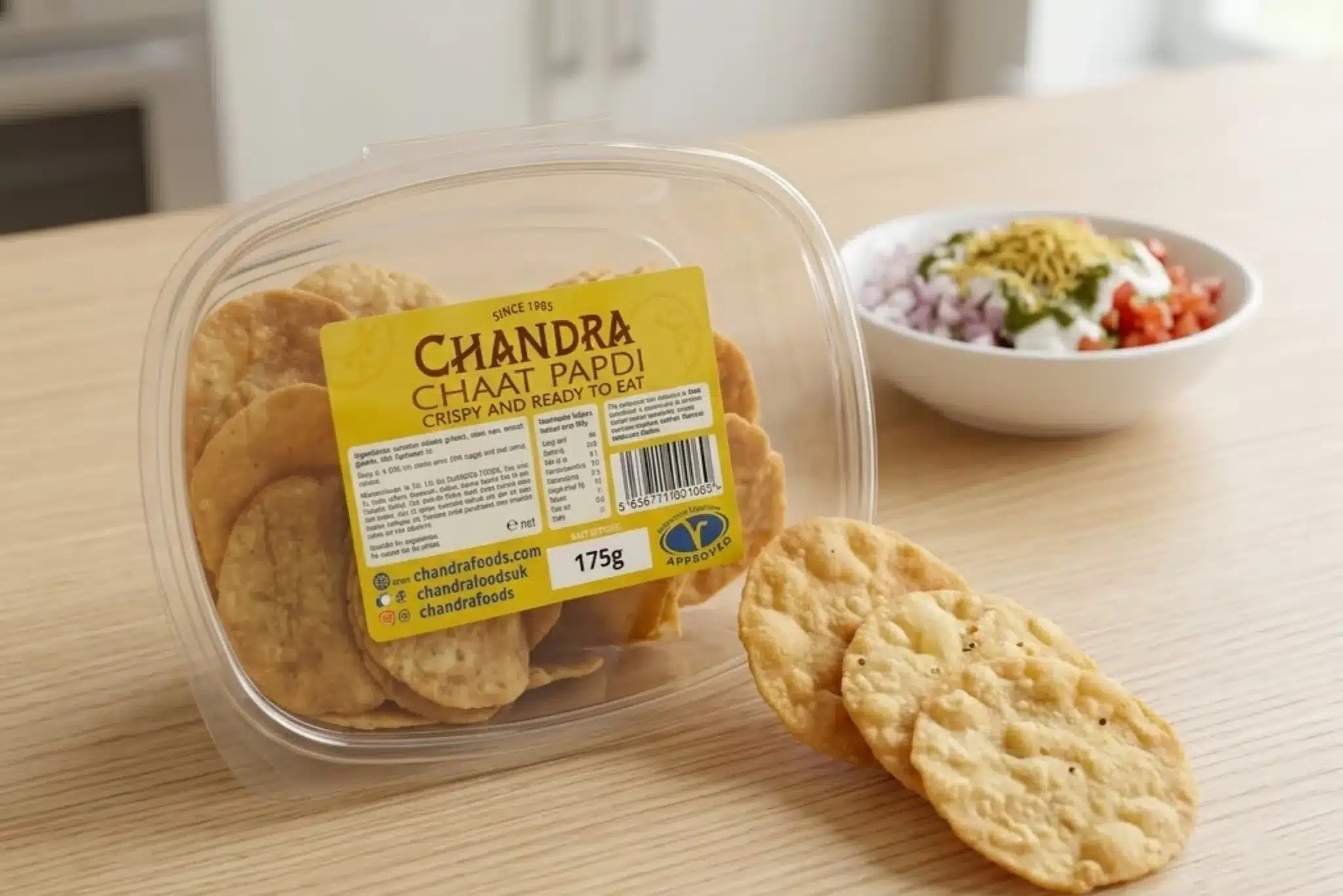
- Flat Chaat Papdi 175g – semolina, plain flour, water, rapeseed oil and salt. A sturdy base that holds yoghurt and chutneys without going soft.
- Puffed Chaat Papdi 175g – light and hollow, made for quick, crunchy chaat.
- Besan Papdi 175g – thin gram flour papdi with a light turmeric flavour, perfect with chai.
- Black Pepper Papdi – gram flour papdi with a warm peppery finish.
- Masala Papdi 175g – bold, spicy papdi for snacking or topping chaat.
Our chaat papdi is vegan approved and ready to use straight from the pack, with no frying needed at home.
How to Make Quick Papdi Chaat at Home
- Arrange flat chaat papdi on a plate.
- Top with diced boiled potato and boiled chickpeas.
- Spoon over whisked, lightly sweetened yoghurt.
- Drizzle with tamarind chutney and green chutney.
- Sprinkle with chaat masala, roasted cumin and chilli powder.
- Finish with nylon sev, masala boondi, chopped onion and coriander.
Tip: Assemble just before serving. The papdi stays crunchiest when the yoghurt goes on at the last moment.
Want everything in one box? The Papdi Chaat Combo and Ultimate Chaat Party Combo bring the dry chaat essentials together. You’ll find more bases and toppings in our chaat snacks range.
How to Keep Papdi Crispy
- Store airtight – once opened, move papdi to a sealed container away from humidity and steam.
- Top at the last minute – wet toppings soften papdi within minutes.
- Re-crisp if needed – a few minutes in a low oven brings back the crunch.
- Keep sauces cool and thick – thick yoghurt and chutney soak in more slowly than thin, runny ones.
Frequently Asked Questions
What is chaat papdi made of?
Chaat papdi is usually made from plain flour and semolina, with oil, salt and water. Chandra Foods Flat Chaat Papdi uses semolina, plain flour, water, rapeseed oil and salt.
Why does semolina make papdi crispy?
Semolina’s coarse texture breaks up the smooth flour dough and fries into a firmer, crunchier structure that resists going soft under toppings.
Why does my homemade papdi go soft?
The usual causes are a dough that is too soft, too little fat in the dough, rolling too thick or frying in oil that is too hot. Storing papdi without an airtight container also softens it.
What is the difference between papdi and puri?
Papdi is flat and pricked so it stays thin and crisp. Puri for pani puri is fried to puff into a hollow shell for filling.
Is chaat papdi vegan?
Chandra Foods Flat Chaat Papdi and Puffed Chaat Papdi are vegan approved. Papdi chaat becomes non-vegan when topped with dairy yoghurt, so use a plant-based yoghurt for a vegan version.
Where can I buy chaat papdi in the UK?
You can buy flat and puffed chaat papdi online from Chandra Foods, made in London and delivered across mainland UK. Delivery is free on orders over £40.