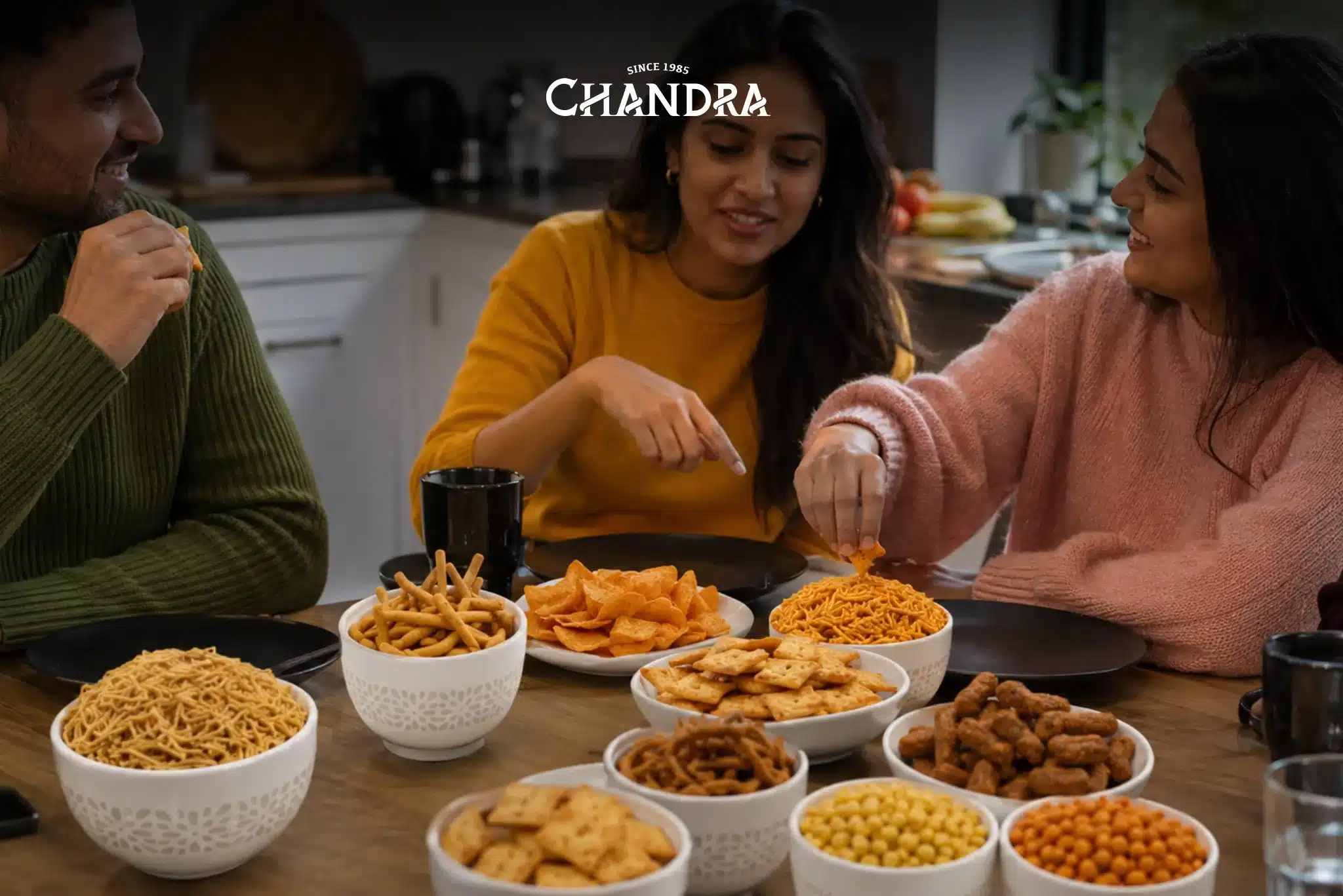

Puri, also spelled poori, is one of India’s best-loved fried breads, and over generations it has grown into a whole family of crispy snacks. In Gujarat especially, pharsi puri and methi puri are classics you will find at festivals, on long train journeys and in tea-time tins in almost every home. In this guide, we explore the different types of puri snacks, take a closer look at pharsi puri and methi puri, and show you where to buy pharsi puri in the UK, whether you want a teatime treat or the makings of a chaat platter at home.
What Is Puri?
Puri is a small disc of unleavened dough, usually made from wheat flour, rolled out and fried until it puffs up and turns golden. The result is a light, hollow centre inside a crisp shell, perfect for scooping up curry or adding crunch to snacks.
Unlike roti or paratha, which are cooked on a flat pan with little oil, puri is fully fried, which gives it that iconic puffed shape and its crisp, slightly chewy bite. You will see it at breakfast with potato curry (puri bhaji), at festive lunches with rich sabzis, and in famous street foods like pani puri, bhel puri and sev puri.
Change the thickness, flour or spices, or flatten it completely into papdi, and you get a whole range of puri snacks, from airy pani puri shells to sturdy, flaky crackers like pharsi puri.
Types of Puri Snacks: Regional Varieties
Across India, cooks have taken the basic puri and made it their own. Here are some of the best-known varieties:
- Pharsi (Farsi) Puri: A much-loved Gujarati farsan made from a stiff dough of flour and semolina, seasoned with black pepper and cumin. The dough is rolled thin and fried until incredibly crisp and flaky. Chandra Foods pharsi puri is made with plain flour, semolina and gram flour, with cumin, black pepper and sesame seeds.
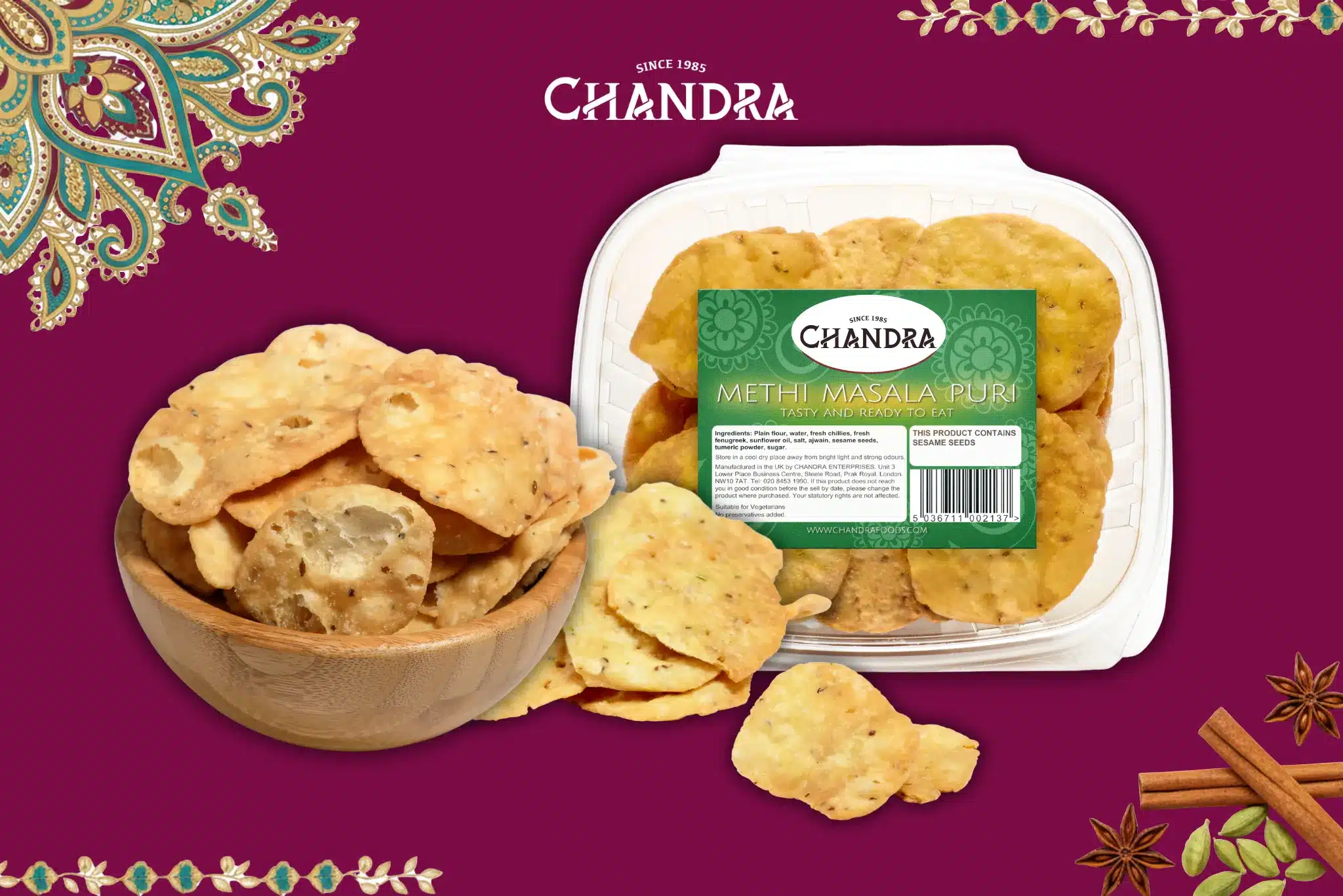
- Methi Puri: Fenugreek (methi) leaves are kneaded into the dough with spices, giving golden puris with green flecks and an earthy, gently bitter aroma. Our Methi Masala Puri uses fresh fenugreek, chillies, ajwain and turmeric for a fragrant, crunchy bite.
- Masala Puri: Flavoured with chilli, coriander, turmeric and ajwain, masala puris are thicker and very crisp, often served with potato curry or crumbled into chaat.
- Jeera Puri: Popular across North India, this style is infused with cumin seeds for a warm, nutty aroma that pairs well with yoghurt and pickles.
- Aloo Puri: Spiced potato is either stuffed inside or mixed into the dough, making a hearty snack on its own or with chutney.
- Papdi (Flat Puri): Thin, flat, crisp puris that form the base of chaats like sev puri and dahi papdi. Chandra Foods makes several styles, including flat chaat papdi, besan papdi and black pepper papdi.
- Ragi or Besan Puri: Some communities use millet flour or gram flour for a nuttier flavour and darker colour, often on festival menus.
- Achari Puri: Made with pickling spices such as fennel, nigella, mustard and cumin, giving each bite a tangy, spicy kick reminiscent of Indian achar.
Alongside these puris, Chandra Foods makes a full range of Gujarati snacks for a complete farsan spread, including fafda, chakri and Tikha Para.
How Pharsi Puri Is Made
Every home cook has a personal twist, but most pharsi puri recipes follow the same core method.
Key ingredients:
- Plain flour, sometimes mixed with gram flour or wholewheat flour
- Semolina (sooji) for extra crunch
- Salt, crushed black pepper and cumin or carom seeds
- Ghee or hot oil, rubbed into the flour
- Cold water to make a stiff dough
Making the dough: The flour, semolina, salt and spices are mixed, then the hot fat is rubbed in until the mixture looks like coarse breadcrumbs. This step is the secret to the flaky texture. Cold water is added a little at a time to form a firm dough, which then rests briefly.
Rolling and layering: Small balls of dough are rolled into discs, sometimes brushed with fat and folded before rolling again. That layering gives pharsi puri its signature short, flaky bite, and you can often see the fine layers when you snap one in half.
Frying: The puris are fried over medium heat until evenly golden and crisp, then drained and cooled completely. Careful frying and full cooling are what help them stay crunchy for so long.
The result is crisp, slightly crumbly, lightly peppery and aromatic, the perfect partner for hot chai or a spoonful of tangy pickle.
Pharsi Puri vs Methi Puri: Flavour and Uses
Pharsi puri and methi puri are close cousins, but each brings something different to your snack tin.
Pharsi Puri Flavour
Pharsi puri is all about delicate layers and gentle spice. Black pepper gives a warm heat, while cumin adds a toasty note. Each disc is rich and flaky, almost like a savoury biscuit. Many Gujarati families love it with mango pickle, whose sharp, fruity tang cuts through the richness. For more serving ideas, read our guide to ways to enjoy pharsi puri at home.
Methi Puri Flavour
Methi puri, sometimes called methi farsi puri, brings fenugreek into the dough for an earthy, slightly bitter complexity that fans of Gujarati snacks adore. Chandra Foods Methi Masala Puri balances fresh fenugreek with chilli, ajwain and turmeric for a crisp, aromatic snack that is ideal with tea. If you love that methi flavour, try our Methi Chakri too.
How to Enjoy Them
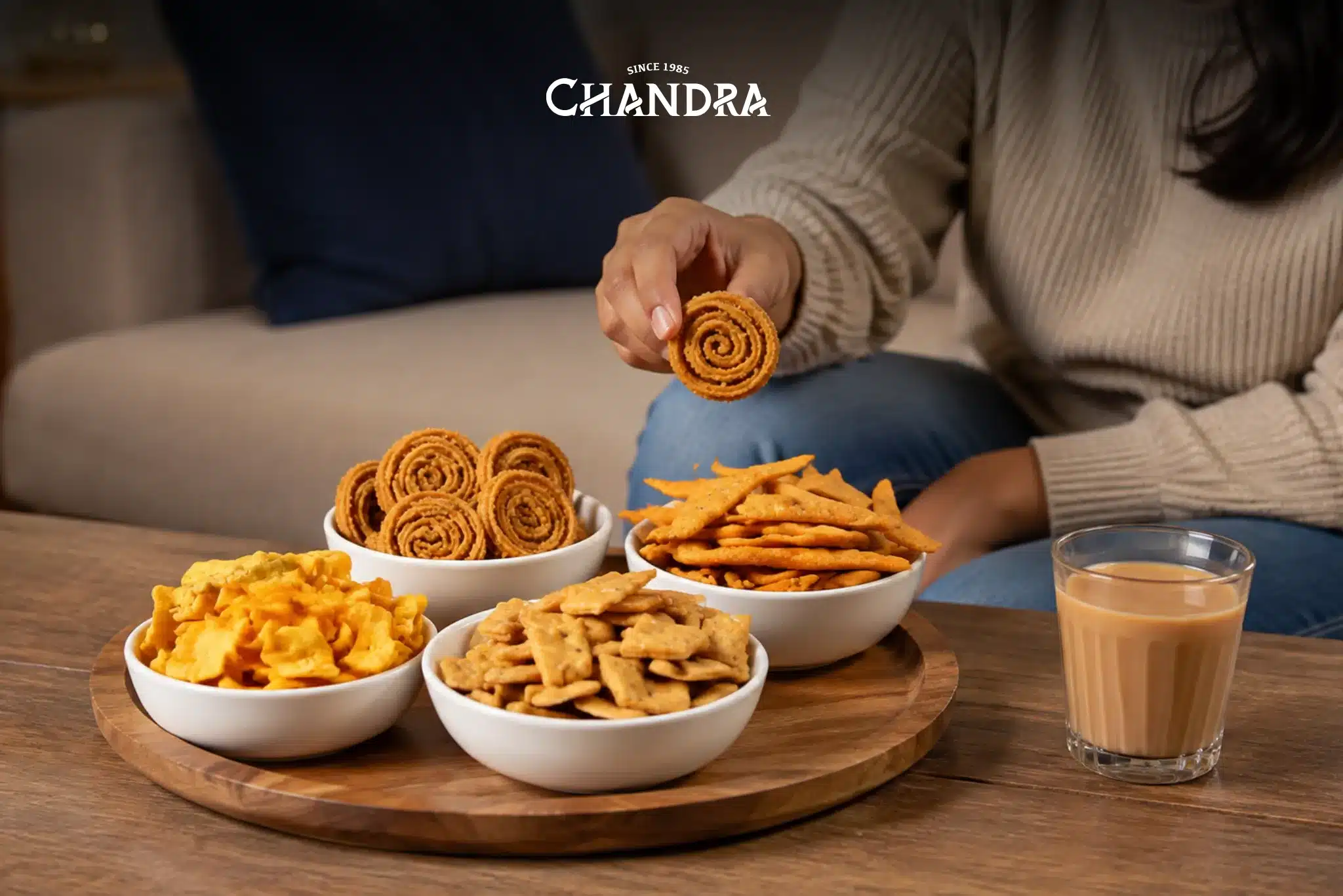
- Serve pharsi puri and methi puri straight from the pack as a teatime snack with chai.
- Pair pharsi puri with mango or lime pickle for bold, tangy flavour.
- Enjoy methi puri with a mild yoghurt dip or simple potato curry, so the fenugreek can shine.
- Crush either puri over chaat as a crunchy topping, or use them as a base for potato, onion, chutney and sev.
Making a batch at home is a lovely weekend project, but a pack of Chandra Foods pharsi puri in the cupboard is the easy everyday option. The Premium Tea Time Combo is a convenient way to stock up on teatime favourites in one order.
Papdi: The Flat Puri Made for Chaat
Papdi is often described as a flat, crisp puri, which is why it forms the base of so many chaat dishes. Ready-made papdi saves you the rolling and frying, so you can focus on layering yoghurt, chutneys, chickpeas and sev for restaurant-style chaat at home.
Choose firm flat chaat papdi for loaded platters, light and hollow puffed chaat papdi for dahi papdi chaat, or spicier masala papdi when you want extra heat.
How to Use Different Puris in Popular Snacks
With a few varieties in the cupboard, you can turn your kitchen into a mini chaat stall.
Pani Puri (Golgappa)
Pani puri needs small, hollow puris that shatter in one bite. Chandra Foods pani puri shells come ready to fill, so you only need to make the potato filling and tangy mint-tamarind water. For a family gathering, the Family Pani Puri Combo makes stocking up easy.
Papdi Chaat
Classic papdi chaat layers flat puris with yoghurt, chutneys, onion, boiled potato and sev. Flat, puffed, besan and masala papdi all make a great crunchy base, and crumbling a pharsi puri or methi puri over the top adds extra texture. The Papdi Chaat Combo brings the essentials together.
Dahi Puri
Fill small hollow puris with potato, yoghurt and chutneys. Mix them with flat papdi on the same platter for variety.
Bhel Puri
Toss puffed rice, crushed papdi, onion, tomato and chutneys together for a quick, crunchy street-food bowl. Our Bhel Puri Mix gives you a ready-made start.
Puri Sabzi and Aloo Puri
Serve larger, softer puris or thick masala puris with spicy potato curry or chhole. Achari and masala puris work especially well here, as their spices echo the curry.
Creative Toppings
Crushed pharsi puri makes a fantastic crunchy topping for salads, bhel puri and even creamy soups. Methi puri crumbled over yoghurt with pomegranate seeds and chutney makes a quick, flavour-packed snack bowl.
Where to Buy Pharsi Puri in the UK
If you are searching for where to buy pharsi puri in the UK without driving between shops, ordering online is the easiest route.
Chandra Foods: Authentic Gujarati Puris and Papdi
Chandra Foods has been making authentic Gujarati and Indian snacks online for UK families since 1985, using traditional recipes in our own kitchen in the UK. You can buy pharsi puri and methi masala puri in handy 175g packs, alongside pani puri shells and a full line-up of papdi, with delivery across mainland UK and free delivery on orders over £40.
Pharsi puri and methi masala puri also feature in our Diwali Indian Savoury Snacks Festive Collection, together with Chakri, Tikha Para, Farali Chevda and Sweet Para, a great way to try several favourites at once. For more crunchy options, explore our para snacks range.
Visit Our Park Royal Store
If you are in London, you can also pick up Chandra Foods snacks in person at our store in Park Royal, London NW10.
Tips for Storing and Reheating Puris
- Storage: Let homemade puris cool completely, then keep them in an airtight tin or jar lined with kitchen paper, away from moisture and steam. Once opened, keep packaged puris sealed tightly.
- Shelf life: Homemade farsi and methi puris usually stay crisp for several days to a couple of weeks. Packaged puris last longer, so always check the best-before date on the pack.
- Re-crisping: If puris lose a little crunch, warm them on a baking tray in a low oven (around 150°C) for a few minutes. Avoid the microwave, which can make them tough.
- Make ahead: Many Gujarati households make big batches of farsi puri before Diwali so there are always snacks ready for guests.
Frequently Asked Questions
1. What are the main types of puri snacks?
Popular types include pharsi puri, methi puri, masala puri, jeera puri, aloo puri, pani puri shells and papdi, the flat puri used in chaat.
2. What is the difference between pharsi puri and methi puri?
Pharsi puri is flaky and peppery, seasoned with black pepper and cumin. Methi puri adds fenugreek leaves to the dough for an earthy, slightly bitter, aromatic flavour.
3. Where can I buy pharsi puri in the UK?
You can buy pharsi puri online from Chandra Foods in 175g packs, with free UK mainland delivery on orders over £40, or visit our store in Park Royal, London.
4. What do you eat pharsi puri with?
Pharsi puri is traditionally enjoyed with chai and mango or lime pickle. It is also great crumbled over chaat or salads.
5. Is papdi the same as puri?
Papdi is a flat, crisp type of puri. Unlike puffed puris, it stays flat, which makes it the ideal base for chaat dishes like papdi chaat and sev puri.
6. How long do pharsi puris stay crisp?
Stored in an airtight container away from moisture, homemade pharsi puri stays crisp for days to a couple of weeks. Packaged puris last longer, so check the best-before date.
Conclusion
From airy pani puri shells to sturdy papdi and richly spiced teatime crackers, the many types of puri snacks offer something for every taste. Few are as loved as pharsi puri and methi puri, one with a peppery, layered crunch, the other scented with fenugreek and gentle spice.
Enjoy pharsi puri with mango pickle, build a chaat platter on a bed of papdi, or crumble methi puri over yoghurt and chutneys for a quick street-food-style bowl. When you are ready, order from Chandra Foods and bring a taste of Gujarat to every UK teatime.
Shop the Products Mentioned in This Guide
You can order salt and spicy para, sweet para and farali chevda from Chandra Foods, with free UK delivery on orders over £40.