
Browse any health food shop or online grocer in the UK and you will find nuts sold in two main forms: raw and roasted. They look similar and both taste great, but which is actually better for you? The raw vs roasted nuts debate comes up again and again among nutritionists, home cooks and everyday snackers. If you buy nuts online in the UK for snacking, baking or adding more goodness to your diet, knowing the real differences will help you choose with confidence.
The good news is that both forms are genuinely healthy. The differences are in the details, and this guide walks through them.
Raw vs Roasted Nuts: What Is the Difference?
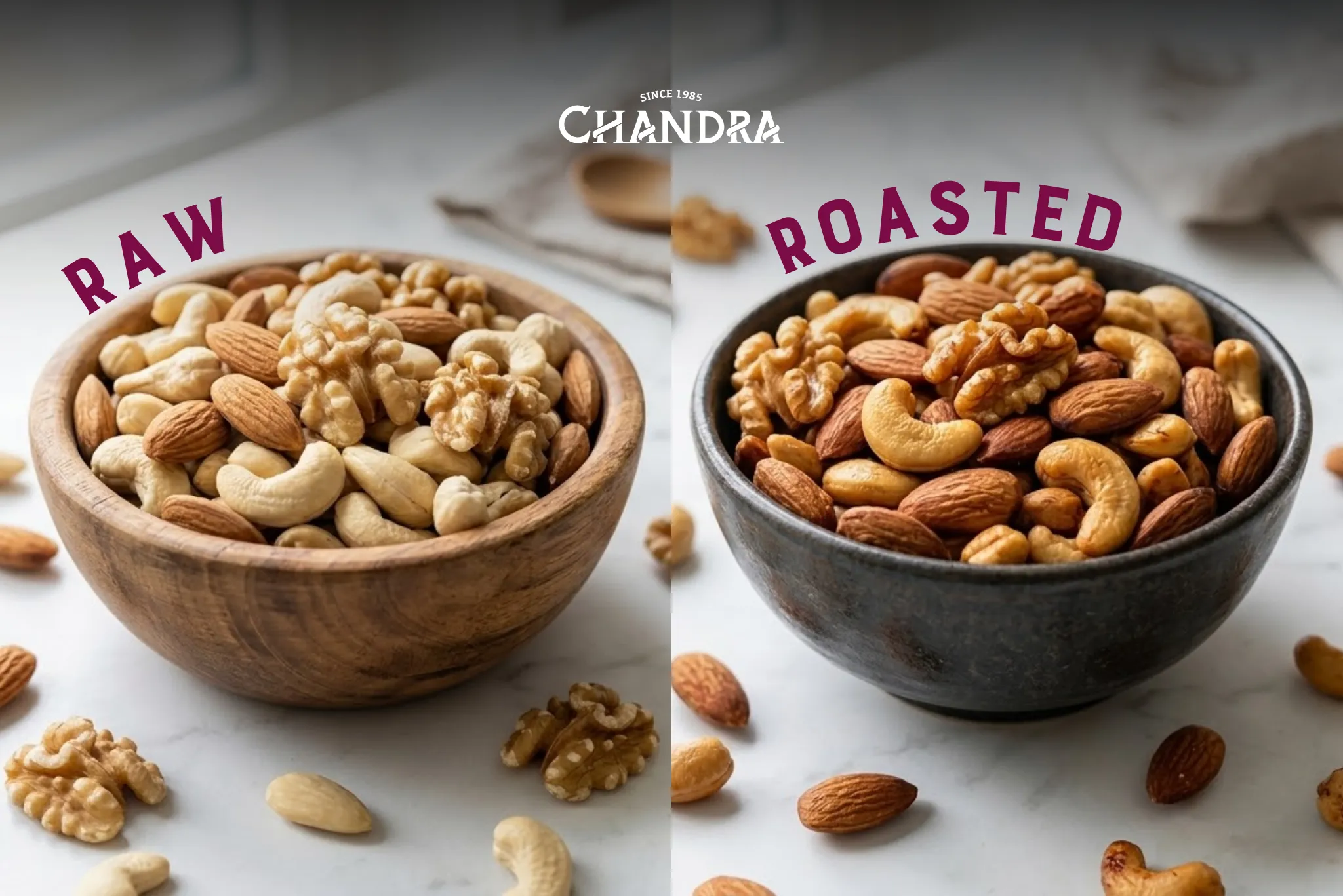
Raw nuts are harvested, cleaned and packed without any heat treatment. They keep their natural oils, moisture and nutrient structure exactly as they grew. At Chandra Foods, our raw nuts range covers natural, unsalted favourites such as almonds, cashews, walnuts, Brazil nuts, hazelnuts, pecans, macadamias and pine nuts.
Roasted nuts are cooked with dry heat or oil. Dry roasting uses no added fat and is the cleaner method. Oil roasting adds a little fat, which nudges up the calories but deepens the flavour and crunch.
Roasting also sits on a spectrum. Lightly roasted nuts, cooked at lower temperatures for shorter times, keep far more of their nutritional value than heavily roasted ones. That matters whenever you compare the two, and it is worth keeping in mind if you buy bulk nuts online in the UK for the whole household.
Nutritional Comparison: Raw vs Roasted Nuts
Here is the reassuring part: the nutritional gap between raw and roasted nuts is small.
A 28g handful of raw almonds contains roughly 161 calories and 14g of fat, while the same weight of dry-roasted almonds has around 167 calories and 15g of fat. The difference comes mainly from moisture loss. A roasted nut weighs a little less, so its fat content looks slightly higher gram for gram. Protein and carbohydrate levels stay almost identical.
| Nutrient | Raw Nuts | Roasted Nuts |
| Calories | Slightly lower | Marginally higher |
| Fat | Slightly lower | Marginally higher (moisture loss) |
| Protein | Similar | Similar |
| Carbohydrates | Similar | Similar |
| Antioxidants | Higher | Slightly reduced at high heat |
| Vitamins (E, B) | Fully retained | Some loss at high temperatures |
| Shelf life | Shorter | Longer |
| Flavour | Mild and natural | Richer and more intense |
The real differences show up in the micronutrients: vitamins, antioxidants and the quality of the fats, and how heat affects each of them.
Health Benefits of Raw Nuts
Raw nuts have one clear advantage: maximum nutrient retention.
With no heat processing, they keep their full range of vitamins, minerals and antioxidants. Vitamin E, found in especially high levels in almonds, is one of the nutrients most affected by high roasting temperatures. Some studies have found that roasting almonds at around 160–170°C for 15 minutes can reduce their most active form of vitamin E by up to roughly half. In raw almonds, it stays intact.
Raw nuts also keep higher levels of natural antioxidants, which help protect cells against oxidative stress. Their fibre is fully preserved too, supporting healthy digestion, steadier blood sugar and lasting fullness. That makes raw, unsalted nuts a smart everyday choice if you are watching your weight or following a plant-based diet.
One thing to know: raw nuts contain natural compounds called phytates and enzyme inhibitors, which can make them slightly harder for some people to digest. Soaking them in water overnight helps break these down. Soaked cashew nuts also blend into a beautifully smooth cream for curries and plant-based desserts.
Health Benefits of Roasted Nuts
Roasted nuts have strengths of their own, and for most people the nutritional differences are too small to make a meaningful difference to overall health.
Roasting draws out the natural oils, giving a deeper flavour and a satisfying crunch that raw nuts cannot quite match. Our pistachios in shell, for example, are roasted and lightly seasoned for that classic snacking taste. Because people tend to enjoy roasted nuts more, they are often more likely to eat them regularly, which is what really counts in a healthy diet.
Roasting also reduces moisture, so roasted nuts are less prone to spoiling and stay fresh for longer. Some research even suggests that longer roasting can create new antioxidant compounds through the Maillard reaction, the same browning process that gives toast its flavour. So while a few antioxidants are lost, others are formed.
Does Roasting Reduce the Nutritional Value of Nuts?
Yes, but only meaningfully at high temperatures. Roasting at low to medium heat (around 120–160°C) causes minimal nutritional loss. Bigger losses of vitamins and antioxidants mainly happen above 170°C, especially over longer roasting times. High-heat roasting raises two particular concerns:
- Fat oxidation: The polyunsaturated fats in nuts can oxidise under high heat. Walnut halves are the most sensitive, because around 72% of their fat is polyunsaturated, including omega-3. Gentle roasting largely avoids this, which is why walnuts are best enjoyed raw or only lightly toasted.
- Acrylamide: Above roughly 130°C, natural sugars and the amino acid asparagine can react to form small amounts of acrylamide. Almonds are the most susceptible, but levels in commercially roasted nuts are well below amounts considered harmful.
The takeaway: the issue is not roasting itself, it is over-roasting. Lightly roasted nuts keep most of their goodness and taste better.
Raw or Roasted: Which Is Better for Digestion?
For most people, roasted nuts are a little easier to digest, because heat breaks down some of the phytic acid and enzyme inhibitors found in raw nuts. Raw nuts can occasionally cause bloating if you eat a lot of them at once. If they sit heavily with you, try soaking them first or switching to lightly roasted nuts.
Either way, the fibre in both raw and roasted nuts feeds beneficial gut bacteria and supports regular digestion, so both are a positive choice for your gut.
How to Roast Raw Nuts at Home
Buying raw nuts and roasting them yourself gives you the best of both: you control the heat, the time and the salt. Spread the nuts in a single layer on a baking tray and dry-roast at 150–160°C:
- Hazelnuts: 10–12 minutes, then rub off the skins in a clean tea towel
- Almonds: 10–12 minutes, until fragrant and lightly golden inside
- Cashews: 8–10 minutes, shaking the tray halfway
- Pecan nuts: 6–8 minutes, as their high oil content means they brown quickly
- Macadamia nuts: 8–10 minutes, until just golden
- Walnuts: 5–7 minutes at most, to protect their delicate fats
Let them cool completely before storing. For baking and garnishing, ready-toasted sliced almonds save you a step, while blanched almonds are ideal when you want a pale, skinless nut for cakes and sweets.
How to Choose Quality Nuts When You Buy Online in the UK
Whether you prefer raw or roasted, freshness and sourcing matter more than anything else. Here is what to look for:
- Minimal additives: Raw nuts should contain nothing but the nut. Roasted nuts are best dry-roasted, without unnecessary oils, flavourings or heavy salt.
- Airtight, resealable packaging: This protects the natural oils from oxidation in transit and in your cupboard.
- Sensible quantities: Raw nuts have a shorter shelf life, so buy what you will use within a few weeks, or store larger packs in the fridge. Our guide on how to store nuts and seeds explains how to keep them fresh for longer.
- Transparent sourcing: A good supplier will tell you where its nuts come from and how they are processed.
- Variety: Rotating between almonds, cashews, walnuts, pistachios and Brazil nuts means you benefit from each nut’s unique nutrients, such as the selenium in Brazil nuts.
If you want variety without ordering pack by pack, the Mixed Nuts Box brings six whole nut varieties together in separate packs, while the Nuts & Seeds Box pairs almonds and cashews with four kinds of seeds.
Buying in bulk makes sense for regular nut eaters, as long as you buy from a trusted specialist with proper handling standards. At Chandra Foods, a family business since 1985, our natural, unsalted nuts are packed in resealable bags and delivered across the UK, with free delivery on orders over £40.
Frequently Asked Questions
1. Are raw nuts healthier than roasted nuts?
Raw nuts keep slightly more vitamin E and antioxidants, but the overall difference is small. Lightly roasted nuts are almost as nutritious and many people find them tastier and easier to digest.
2. Do roasted nuts have more calories than raw nuts?
Only marginally. Dry-roasted nuts have a few more calories per gram because they lose moisture during roasting. Oil-roasted nuts gain a little extra fat from the oil.
3. Which nuts are best eaten raw?
Walnuts are best raw or only lightly toasted, because their polyunsaturated fats are sensitive to heat. Almonds are also a great raw choice for their vitamin E.
4. Should I soak raw nuts before eating?
It is not essential, but soaking overnight can make raw nuts easier to digest and softens them for blending into sauces, milks and spreads.
5. Are dry-roasted nuts better than oil-roasted nuts?
Dry-roasted nuts are generally the healthier option because no extra fat is added. Oil roasting adds flavour but also a few more calories.
6. How long do raw nuts stay fresh?
Stored in an airtight container in a cool, dark place, most raw nuts stay fresh for a few months. Keeping them in the fridge or freezer extends their shelf life even further.
Raw vs Roasted Nuts: The Verdict
So, raw or roasted? Both are excellent choices, and neither wins outright. Raw nuts edge ahead on vitamins and antioxidants, while lightly roasted nuts offer richer flavour, easier digestion and a longer shelf life without meaningfully compromising your health.
What matters far more is the quality of the nuts you buy. Fresh, well-sourced, minimally processed nuts will always beat cheap, over-processed ones that have sat on a shelf for months. When you buy nuts online in the UK, the smartest approach is to keep both in your kitchen: raw nuts for smoothies, soaking and baking, and lightly roasted nuts for a satisfying, flavour-packed snack.
Shop the Products Mentioned in This Guide
You can order pine nuts, almond flour and Baking Essentials Combo from Chandra Foods, with free UK delivery on orders over £40.