
For Hindu households in the UK, vrat days come round more often than most people outside the community realise. Ekadashi twice a month, Shivratri, Janmashtami, the nine days of Navratri, Karva Chauth – each with its own food rules, all falling under the umbrella of farali eating. Which farali chevda counts as a proper fasting snack in the UK? Which packaged foods look fine but break the rules by accident? The gap between everyday shopping and vrat-appropriate shopping is where most families get caught out. This guide walks through what farali actually means, the ingredients that make up the core of a vrat kitchen, and the ready-made snacks worth keeping in the cupboard.
What Farali Means and Which Fasts Follow It
Farali (also called upvas food, faral or vrat ka khana) is the category of food allowed during Hindu fasts. The rules are not identical across every fast. Ekadashi restricts grains. Navratri restricts grains along with onion and garlic. Shivratri traditionally follows a stricter no-grain, dairy-and-fruit rule. Janmashtami varies by region and family.
What sits at the centre of every farali plate, though, is the same short list of ingredients: sabudana, singhare ka atta (water chestnut flour), rajgira (amaranth), kuttu (buckwheat), potato, sweet potato, peanuts, cashews, almonds, raisins, banana, milk, ghee, curd, rock salt and a small set of spices – cumin, black pepper, green chilli, coriander leaves, ginger.
Everything else – wheat, rice, pulses, onion, garlic, table salt, most packaged foods – sits outside the allowed list. Which is why farali food, at least in a UK kitchen, needs its own small shelf. Confusion between everyday snacks and vrat-appropriate ones is what leads to accidentally breaking a fast.
The Farali Rules: What’s Allowed and What Isn’t
The Allowed List
- Sabudana (tapioca pearls)
- Rajgira (amaranth), kuttu (buckwheat), singhare (water chestnut) flours
- Potatoes, sweet potatoes, arbi (colocasia)
- Bottle gourd, pumpkin, cucumber, tomato
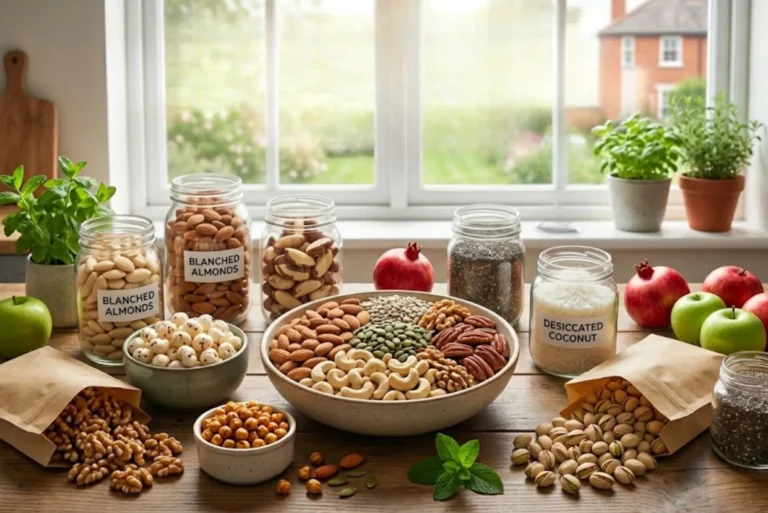
- Peanuts, cashews, almonds, walnuts, pistachios, raisins, dates
- Fresh fruit including banana, apple, grapes, papaya
- Milk, curd, paneer, ghee, cream
- Sendha namak (rock salt)
- Cumin, black pepper, green chilli, coriander leaves, mint, ginger
- Coconut – fresh, dried and desiccated
- Sugar, jaggery, honey
What’s Not Allowed
- Wheat, rice, semolina, oats, corn, millet
- All pulses and lentils (chana, moong, urad, masoor, toor)
- Onion, garlic
- Table salt (iodised)
- Turmeric, mustard, fenugreek, most masala mixes
- Meat, eggs, fish
- Alcohol
- Anything processed with those ingredients – most biscuits, standard chevda, most crisps
Different families interpret the finer points differently. Some allow tea, others don’t. Some use table salt, others insist only on rock salt. The safe rule for a UK household putting together a farali cupboard is to stay on the strict side and adjust from there.
The Core Farali Ingredients Every UK Household Keeps Ready
Sabudana, Rajgira and Singhare Flour
The three flours that carry farali cooking. Sabudana forms the base for khichdi and vadas. Rajgira turns into ladoos, chikki and parathas. Singhare ka atta becomes puris, halwa and pancakes. All three keep well in an airtight tin and travel from one fast to the next through the year. For a household of four getting through a full Navratri, a 500g bag of each is a sensible starting point.
Nuts and Dry Fruits: the Farali Engine Room
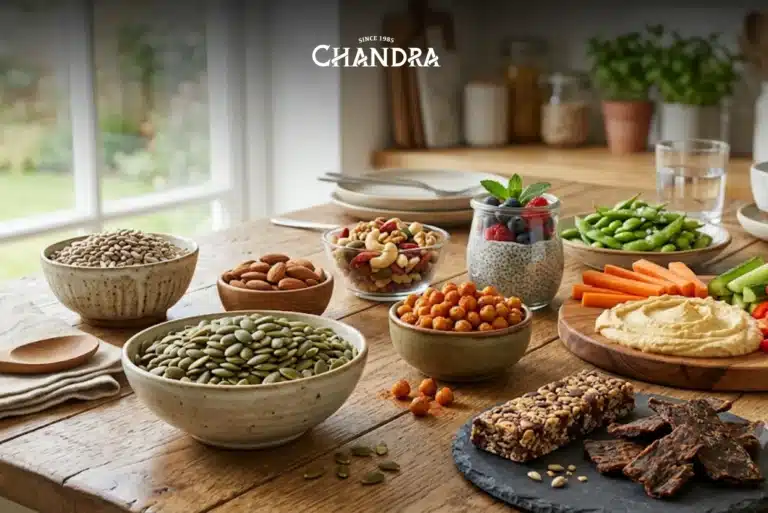
Nuts do the heavy lifting during vrat days. When grains and pulses are off the menu, nuts and dry fruits become the primary source of protein, fat and slow-burning energy. Every Gujarati or Marwari farali kitchen keeps them in decent quantity.
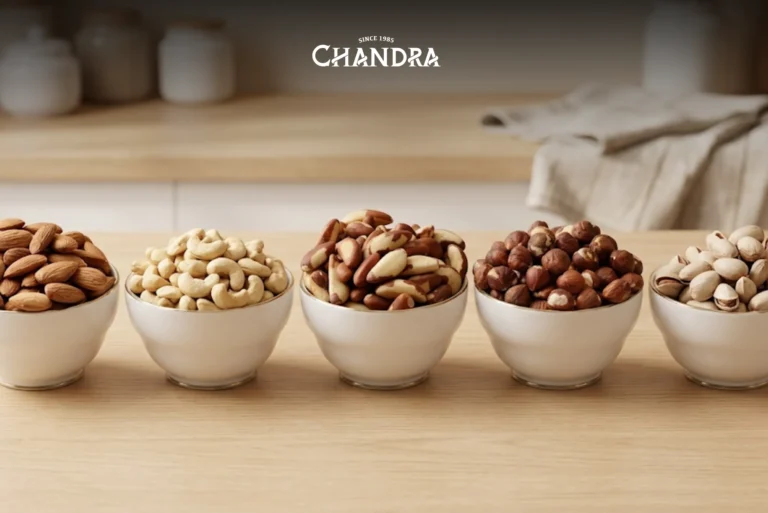
Cashews go into farali chevda, kheer and roasted-and-salted bowls for snacking. A 500g pack of kaju nuts disappears faster than most families anticipate during Navratri – it’s the one nut that turns up in every dish and every snack bowl. Almonds are the second essential. Soaked overnight and eaten in the morning, ground into badam milk for the evening, chopped into fresh fruit chaat. Peanuts, roasted and salted with rock salt, cover the savoury side. Walnuts and pistachios turn up in mithai. Raisins and dates soften the sweet dishes.
Sendha Namak (Rock Salt)
The single ingredient that separates farali food from everyday cooking. Every dish is seasoned with sendha namak instead of iodised table salt. A 250g pack lasts most of the year. Missing it is what makes home-made farali food taste flat.
Fresh Potatoes, Sweet Potatoes and Gourds
The vegetable base of most farali meals. Potatoes for aloo sabzi, sabudana khichdi and farali cutlets. Sweet potatoes roasted in ghee with rock salt and pepper. Bottle gourd for koftas. Pumpkin for halwa. All easy to find at any UK supermarket.
The Ready-Made Farali Snacks Worth Buying
Not everything gets made from scratch. UK families with jobs, school runs and Navratri all overlapping in one week need snacks that are ready to open and eat.
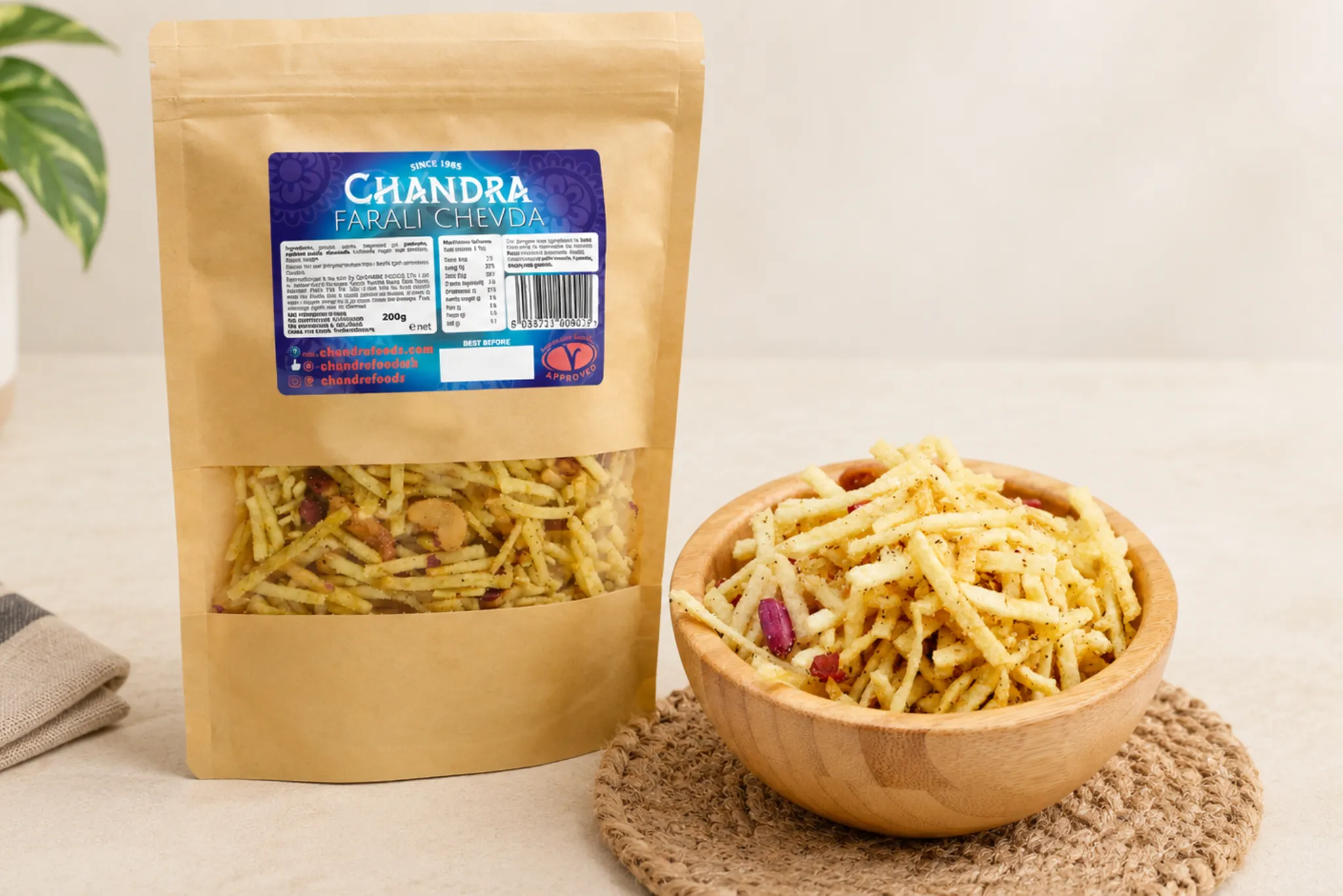
Farali Chevda
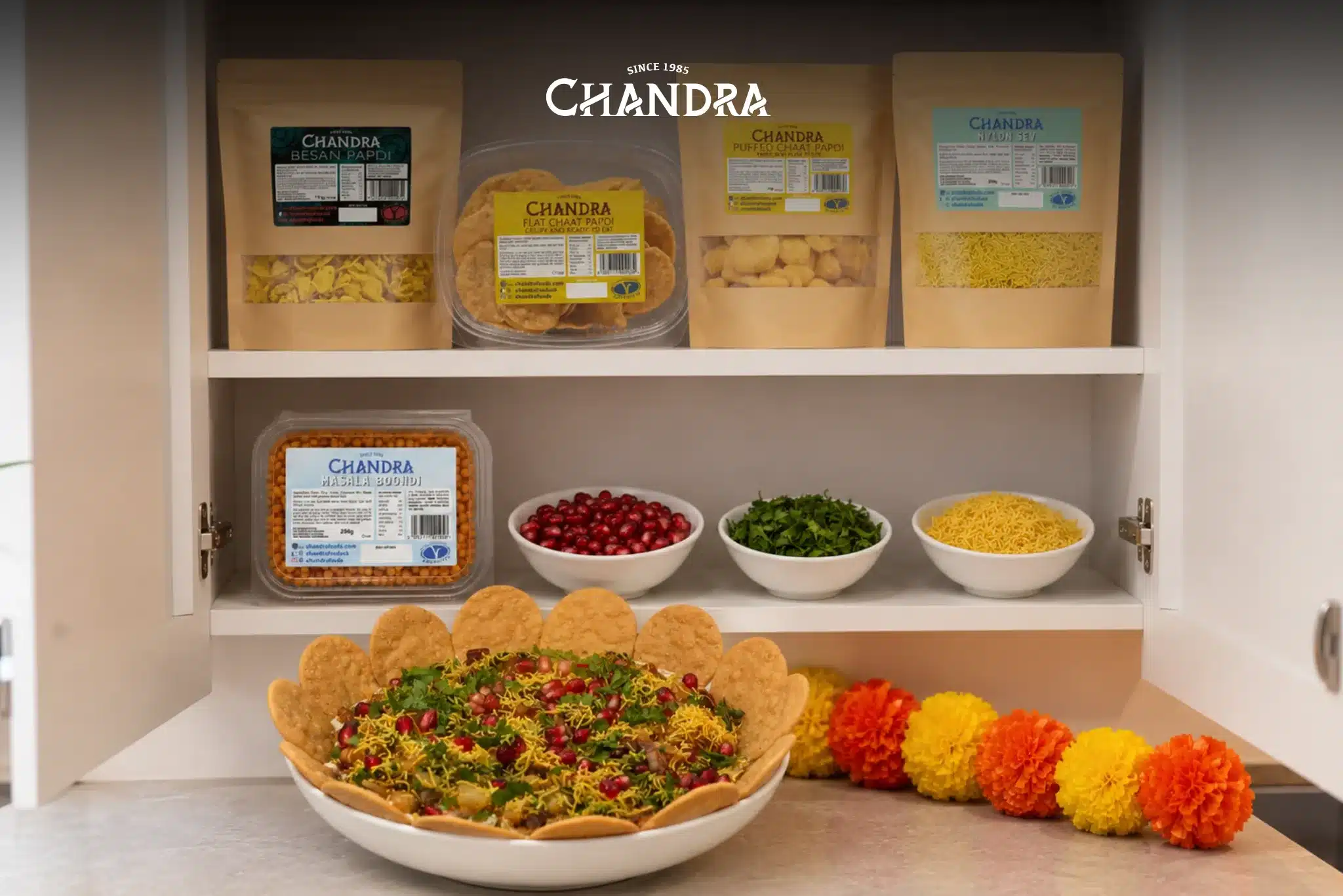
A specific version of chevda made without any grain or pulse. The base is usually fried sabudana or thin fried potato slivers, mixed with roasted peanuts, cashews, raisins, curry leaves, green chilli, rock salt, cumin and sometimes desiccated coconut. Sweet-savoury, crunchy, filling. Farali chevda is the ready-made snack most UK households order in bulk before Navratri. A 500g bag disappears in three days when relatives are visiting, which is why a lot of families order two or three at a time in the week before the festival begins.
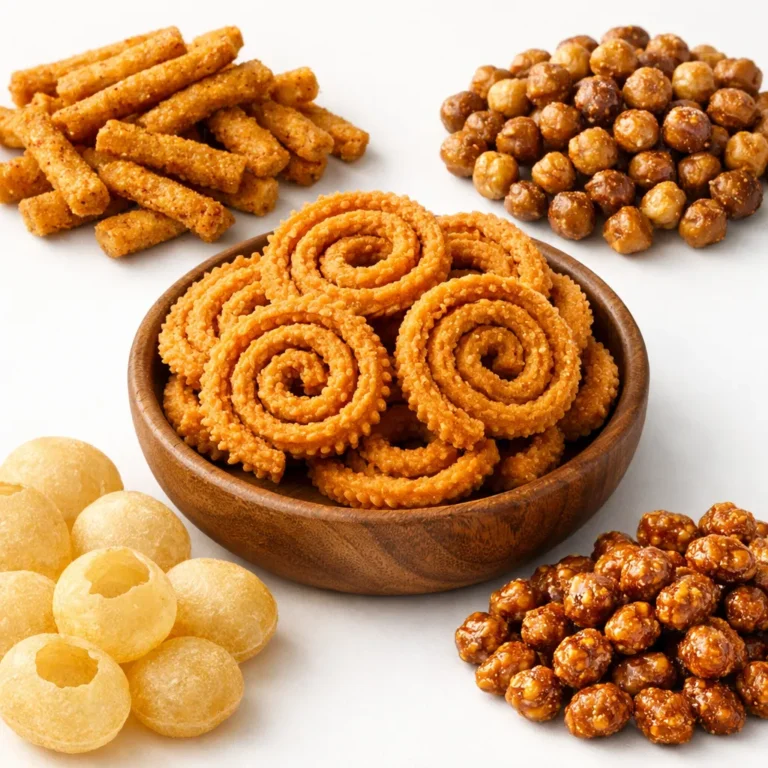
Farali Chakli, Farali Sev and Sabudana Chips
Cousins of the standard versions, made only with allowed ingredients. Farali sev uses singhare or rajgira flour instead of besan. Farali chakli follows the same route. Sabudana chips – thin, salty, crisp – are the farali answer to crisps.
Sweet Potato and Banana Chips
Deep-fried thin slices, seasoned with rock salt and black pepper. Heavier than sabudana chips but more satisfying at the end of a fasting day when energy is low.
Dry Fruit and Farali Mithai
Black raisin, cashew and almond mithai – kaju katli, kaju roll, badam barfi, magas made with rajgira. The mithai section of a farali plate is often larger than the savoury section because sweets carry more energy per bite, and sugar is one of the few concentrated calorie sources allowed during vrat. Chikki – nuts or seeds set in jaggery – is the most portable farali snack of all. It travels in a bag, doesn’t melt, doesn’t crumble, and picks up energy in one bite.
How UK Hindu Families Manage the Farali Cupboard
The main challenge in the UK isn’t the fasting itself. It’s the logistics. Everyday shops don’t stock farali ingredients. Big supermarkets have almonds, cashews and desiccated coconut, but they don’t sell singhare ka atta, farali chevda or rock salt. So the household either travels to the nearest Indian grocery – which for many families in Scotland, the north-east or rural areas is a two-hour drive – or orders online in advance.
Some UK families look at vegetarian snacks uk collections as a shortcut, but only some of what’s inside them qualifies as farali. Vegetarian and vegan are not the same as vrat-appropriate. Onion, garlic, iodised salt and grains all sit inside a vegan diet, and none of them are allowed during a strict fast. The label to look for is “farali” – sometimes marked “vrat”, “upvas” or “fasting-friendly”.
The families who do this well tend to stock up in September. Navratri lands in October, Karva Chauth in November, Ekadashi is every fortnight. By the time the festival season is in full flow, the cupboard is already ready and no one is running to the shops mid-fast.
A Simple Farali Day Plan
For anyone doing a full-day vrat for the first time, this is a routine that works.
Morning: A glass of milk with soaked almonds and a banana.
Mid-morning: A handful of dry fruits and one piece of chikki.
Lunch: Sabudana khichdi with peanuts and a side of curd, seasoned with cumin and rock salt.
Afternoon: Farali chevda with a cup of tea, if your family tradition allows tea on vrat days.
Evening: Sweet potato roast, or aloo tikki fried in ghee with green chilli chutney.
Dinner: Singhare ka atta puri with aloo sabzi, or a bowl of kheer made with milk, sugar, cashew and desiccated coconut.
That’s enough to keep energy steady through the day without breaking the fast. If it’s Ekadashi and you’re doing water-only until sunset, a plate like this served at evening is what breaks the fast.
Frequently Asked Questions
- What is farali food?
- Farali food is the category of ingredients and dishes permitted during Hindu fasts (vrat or upvas). It excludes grains, pulses, onion, garlic and iodised salt, and centres around sabudana, singhare and rajgira flours, potatoes, dry fruits, nuts, dairy and rock salt.
- Which fasts follow farali rules in the UK?
- The main ones are Navratri (nine days, twice a year), Ekadashi (fortnightly), Shivratri, Janmashtami, Ganesh Chaturthi, Karva Chauth and specific family observances. Each fast has slight variations, but the farali food principle is the same across all of them.
- Can I buy farali chevda online in the UK?
- Yes. Family-run Indian grocers like Chandra Foods stock farali chevda and related vrat snacks, ship across the UK, and label the packs clearly. Ordering in September or early October covers the busiest fasting stretch of the year.
- Is farali food the same as vegetarian food?
- No. All farali food is vegetarian, but not all vegetarian food is farali. Onion, garlic, grains, pulses and table salt are all vegetarian and all excluded from a fasting menu. The check to make before buying anything is that the pack is labelled farali, vrat or upvas – not just vegetarian.
- Can children eat farali food during Navratri?
- Yes. Farali food is nutritionally sound – high in dairy, nuts, dry fruit and fresh vegetables. Children often eat farali meals through Navratri along with the rest of the family, and ready-made snacks like farali chevda and sabudana chips are safe, straightforward options for lunchboxes.