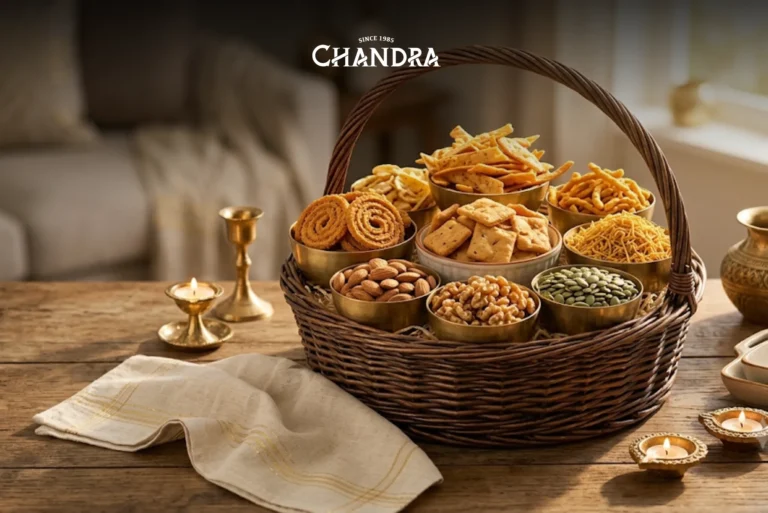

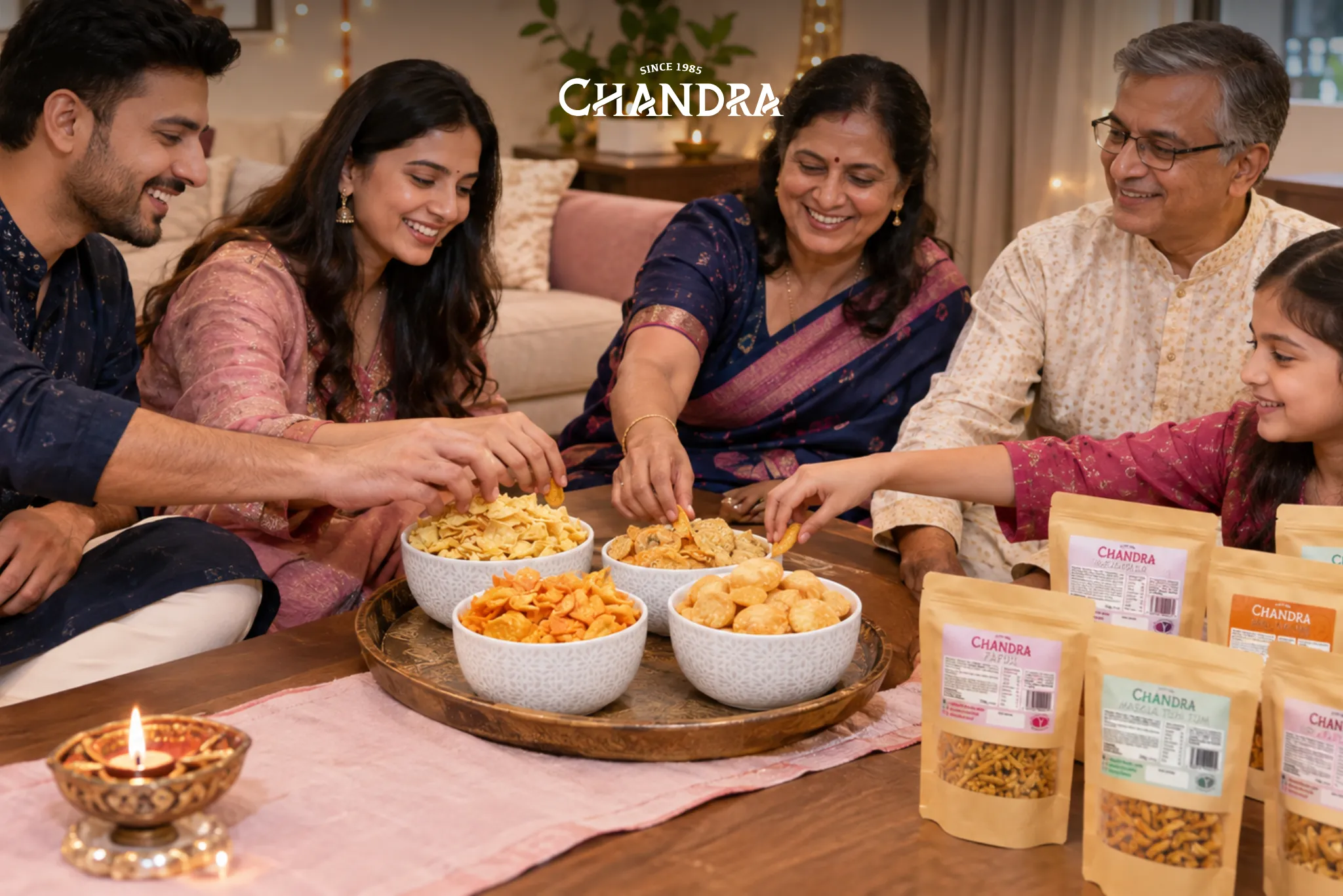
Diwali 2026 falls on Sunday 8 November in the UK, and in most Gujarati homes the first sign that it has arrived isn’t the diyas on the windowsill. It’s the steel plate on the coffee table. Thin yellow strips, thick knobbly sticks, crisp spirals, a small bowl of boondi on the side. That plate of Gujarati Diwali snacks stays out for all five days, gets topped up every morning, and greets anyone who walks through the door. If you’re putting one together this year, or ordering for the family from further away, this guide covers what goes on it, how much you’ll need and where to buy it in the UK.
When Is Diwali 2026 in the UK?
The festival runs over five days, and the snack plate needs to be ready from the first one. UK dates are a day earlier than India for the last three days this year, so it’s worth checking the family WhatsApp group has the right ones.
- Dhanteras – Friday 6 November. Cleaning finished, first diyas lit, snacks should already be in the house.
- Kali Chaudas / Choti Diwali – Saturday 7 November.
- Diwali (Lakshmi Puja) – Sunday 8 November. The busiest evening for visitors.
- Gujarati New Year (Bestu Varas) – Monday 9 November. Saal Mubarak visits, and the plate empties fastest.
- Bhai Dooj (Bhai Beej) – Tuesday 10 November.
What Makes Gujarati Diwali Snacks Different
Every region of India has its own festive plate, but the Gujarati version is easy to spot. Almost everything on it is savoury, made from besan (gram flour) or a besan-and-dal dough, and seasoned with ajwain, black pepper, hing and chilli. It’s dry, crunchy food, made to sit out on a plate for days without going soggy.
The plate isn’t a meal. It’s what you offer with chai when relatives turn up unannounced, what the children pick at between card games, and what neighbours compare when they swap boxes. Sweets sit on a separate dish so the savoury pieces stay crisp. That balance of savoury nasta on one side and mithai on the other is what makes a Gujarati Diwali plate feel complete.
The Diwali Savoury Snacks Every Gujarati Plate Needs
Fafda
Long, flat strips of besan with ajwain and black pepper, fried to a pale gold. In Gujarat, fafda is a Sunday breakfast with jalebi and green chutney, and it carries straight over onto the Diwali plate. A good piece bends slightly before it snaps. Chandra’s fafda is the one most UK families reorder for Diwali morning, especially for the New Year visits.
Gathiya
Thicker and chunkier than fafda, gathiya is the anchor of a Kathiawadi plate. There are two styles worth having. Bhavnagari gathiya is the thick, soft-centred version from Bhavnagar, usually eaten with fried green chillies and raw onion. Thikha gathiya brings more heat for the family members who find the rest of the plate too mild.
Chakri
The spiral that every child reaches for first. Chakri is crunchy, mildly spiced with cumin and sesame, and it keeps its crispness well in an airtight tin, so it often lasts to the final day. Keep a pack of plain chakri for the kids and a pack of methi chakri for the grown-ups who like the fenugreek note.
Sev
Fine strands of fried besan dough that sit somewhere between a snack and a topping. On the Diwali plate you’ll usually see a small heap of fine nylon sev, and many families add ratlami sev for its clove-and-pepper kick. Leftover sev doesn’t go to waste either. It ends up on poha, chaat and bhel through November.
Boondi
Tiny fried droplets of besan batter, served in their own bowl because they roll everywhere. Masala boondi is the one for the snack plate, with a light coating of chilli and spice. It’s the piece people eat absent-mindedly mid-conversation, so buy more than you think.
Para
Para bridges the gap between the savoury plate and the mithai dish. Sweet para has a gentle sweetness that older relatives love with tea, while the salt and spicy version suits those who’d rather skip sugar altogether.
How Much to Buy for the Five Days
Most families underestimate how fast the plate empties on Diwali night and New Year’s Day. As a rough guide:
- Small household, few visitors: one pack each of fafda, gathiya, chakri, sev and boondi.
- Regular stream of relatives: double up on the favourites (usually fafda and chakri) and add a second gathiya.
- Hosting on New Year’s Day: plan for two of everything, plus a box of para for the tea round.
Store opened packs in airtight tins away from the radiator, and refill the plate little and often rather than emptying a whole pack at once. That keeps everything crisp to the last day.
Buying Diwali Snacks Online in the UK
Not everyone lives near Wembley, Leicester or Harrow, and a lot of families now order their Diwali snacks online rather than queueing at the local farsan shop. The simplest route is the Diwali Indian savoury snacks festive collection, made for exactly this plate. If you’d rather pick each item yourself, the full range of Gujarati snacks lets you build it piece by piece, and the Spicy Indian Snacks Box covers the sev, gathiya and papdi side in one order.
Two practical tips. Order before Dhanteras so everything is in the house before the first evening. And combine orders with family members to go over £40, which gets free UK delivery.
Beyond the Plate: Gifting and New Year Visits
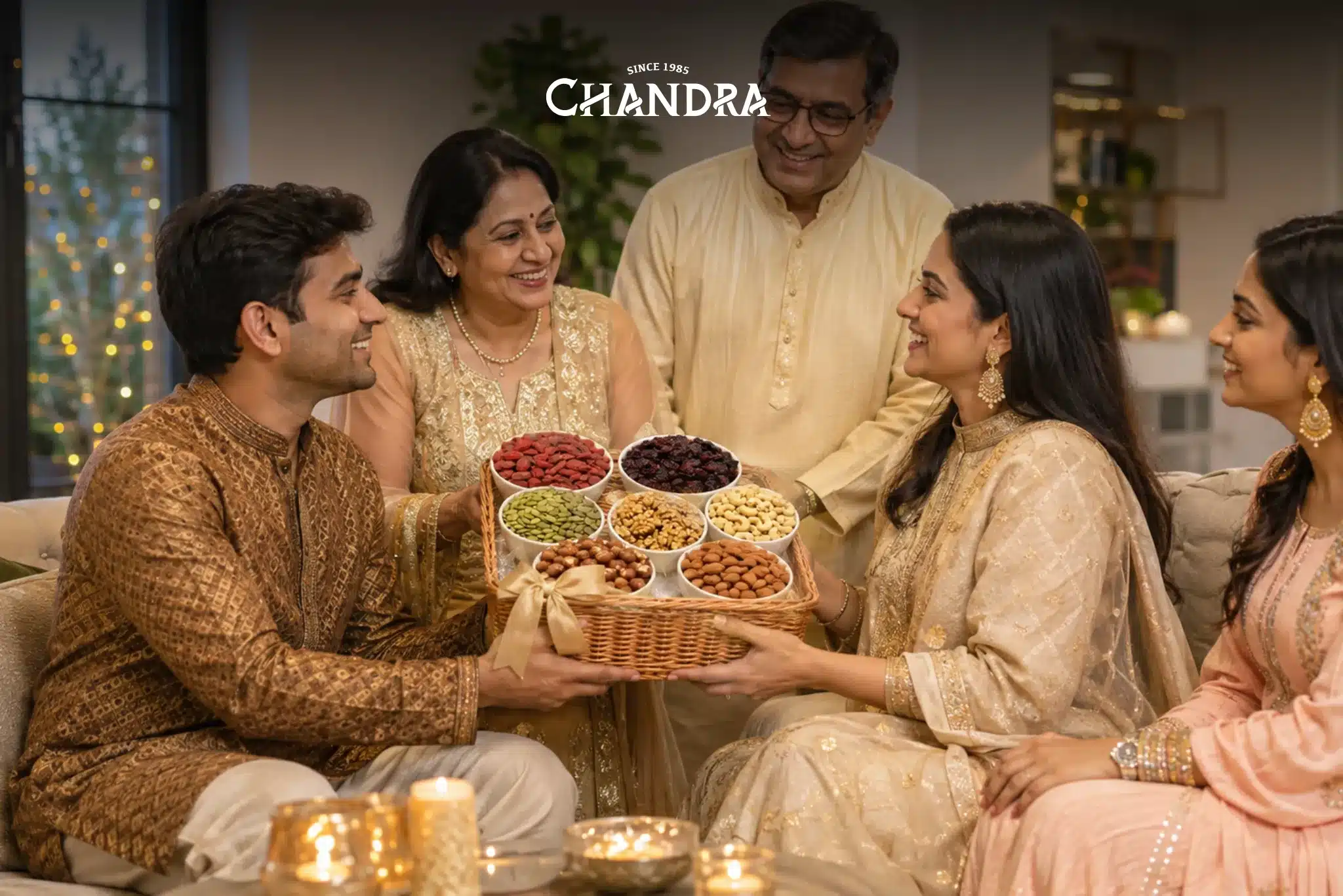
The same savoury Diwali snacks double as presents. A box of nasta is still one of the most welcome things to carry when visiting on Bestu Varas, and plenty of families send boxes to relatives who can’t travel. If you’re putting together presents this year, our guide to traditional Diwali gifts covers snack and dry fruit ideas for family, friends and clients.
Frequently Asked Questions
What are traditional Gujarati Diwali snacks?
The classic Gujarati Diwali snacks are fafda, gathiya, chakri, sev, boondi and para. Most are made from besan and seasoned with ajwain, pepper and chilli. They’re served on a shared plate through all five days, with sweets kept on a separate dish.
When is Diwali 2026 in the UK?
Diwali falls on Sunday 8 November 2026. The festival starts with Dhanteras on Friday 6 November, followed by the Gujarati New Year on Monday 9 November and Bhai Dooj on Tuesday 10 November.
Can I buy Gujarati Diwali snacks online in the UK?
Yes. Chandra Foods delivers traditional Gujarati snacks across the UK, with free delivery on orders over £40. Ordering before Dhanteras means everything arrives before the busiest evenings.
How do I keep Diwali savoury snacks crisp for all five days?
Keep opened packs in airtight tins, away from heat and steam from the kitchen. Top up the plate in small amounts rather than emptying full packs, and keep sweets on a separate plate so they don’t pass moisture to the savoury pieces.
What’s the difference between Bhavnagari gathiya and thikha gathiya?
Bhavnagari gathiya is thicker, with a softer centre, and comes from the Bhavnagar region of Saurashtra. Thikha gathiya is spicier. Many families put both on the Diwali plate so there’s something for every taste.