
Desiccated coconut is one of those simple pantry ingredients that quietly does a lot of heavy lifting in the kitchen. Whether you are baking, cooking curries, or making healthy snacks, it adds natural flavour, texture, and a subtle sweetness without needing any extra effort.
In the UK, it has become a staple ingredient for home bakers and health-conscious cooks looking for versatile, shelf-stable ingredients. You will often find it used in cakes, biscuits, energy balls, granola, and even savoury dishes.
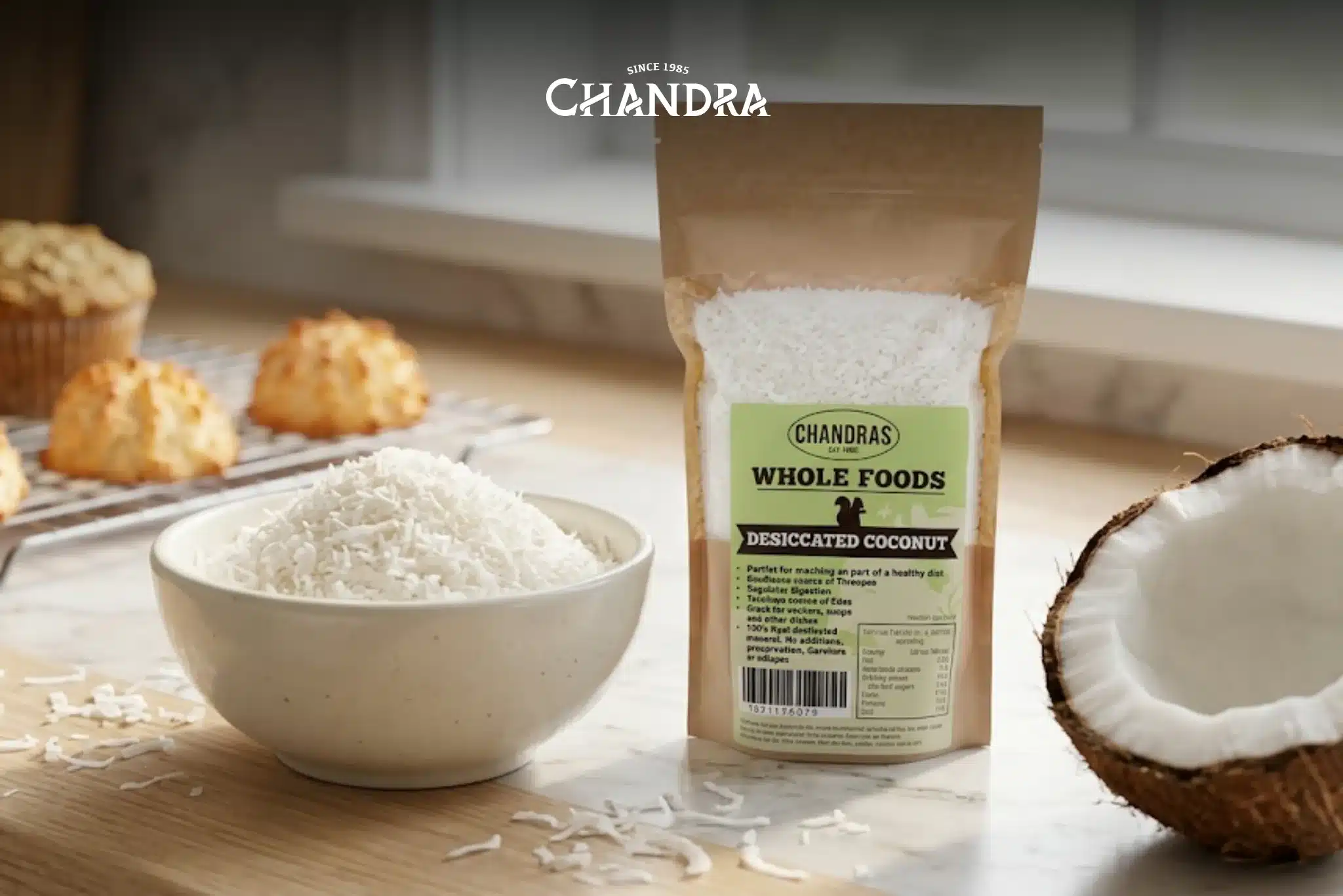
A popular option for high-quality coconut in the UK is Chandra Foods Desiccated Coconut, known for its fine texture and consistent quality, making it suitable for both everyday cooking and baking.
What Is Desiccated Coconut?
Desiccated coconut is made from the white flesh of mature coconuts that has been shredded, dried, and finely processed to remove most of its moisture.
The result is a light, dry ingredient with a soft texture and a naturally sweet, nutty coconut flavour. Because the moisture is removed, it has a long shelf life and is easy to store.
It is different from fresh coconut because it is fully dehydrated, meaning it does not add liquid to recipes. This makes it especially useful in baking where consistency matters.
In simple terms, it is coconut meat in a dried, finely grated form that is ready to use straight from the pack.
Desiccated Coconut UK: Why It’s So Popular
In the UK, desiccated coconut has become increasingly popular due to changing cooking habits and the rise of home baking.
Some of the main reasons include:
- Easy availability in supermarkets and online stores
- Long shelf life compared to fresh coconut
- Perfect for baking and dessert recipes
- Suitable for vegan and plant-based diets
- Works in both sweet and savoury dishes
It is also widely used in Indian, Caribbean, and Asian cooking, which makes it a multicultural kitchen essential across UK households.
Types of Desiccated Coconut
Not all desiccated coconut is the same. It comes in different textures depending on how it is processed.
Fine Desiccated Coconut
Very soft and powder-like. Ideal for cakes, cookies, and smooth batters.
Medium Desiccated Coconut
Slightly coarser texture. Works well in energy balls, granola, and toppings.
Coarse Desiccated Coconut
Chunkier flakes that add texture and crunch to desserts and savoury dishes.
Each type serves a different purpose depending on the recipe you are preparing.
Nutritional Value of Desiccated Coconut
Desiccated coconut is not just about flavour, it also contains useful nutrients.
It typically provides:
- Healthy fats (mainly medium-chain fatty acids)
- Dietary fibre
- Small amounts of protein
- Minerals such as iron, copper, and manganese
- Natural energy from fats
Because it is calorie-dense, it is best used in balanced portions, especially in baking and snacks.
Health Benefits of Desiccated Coconut
Supports Energy Levels
The healthy fats in coconut provide a steady source of energy, making it a popular ingredient in snack bars and breakfast foods.
Good Source of Fibre
It helps support digestion and keeps meals more filling.
Naturally Dairy-Free
A great alternative for people avoiding dairy in their diet.
Suitable for Vegan Cooking
It works well in plant-based recipes, adding texture and richness.
Rich in Natural Nutrients
Contains trace minerals that support overall wellbeing.
Uses of Desiccated Coconut in Everyday Cooking
Desiccated coconut is extremely versatile and fits into many types of recipes.
Baking
It is commonly used in:
- Cakes
- Muffins
- Cookies
- Brownies
- Coconut macaroons
It adds moisture, flavour, and a soft texture to baked goods.
Indian and Asian Cooking
Widely used in:
- Chutneys
- Curries
- Rice dishes
- Sweets like ladoos and barfi
Healthy Snacks
Perfect for:
- Energy balls
- Protein bites
- Granola mixes
- Homemade snack bars
Breakfast Additions
You can sprinkle it on:
- Porridge
- Smoothie bowls
- Yoghurt
- Muesli
Dessert Toppings
Adds texture to:
- Ice cream
- Cheesecakes
- Puddings
- Fruit salads
Easy Recipes Using Desiccated Coconut
Here are a few simple ideas you can try at home.
Coconut Energy Balls
Mix desiccated coconut with dates, oats, and a spoon of nut butter. Roll into small balls and refrigerate.
Coconut Cake Topping
Sprinkle desiccated coconut over frosted cakes for a soft, snowy finish.
Coconut Chutney
Blend coconut with green chilli, ginger, and yoghurt for a fresh side dish.
Coconut Cookies
Add desiccated coconut to cookie dough for extra texture and flavour.
How to Store Desiccated Coconut
Proper storage is important to maintain freshness and flavour.
Best practices include:
- Store in an airtight container after opening
- Keep in a cool, dry place away from sunlight
- Avoid moisture exposure
- Refrigerate in warmer climates for longer shelf life
Because coconut contains natural oils, it can lose freshness over time if not stored correctly.
Desiccated Coconut vs Fresh Coconut
Both come from the same source but are used differently.
Fresh Coconut
- Contains high moisture
- Needs preparation before use
- Best for fresh dishes and drinks
Desiccated Coconut
- Fully dried and shelf-stable
- Easy to use directly in recipes
- Ideal for baking and cooking
Desiccated coconut is more convenient for everyday cooking, especially in busy kitchens.
Tips for Using Desiccated Coconut
To get the best results, keep these tips in mind:
- Soak it in warm milk or water for softer texture in cakes
- Toast it lightly for a deeper flavour
- Add it gradually in baking recipes to balance texture
- Combine with flour in gluten-free baking for better structure
These small adjustments can significantly improve your results.
Why Desiccated Coconut Is a Pantry Essential
Desiccated coconut is one of those ingredients that fits into almost every type of cooking style.
It is:
- Easy to store
- Highly versatile
- Naturally flavourful
- Suitable for multiple diets
- Budget-friendly and long-lasting
This makes it a smart ingredient for both everyday cooking and special recipes.
Premium options like Chandra Foods Desiccated Coconut are especially preferred in UK kitchens because of their consistent texture and reliable quality.
Frequently Asked Questions (FAQ)
- What is desiccated coconut made from?
- It is made from the white flesh of mature coconuts that is shredded and dried until most of the moisture is removed.
- Is desiccated coconut the same as shredded coconut?
- Not exactly. Desiccated coconut is usually finer and drier, while shredded coconut is thicker and more moist.
- Can I use desiccated coconut in baking?
- Yes, it is commonly used in cakes, cookies, muffins, and desserts.
- Is desiccated coconut healthy?
- It contains fibre, healthy fats, and minerals, but it is also calorie-dense, so moderation is recommended.
- How long does desiccated coconut last?
- If stored properly in an airtight container, it can last several months.
- Can I eat desiccated coconut raw?
- Yes, it can be eaten directly or added to recipes without cooking.
- Is desiccated coconut good for weight management?
- It can support satiety due to fibre and fat content, but portion control is important.
Conclusion
Desiccated coconut is a simple yet powerful ingredient that adds flavour, texture, and nutrition to a wide range of recipes. From baking and desserts to curries and healthy snacks, it fits easily into everyday cooking.
In the UK, it has become a kitchen essential due to its versatility, long shelf life, and ease of use. Whether you are an experienced baker or just starting out, desiccated coconut is one ingredient worth keeping in your pantry.