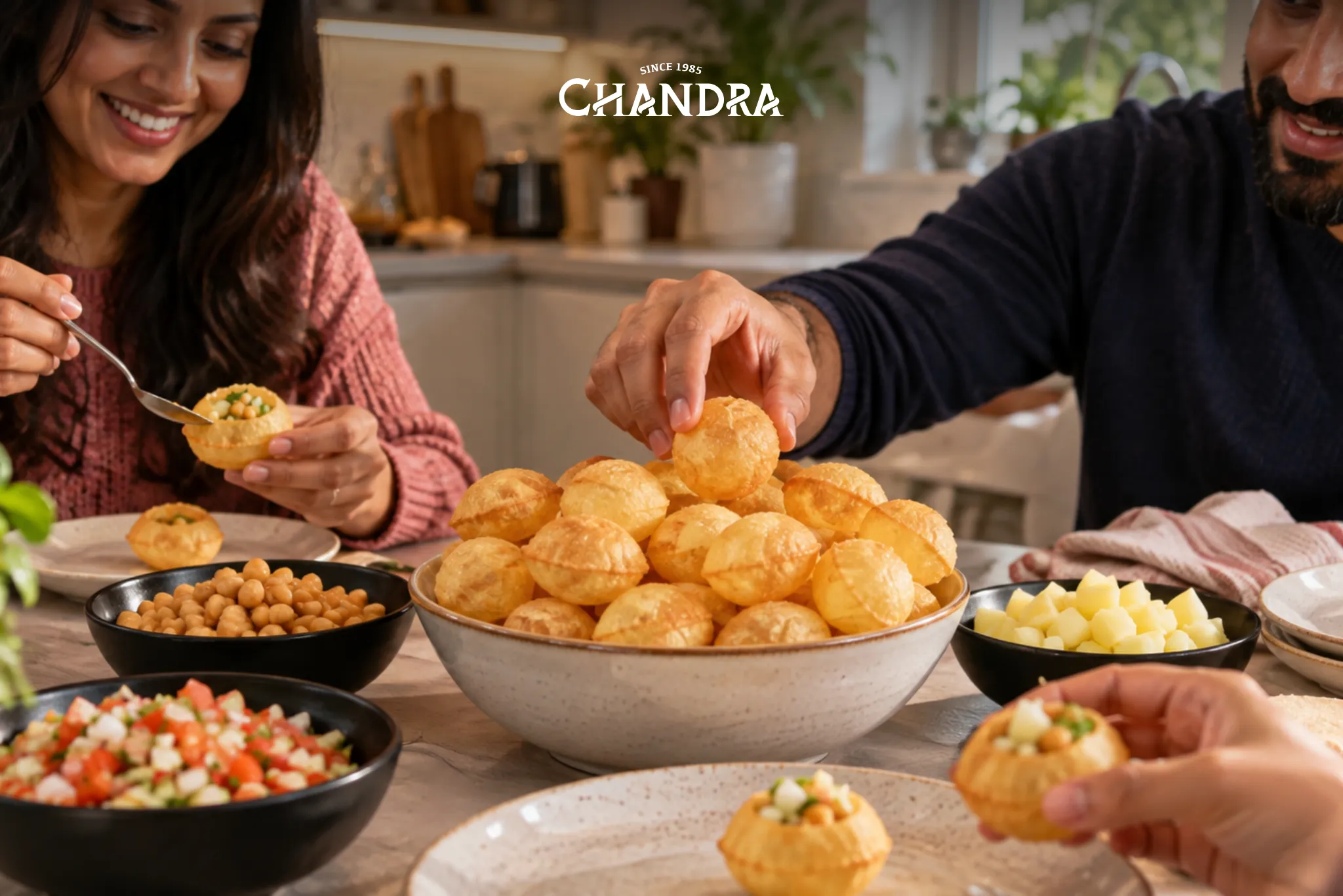
Order it in Mumbai and it’s pani puri. Ask for it in Delhi and you’ll hear golgappa. Cross into Kolkata and it becomes puchka. Head to Hyderabad or parts of the south and you might hear gup chup. Four names, four regions, four sets of people who’d each insist their version is the real one – and underneath all of it, the same basic idea: a hollow, crisp puri, cracked open, filled, and eaten in one bite before it can fall apart.
For anyone in the UK encountering pani puri uk for the first time, or trying to recreate a specific regional version they grew up with, the naming confusion is usually the first hurdle. The second is figuring out what actually goes into it, since “pani puri” describes an assembly, not a single packaged product.
Why One Snack Has Four Names
India’s linguistic map roughly tracks the naming split. “Pani puri” – literally “water puri” – is the dominant name across Maharashtra and much of western India. “Golgappa,” used widely in Delhi and the north, likely derives from “gol” (round) describing the shape of the puri itself. “Puchka” is Bengali, tied to Kolkata’s specific version of the dish, which tends to use a tangier, more tamarind-forward water than other regions. “Gup chup” shows up across parts of eastern and central India, and by most accounts describes the sound of eating it quickly and quietly – “gup chup” also means “hush” or “silently” in Hindi, which fits a snack that’s eaten in one fast bite, mid-conversation, without much ceremony.
None of the names is more “correct” than the others. They reflect regional dialect and regional variation in how the dish is actually made – the water differs, the filling differs, even the size of the puri can differ slightly from state to state – more than they reflect any single original version splintering into four.
What Actually Goes Into a Plate of Pani Puri
Regardless of what it’s called locally, the components stay broadly consistent:
The puri (shell). A small, hollow, deep-fried sphere, usually made from semolina or a wheat-semolina mix, puffed during frying so it’s crisp and light enough to crack open with a thumb. This is the part most likely to go wrong for home cooks – puris need real heat and the right dough hydration to puff properly, which is why most households, in India and abroad, buy them ready-made rather than frying from scratch.
The pani (water). A thin, intensely flavoured liquid – usually mint and coriander blended with tamarind, green chilli, roasted cumin and black salt. This is the part that varies most by region: Kolkata’s puchka water tends toward sharper and more tamarind-forward, while western Indian pani puri water often leans more herbal and less sour.
The filling. Typically boiled potato, chickpeas, and sometimes sprouted moong, spiced and mixed with chutney.
The finishing touch. A scatter of fine sev or a spoon of yoghurt, depending on the regional style and the individual making it.
Buying Pani Puri Shells and Ingredients in the UK
Making genuinely good puris from scratch is a real skill – they need to puff evenly and stay crisp, which is harder to pull off consistently at home than it looks in a five-minute recipe video. That’s why most UK households, and most Indian households too, buy the shells rather than frying their own.
If you’re shopping to buy pani puri online uk for the first time, the main thing to check is freshness and crispness – a stale batch of puris won’t hold their shape when cracked open, and they’ll go soft the moment the pani hits them instead of staying crisp for the few seconds it takes to eat.
For anyone assembling everything from scratch at home rather than buying a pre-made kit, a pani puri kit home uk setup with puris, a spice mix for the water, and a filling base takes most of the guesswork out of getting the balance right on a first attempt – useful if you’re cooking for guests and don’t want to be adjusting seasoning under pressure.
The individual pani puri ingredients uk shoppers need beyond the shells themselves are straightforward to source: tamarind concentrate, chaat masala, black salt (kala namak) and roasted cumin powder are the four that make or break the water’s flavour, and none of them are hard to find in a well-stocked Indian grocer or online.
What Makes a Good Pani Puri Shell
Not all puris are equal, and the difference shows the moment you try to fill one. A well-made shell should be uniformly thin, puffed into a proper hollow sphere with no dense or doughy patches, and crisp enough to crack cleanly with light pressure from a thumb rather than needing to be broken with a spoon.
Shoppers looking for the best pani puri shells uk has to offer should check for consistent size across the batch – uneven puris mean uneven cooking, and a mix of over-fried and under-fried shells in the same pack. Freshness matters just as much as manufacturing quality here: even a well-made puri goes soft and chewy within weeks if it’s not stored and sold properly, so checking production dates rather than relying on appearance alone is worth the extra step.
Pani Puri’s Papdi Cousins: What to Know
Pani puri sits within a wider family of chaat built on fried dough bases, and it’s worth understanding where it fits relative to its closest relatives, since UK shoppers often conflate the two.
Papdi is flat, not hollow – a crisp round or oval disc, rather than a puffed sphere. It’s the base for papdi chaat, a different but related dish where the papdi is topped rather than filled, layered with yoghurt, chutney, chickpeas and sev instead of being cracked open and eaten whole. Anyone browsing chaat papdi online should know this distinction going in – papdi and puri are cooked from similar doughs but serve completely different roles on the plate.
Papdi chaat itself deserves a mention because it’s often ordered alongside pani puri at restaurants and mistaken for a variation of the same dish. It isn’t. A plate of papdi chaat uk diners order is assembled and eaten with a fork, built up in layers rather than consumed in single bites – closer in eating style to a loaded nacho plate than to pani puri’s quick-fire format.
Pharsi puri, a Gujarati cousin in the same fried-dough family, is flakier and more savoury-spiced than either pani puri shells or papdi, and tends to be eaten on its own with tea rather than as a chaat component. For households looking to buy pharsi puri online, it’s worth knowing this one isn’t a pani puri substitute – it belongs to nashto, the Gujarati savoury-breakfast category, rather than the chaat family pani puri sits in.
A Few Common Questions
- Is golgappa the same as pani puri?
Yes – same dish, different regional name. Golgappa is the name most commonly used in Delhi and northern India; pani puri is more common in Maharashtra and western India. The preparation is broadly the same, though the water’s flavour balance can vary slightly by region. - Why does my pani puri water taste flat compared to what I remember from India?
Usually a balance issue between the tamarind, mint and black salt. Freshly made pani should taste sharp, slightly sour, and cooling all at once – if it tastes one-note, it’s often under-seasoned with black salt or roasted cumin, both of which round out the flavour rather than adding heat. - Can I make the puris ahead of time?
The pani (water) and filling can be made a day ahead and kept chilled. The puris themselves are best bought or made fresh and kept in an airtight container – once they go soft, there’s no fixing them, so they should be the last thing you prepare, or bought ready-made close to serving. - What’s the difference between puchka and pani puri, beyond the name?
Mostly the water. Puchka, as made in Kolkata, tends to use a more tamarind-forward, tangier pani than the herbal, mint-heavy water common in western Indian pani puri. The shells and basic assembly are otherwise very similar.