
Walk into a Gujarati kitchen before Diwali and you’ll smell it before you see it: sesame, cumin and hot oil, with a coil of dough sizzling in the pan. Ask the family what they’re making and they’ll say chakri. Ask a Maharashtrian neighbour and you’ll hear chakli. Ask a friend from Chennai and it’s murukku. If you’ve been searching for chakli online and wondering whether it’s the same snack as the chakri on a Gujarati menu, the short answer is yes. This guide explains why the spelling changes and what really does differ from kitchen to kitchen.
Why One Snack Has So Many Names
Chakri and chakli both come from the Sanskrit word chakra, meaning wheel or circle. Look at one and the reason is obvious. The dough is pressed into a flat coil, round and round, like a wheel. The name simply follows the shape.
What changes is the language. Gujarati speakers say chakri. Marathi speakers say chakli. Hindi speakers use either. When those words are written in English letters, the “r” and the “l” sit close enough that spellings drift. Nobody is getting it wrong. They’re writing down words from different scripts and different regional habits.
Further south the snack has other names again. In Tamil Nadu it’s murukku, from a Tamil word for twisting. In Kannada it’s chakkuli. In the UK, shops usually pick the spelling their customers use, so the same product can appear as chakri, chakli or murukku depending on where you look. That’s why it’s worth searching for all three.
How a Chakri Actually Gets Made
The method is the same everywhere, and it’s more skilful than it looks. Flour goes into a bowl with salt, sesame seeds, cumin, chilli and often ajwain. In many recipes the flour is steamed or gently cooked first, which makes the dough smooth and easy to press. The dough then goes into a press fitted with a star-shaped plate. The cook squeezes it out in one continuous coil, like a snail shell, and slides it into hot oil.
The frying is where experience shows. The oil has to be hot enough to set the spiral quickly, but not so hot that the outside browns before the inside cooks. The old kitchen test is to listen. When the bubbling settles down, the moisture has gone and the chakri is ready.
A well-made one is crisp all the way through, not rock hard. It should snap cleanly, taste of cumin and sesame first and chilli second, and leave your fingers only lightly oily. If you’re comparing options for authentic chakri online, that’s the checklist to hold them against.
Chakri, Chakli and Murukku: Where the Recipes Really Differ
So is there any difference beyond the spelling? Sometimes, and it usually comes down to the flour and the spice. Broadly:
- Gujarati chakri. Usually built on rice flour, with sesame, cumin, chilli and ajwain. It tends to be crisp, lightly spiced and easy to eat by the handful. Gujarati families often make a fenugreek version too.
- Maharashtrian chakli. Famous for bhajani, a roasted multigrain flour that typically includes rice, lentils and spices. That gives it a deeper, nuttier flavour, and it’s a fixture on the Diwali faral plate in Maharashtra.
- Tamil murukku. Traditionally made with rice flour and roasted urad dal flour, often flavoured with cumin or sesame. Some versions are thinner and finer than the North Indian spiral.
Treat those as tendencies, not rules. Ask ten families and you’ll get ten recipes, each one “the right way” according to whoever’s mother made it. In the UK the lines blur even more. A customer might call a Gujarati chakri by the name they grew up with, whichever spelling that is. If you’re ever unsure, read the ingredient list rather than the name on the pack. It tells you far more than the spelling does.
Methi Chakri: The Fenugreek Twist
Add fresh fenugreek leaves (methi) to the dough and you get methi chakri. The leaves bring a gentle, earthy bitterness that cuts through the richness of the fry. That’s why many people reach for it with a strong, sweet cup of chai. It looks like the plain version, with flecks of green through the spiral, and the smell while frying is unmistakable.
It’s also a good pick for anyone who finds plain chakri a little too simple. If you’d like to try it, you can buy methi chakri online from Chandra Foods and have it delivered across the UK. Keep a pack of each and put them side by side. Most households have a clear favourite within minutes.
Chakri and the Festive Table
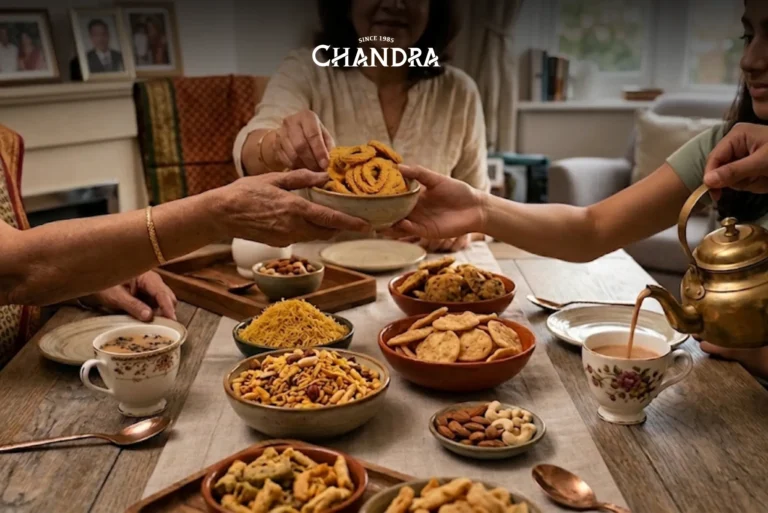
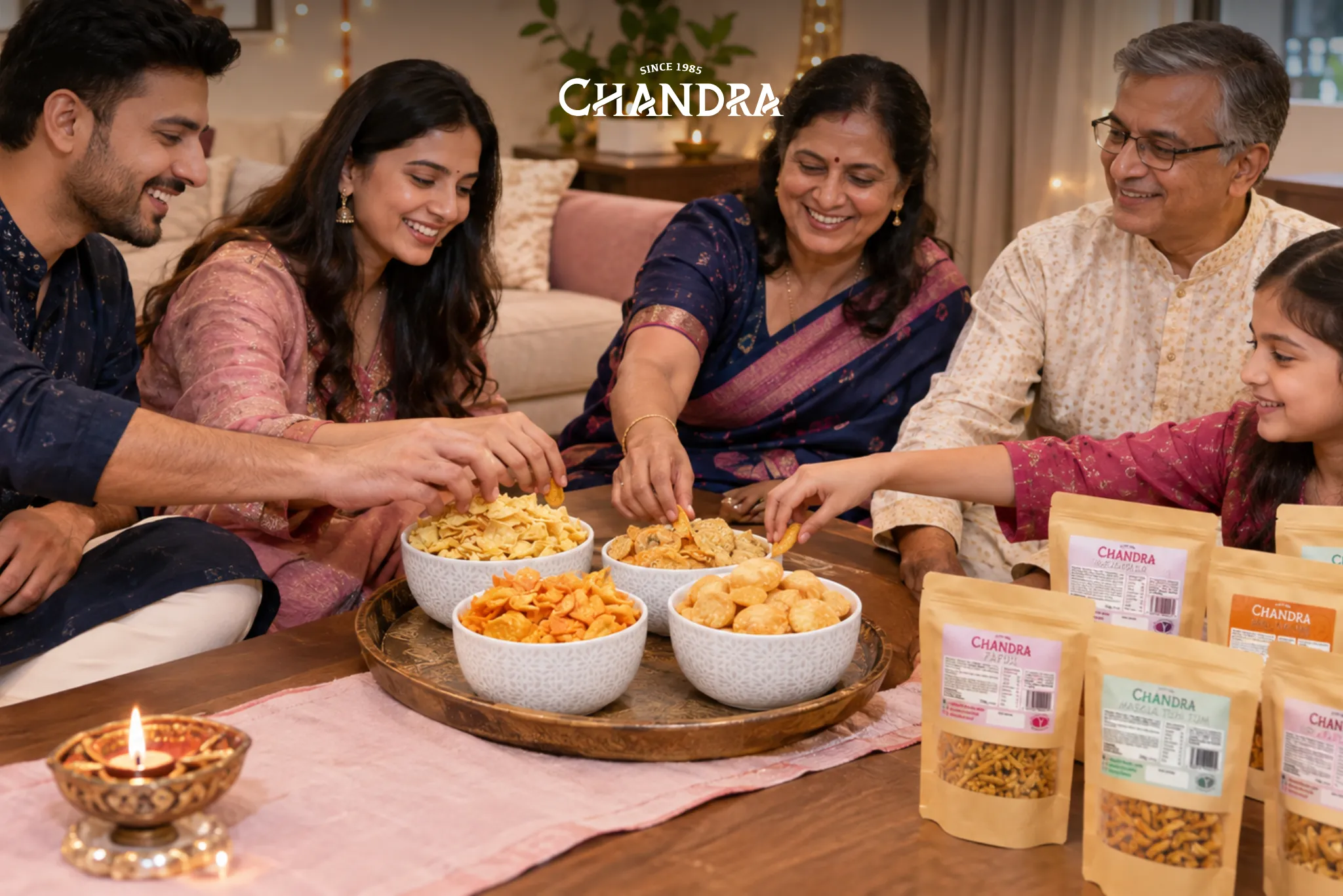
Ask anyone who grew up in Gujarat or Maharashtra about Diwali food and chakri comes up within seconds. In the days before the festival, kitchens turn into small factories, with trays of chakri, sev, papdi and other savouries cooling on every surface. The whole family takes a turn at the press, and the first taste-test is a small ceremony of its own.
Not everyone has the time, or the family kitchen, to fry for three days straight. That’s especially true in the UK, where work and school don’t stop for festivals. If you’d rather spend your evenings with guests than at the stove, a Diwali snack box that brings chakri, methi chakri, papdi and sev together is an easy way to fill the table without any frying at all.
How to Serve Chakri
Chakri is a sociable snack, and it doesn’t need much dressing up. It’s sturdy enough to sit out on the table for an afternoon, which is exactly why it’s a favourite when visitors are coming.
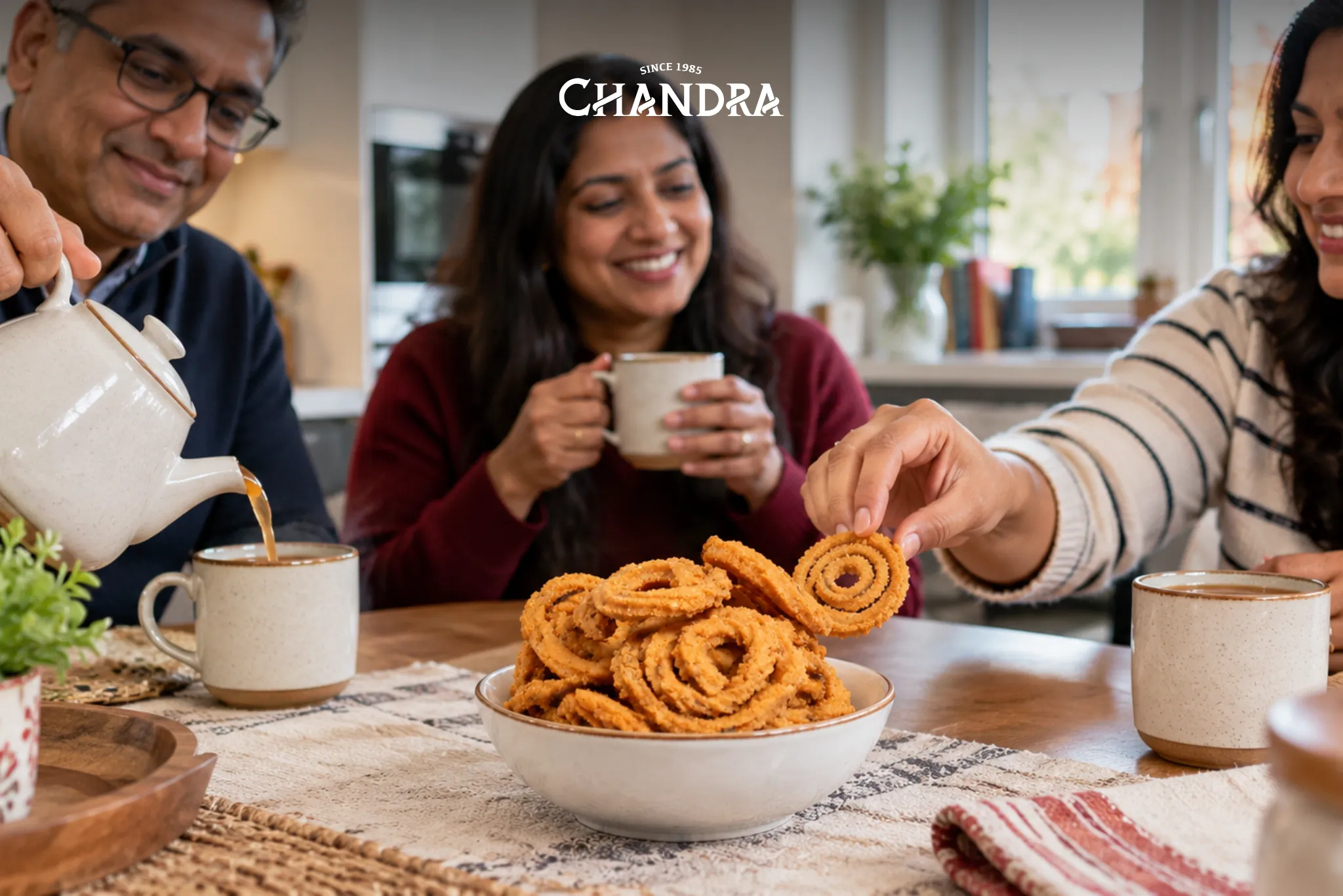
- With chai. The classic. Most people eat it dry, though nobody minds a dunked corner.
- With chutney. Green coriander chutney or a sweet tamarind chutney both work, and either gives the plain version a lift.
- As a topping. Crush a small handful over curd or a cucumber salad for extra crunch.
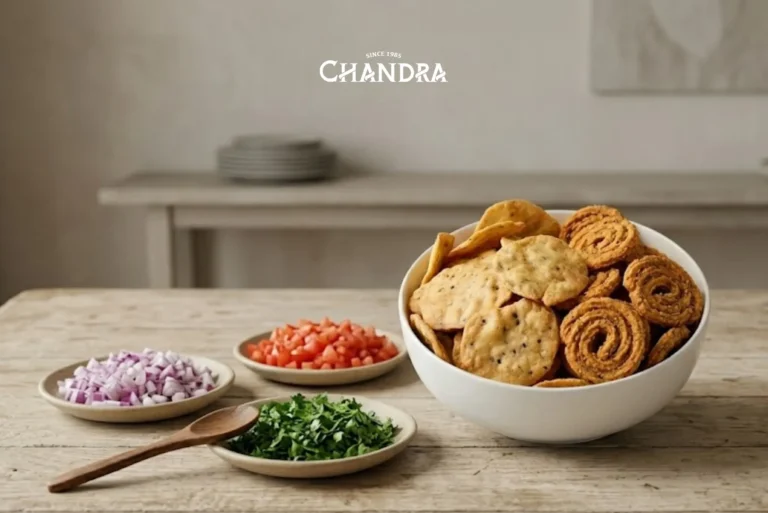
- On a platter. Put chakri beside fafda, sev and papdi and you have a proper Gujarati savoury spread, with a range of shapes and textures.
One practical tip: serve chakri in a shallow bowl at room temperature and top it up as you go, rather than filling the bowl once. It stays crisper that way, and nobody has to watch a stale spiral go soft at the bottom of the dish.
Buying Chakli Online in the UK: What to Look For
Searching for chakli online throws up plenty of options, and the pack photos all look similar. The difference shows up once you open the box. A few things are worth checking before you order:
- Colour. Look for an even golden shade. Dark brown usually means over-fried or old oil.
- Smell. It should smell of toasted sesame and spice. A flat or greasy smell is a warning sign.
- Texture. A good chakri snaps. If reviews mention rock-hard or oily pieces, move on.
- Ingredient list. Short and recognisable: flour, oil, spices, sesame, salt.
- Allergens. Chakri commonly contains sesame and often wheat, so read the allergen information carefully if this matters in your household.
- Packaging. A well-sealed pack keeps the crunch for longer, and it should arrive with few broken pieces.
The best chakri online UK sellers are open about all of this. If you’d like to see how a full range fits together, browse the whole collection of Indian and Gujarati snacks and pick a few varieties to try side by side.
Keeping Chakri Crisp
Store chakri in an airtight container in a cool, dry cupboard, away from the kettle and cooker. Use a dry hand or spoon every time, because a little moisture softens a whole batch. If a few spirals do go soft, warm them in a low oven for a few minutes and let them cool completely before putting them back in the tin.
Chakri or Chakli? Both Are Right
Chakri, chakli, murukku: the spelling follows the language, the recipe follows the family and the spiral stays the same. Whether you type chakri or chakli online, you’re looking for the same crisp, spiced, coiled snack. Read the ingredient list, check the freshness and pick the one you like best. If you’d like to see what else belongs on the plate beside it, our guide to Indian street food snacks covers the other classics.
Frequently Asked Questions
- Are chakri and chakli the same snack?
Yes. Both are spiral-shaped fried snacks made by pressing dough through a star-plate press into hot oil. Chakri is the Gujarati spelling and chakli is the Marathi one. The recipe can vary slightly from family to family. - What is the difference between chakri and murukku?
They’re close relatives. Murukku is the Tamil name, and it’s traditionally made with rice flour and roasted urad dal flour. Gujarati chakri is usually rice-flour-forward with sesame, cumin, chilli and ajwain. - Where can I buy chakli online in the UK?
Look for a UK seller with fresh stock, clear allergen information and a well-sealed pack. Chandra Foods sells chakri and methi chakri online with UK delivery. - Is chakri gluten-free?
Not always. Some recipes include wheat flour, and even rice-flour versions can be made where wheat is handled. Always check the allergen information on the pack. - How long does chakri stay fresh?
Stored airtight in a cool, dry place, it stays crisp for a few weeks. Check the best-before date on the pack. - What is methi chakri?
It’s chakri made with fresh fenugreek leaves, which add a mild, earthy bitterness and green flecks through the spiral.