Look along the shelf of any Indian food shop and you’ll find a dozen bags labelled sev. They all look like golden tangles of fried gram flour, yet they taste and behave very differently. If you’ve been wondering how ratlami sev UK shops sell differs from nylon sev, and which one belongs in your basket, this guide sorts it out style by style. By the end you’ll know which sev suits your chai, your chaat and your cooking.
What Is Sev?
Sev is one of the simplest snacks in Indian cooking. Gram flour (besan) is mixed into a dough with salt, spices and a little oil, then pressed through a perforated press (a jhara) straight into hot oil. The dough comes out as strands, which fry until golden and crisp.
That’s the whole method. What separates one sev from another is the thickness of the strands and the seasoning. A fine, mild sev feels like a light crunch on top of a dish. A thick, peppery sev is a snack in its own right. Sev is eaten by the handful with tea, scattered over chaat and poha, stirred into snack mixes, and cooked into curries.
Nylon Sev: The Fine, Light One
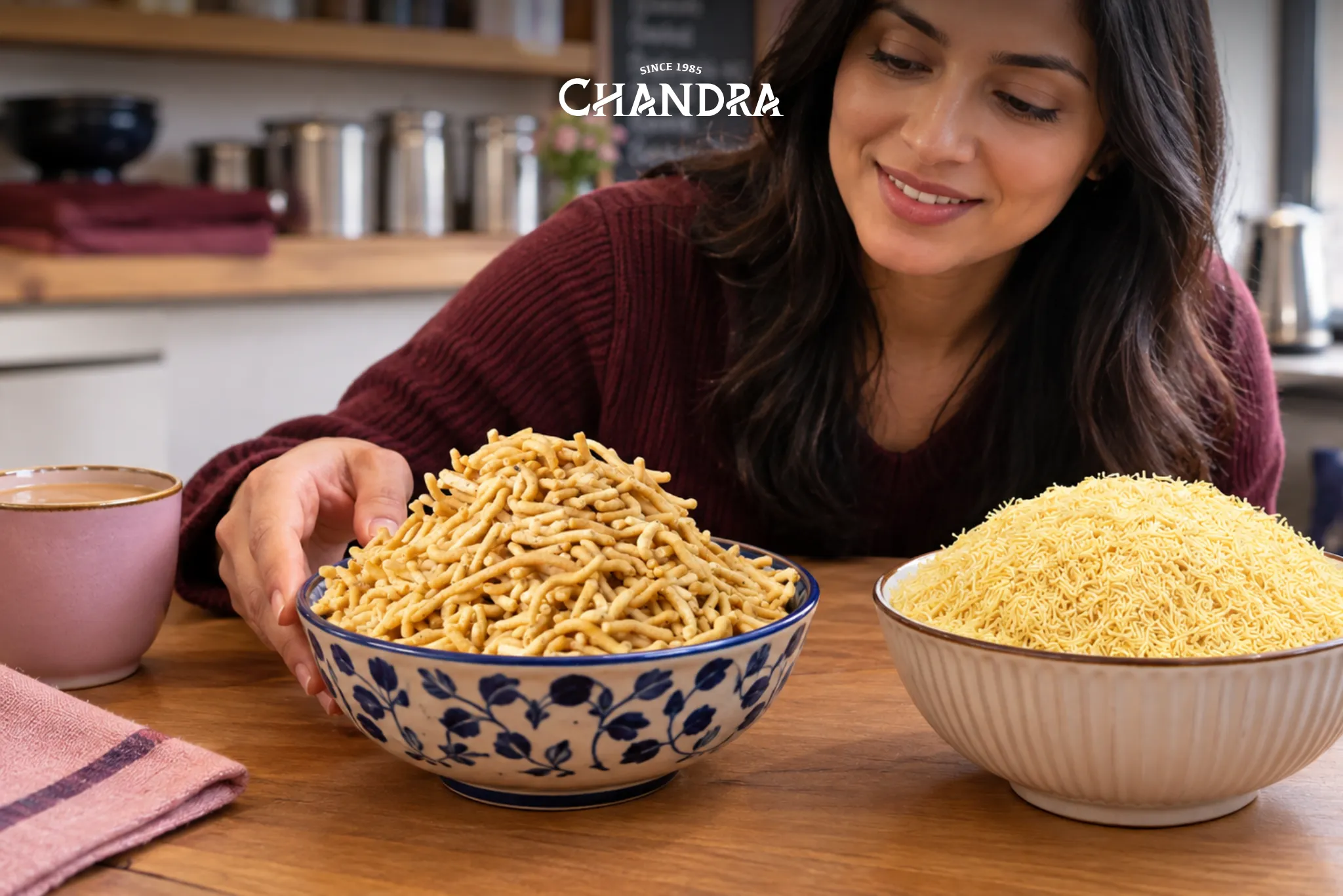
Nylon sev is the finest of the lot. The strands are so thin and delicate that they’re named after the synthetic thread, and you’ll also see it sold as zero-number sev or fine sev. It’s a staple in Gujarati kitchens, and it’s the one you’ll find heaped on top of bhel, sev puri and dahi puri.
The flavour is mild. Chandra’s nylon sev is made from gram flour, water, salt, turmeric and rapeseed oil, and that short list is typical. You taste the gram flour first, then a little salt, so it doesn’t fight with chutneys, curd or the flavours of the dish underneath. Its lightness is the point. It adds crunch without weight, which is why customers also sprinkle it over poha, sandwiches and even salads.
The one thing to know is that fine sev softens quickly once it meets moisture, so add it at the last moment. If you’d like to stock a pack, you can find nylon sev UK delivery is available from Chandra Foods.
Ratlami Sev: The Bold One
Ratlami sev is the opposite personality. It takes its name from Ratlam, a city in Madhya Pradesh, and it’s thicker, spicier and far more aromatic. The signature is a warm blend of black pepper, cloves and chilli, and sometimes a hint of hing (asafoetida). One bite tells you it isn’t shy.
That’s why ratlami sev is more of a snack than a topping. It’s excellent with chai, especially when you want something sharp against a sweet, milky cup. It also works as a crunchy finish on poha, upma and sprout salads, and it makes a punchy addition to snack mixes. Because it’s spicier, start with a small bowl if you’re feeding children or anyone who avoids heat.
If you’re looking to buy ratlami sev UK shops stock, check that the pack lists real spices and that the sev is thick, golden and not crumbled. Chandra’s range includes a ratlami sev UK option alongside the finer styles, so you can compare them side by side.
Other Styles of Sev Worth Knowing
Once you’ve tried these two, a few other styles are worth looking for:
- Gathiya (ganthiya). Thick, soft and mild, with ajwain and pepper. It’s the classic Sunday snack and a perfect partner for chai. Bhavnagari gathiya is the best known regional version, and it’s softer and less crunchy than sev.
- Bhujia. Thin and crisp, and traditionally made with moth bean flour in the Bikaneri style. Aloo bhujia uses potato and is a favourite in snack mixes.
- Flavoured sev. You’ll find palak (spinach), tomato and lasan (garlic) sev, each with its own colour and taste.
- Thick “cooking” sev. Coarser strands sold for curries such as sev tameta nu shaak and sev usal, where fine sev would dissolve.
Ratlami vs Nylon Sev at a Glance
| Nylon sev | Ratlami sev | |
| Thickness | Very fine, thread-like | Thicker, sturdier |
| Flavour | Mild, light | Bold, peppery, clove-spiced |
| Heat | Gentle | Noticeable |
| Texture | Delicate, airy crunch | Firm, crunchy bite |
| Best for | Chaat, bhel, poha, garnish | Chai, snacking, toppings, snack mixes |
| Watch out for | Softens quickly with moisture | Too spicy for some |
Which Sev for Which Dish?
Here’s the quick guide most Gujarati households use without thinking:
- Bhel, sev puri and dahi puri. Nylon sev, every time. Layer it over crisp puffed chaat papdi, chutneys and curd, and add it last so it stays crisp.
- Poha and upma. Either. Nylon for a light finish, ratlami if you like heat.
- Chai time. Ratlami or gathiya, for something with bite next to a sweet, milky cup.
- Curries like sev tameta nu shaak. A thicker sev, so the strands hold their shape in the gravy.
- Snack mixes. A mixture of both, with peanuts and dried fruit, for texture and heat.
- Salads and sandwiches. Nylon sev, sprinkled just before serving.
Buy Sev Online UK: What to Check Before You Order
Searching for the best sev online UK sellers offer turns up plenty of identical-looking bags. The differences appear once the pack is open, so it helps to know what to look for:
- A short ingredient list. Gram flour, oil, salt and spices. If you can’t recognise half the label, that’s a sign.
- Colour. An even golden shade. Dark brown often means old oil or over-frying.
- Crumbs. A little breakage is normal, but a bag of dust means poor handling.
- Smell. It should smell of toasted gram flour and spice, not stale oil.
- Regional character. Traditional Gujarati sev should taste like it. Fine and mild for nylon, peppery and warm for ratlami.
- Allergens. Sev is traditionally gram flour, which doesn’t contain gluten, but it’s often packed where wheat, peanuts and sesame are handled. Read the allergen statement.
For authentic Indian sev and the best Indian sev UK families order, a maker with real history matters. Chandra Foods has been making sev in the UK since 1985. To see how sev sits alongside chakri, papdi, gathiya and the rest, browse the full range of Indian snacks.
Storing Sev
Keep sev in an airtight container in a cool, dry cupboard, away from the cooker and kettle. Steam is its biggest enemy. Use a dry spoon or dry fingers each time, and keep a small working tin with the rest sealed. Fine sev breaks easily, so decant gently rather than tipping. If it goes a little soft, crisp it in a low oven for a few minutes and let it cool completely.
Choosing Between Ratlami and Nylon Sev
You don’t really have to choose. Nylon sev is the light, quiet one that lifts a dish, and ratlami sev is the loud one that stands on its own. Buy both if you cook and snack, and add a thicker gathiya for chai. If you’d like to see how sev fits into a festive spread, a Diwali snack box brings sev and bhujia together with chakri and papdi. And if you’re still deciding on ratlami sev UK-wide, start with a small pack, taste it beside the nylon sev and let your own palate decide.
Frequently Asked Questions
- What is the difference between ratlami sev and nylon sev?
Nylon sev is very fine, mild and delicate, so it’s used mostly as a topping. Ratlami sev is thicker, spicier and flavoured with black pepper, clove and chilli, so it works as a snack in its own right. - Where does ratlami sev come from?
It’s named after Ratlam, a city in Madhya Pradesh, India. The clove-and-pepper spice blend is its signature. - Is nylon sev the same as fine sev?
Yes. Nylon sev is also sold as fine sev or zero-number sev, and it’s the finest style. - Which sev is best for chaat?
Nylon sev. Its fine strands sit lightly over papdi, chutneys and curd, and they don’t overpower the other flavours. - Is sev gluten-free?
Traditional sev is made from gram flour, which doesn’t contain gluten. It can still be packed in a facility that handles wheat, so check the allergen information on the pack. - How long does sev stay fresh?
Stored in an airtight container in a cool, dry place, sev stays crisp for several weeks. Check the best-before date on the pack.