
If you’re building a list of vegan cupboard essentials, Indian snacks deserve a shelf of their own. Gram flour, rice flour, lentils, nuts, seeds and spices are the backbone of traditional Indian snacking, and that’s a lot of plant-based food before you’ve even tried. But “traditionally plant-based” and “vegan” aren’t quite the same thing, because ghee, butter and milk powder turn up in more recipes than you’d expect. This guide covers what belongs in a UK vegan cupboard, how to check a label in two minutes, and how to use it all, from the afternoon cuppa to the party table.
Why Indian Snacks Suit Plant-Based Eating
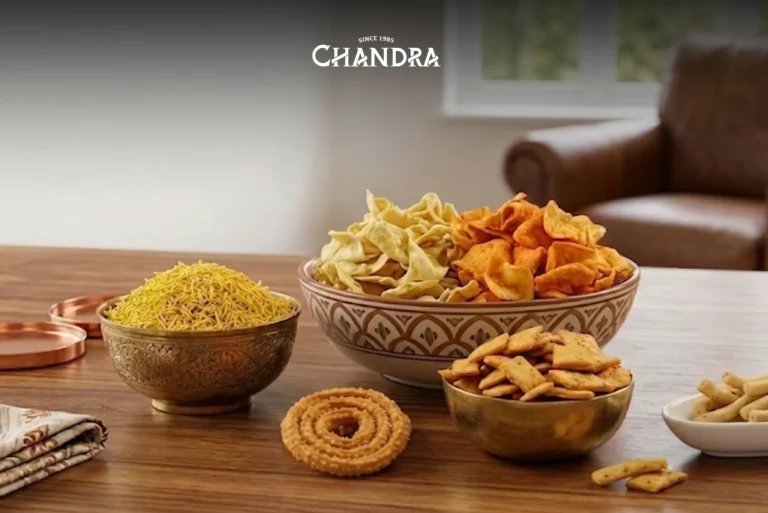
Walk through a list of traditional Indian snacks and most of it starts with plants. Sev and gathiya are gram flour and spices. Papdi and puri are flour, oil and ajwain. Chakri is rice flour and cumin. Chevda is flattened rice or potato sticks with peanuts, curry leaves and raisins. Add roasted nuts, seeds and dried fruit and you have plant based snacks with real character, not just “free-from” substitutes.
There’s a cultural reason too. Fasting days, Jain food traditions and vegetarian households mean generations of cooks have made satisfying, crunchy snacks without meat or eggs. Crunchy vegan snacks aren’t a trend in an Indian kitchen. They’re an ordinary Tuesday.
The catch is dairy. Indian cooking loves ghee, and vegetarian doesn’t mean vegan. So the smart habit isn’t to assume. It’s to check.
The Dairy Question: How to Check a Label in Two Minutes
Whether you want dairy free snacks for yourself or a guest, this quick routine covers most cases:
- Read the ingredients for the obvious. Look for ghee, butter, milk, cream, curd, yoghurt, paneer, whey and milk powder. Ordinary ghee is butter-based, while vegetable ghee is plant-based, so check which one is meant.
- Look at the allergen list. In the UK, milk has to be highlighted in the ingredients. If it’s there, the snack isn’t vegan.
- Notice “may contain milk”. That’s a cross-contact warning, not an ingredient. Whether it matters depends on whether you’re avoiding milk for allergy or lifestyle reasons.
- Check the seasoning. Flavoured mixes and sweet snacks are the most likely places for dairy to hide.
- Look for a vegan mark or statement. It’s helpful when it’s there, but not every pack has one.
- Re-check when you reorder. Recipes and suppliers change.
Chandra Foods says several of its snacks suit vegan diets. Recipes can differ across the range, so read the ingredients and allergen information on each product page.
What Actually Belongs in a Vegan Indian Snack Cupboard
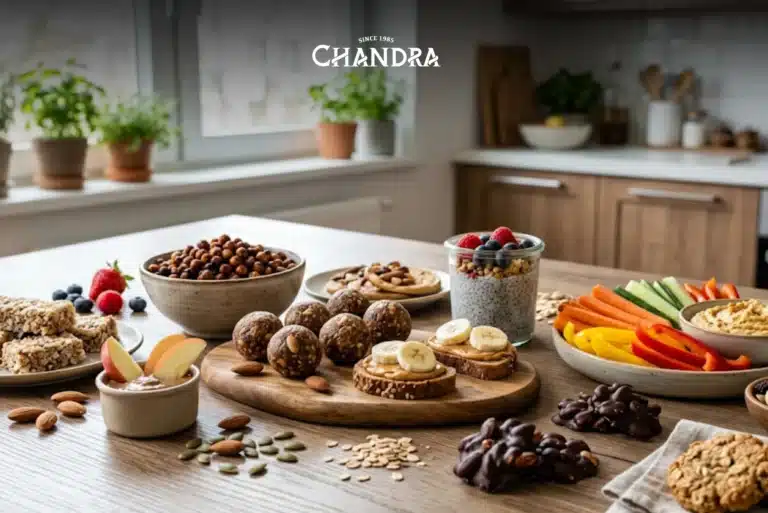
Ask ten people for the best vegan snacks and you’ll get ten different answers. The shelf below is built around variety: crunch, something to share, something sweet and something to eat straight from the pack.
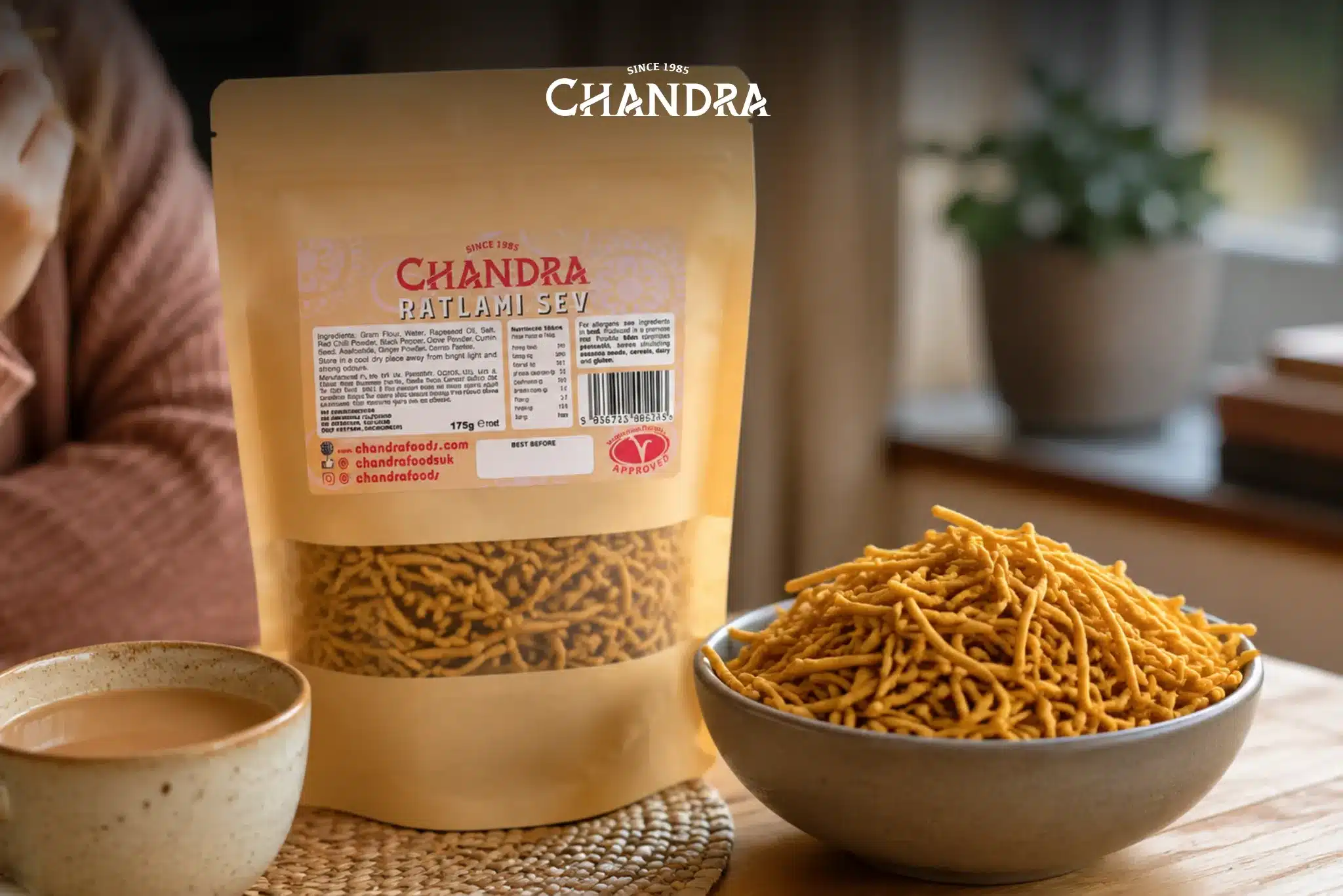
Crunchy classics. Start with the gram-flour snacks: sev, gathiya, papdi and fafda. They’re traditionally made from besan, oil and spices, so they’re the first ones to check on the label. They’re light and salty, and they go with everything from chai to a bowl of dal. A pack of crispy sev also doubles as a topping for poha, chaat and soup.
Nuts. Almonds, cashews, walnuts and pecans are plant-based by nature and work in snacks, curries and desserts. Roast them lightly with a pinch of salt and black pepper for a snack that feels more special than it is.
Seeds. Pumpkin, sunflower, chia and flax are the easiest way to add crunch to porridge, salads and soups. Pumpkin seeds are a good first pouch, and ground flax mixed with water makes a simple egg replacer for baking.
Dried fruit. Raisins, goji berries and prunes are your sweet fix. They need no dairy and no cooking, and they balance salty snacks beautifully.
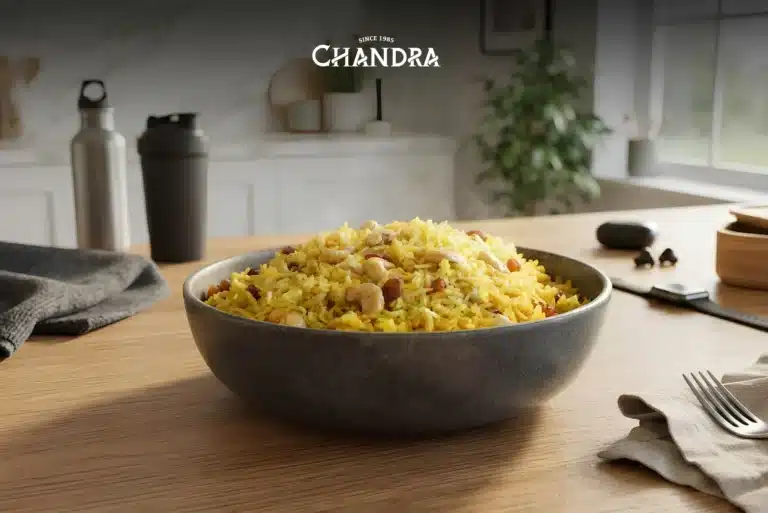
A snack mix for sharing. A chevda-style mix of crunchy pieces, nuts and raisins is what you reach for when people drop in. Farali chevda is built on potato sticks with roasted nuts, seeds and raisins. As with everything here, check the label for your own needs.
Vegan Afternoon Snacks and Vegan Snacks for Sharing
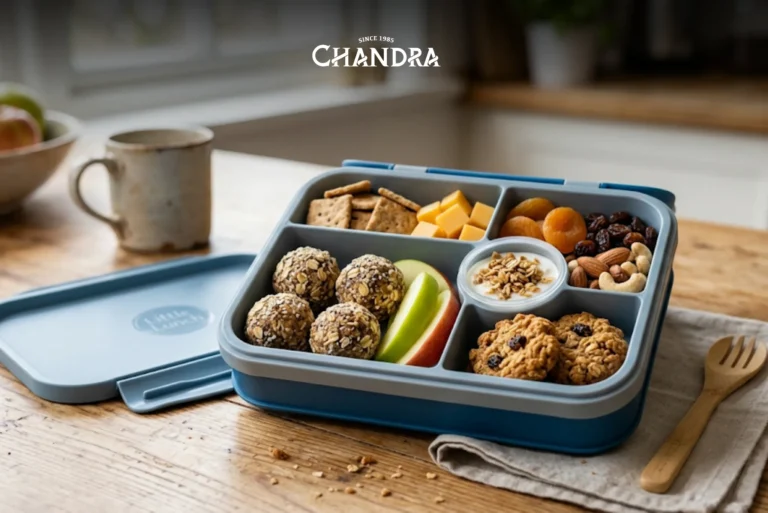
The four o’clock dip is real, and the fix doesn’t need a kitchen. A few vegan afternoon snacks that take a minute:
- A handful of roasted cashews with a few raisins
- Sliced cucumber with a squeeze of lemon, chaat masala and a scatter of sev
- A small bowl of chevda with your chai
- Pumpkin seeds and dried fruit in a small jar on your desk
For vegan snacks for sharing, think platter, not plate. Put sev, papdi, roasted nuts and a chevda-style mix in separate bowls, and add tamarind chutney, green chutney and cut vegetables on the side. Chutneys are usually plant-based, but check the label on any bought ones.
For a dairy-free chaat, layer crisp papdi with boiled chickpeas, chopped onion and tomato, then add tamarind and green chutney and finish with sev. Skip the curd, or replace it with a spoonful of coconut yoghurt or a little blended soaked cashew. Nobody at the table will miss it.
Buying Vegan Snacks Online in the UK: What to Check
When you shop for vegan snacks online, a few checks save you trouble:
- The product page, not the category. Ingredients and allergens matter more than a heading.
- A vegan statement. Useful, but confirm it against the ingredient list.
- Allergens. Read the allergen statement in full, especially if you’re buying for someone with a nut, sesame or milk allergy.
- Freshness. Fried and roasted snacks go stale quickly. Check the best-before date.
- Packaging. A resealable pack keeps crunch for longer.
- Pack size. Buy what you’ll finish in a few weeks, not a few months.
Chandra Foods keeps a collection of vegan snacks UK customers can browse, with ingredients and allergen information on each product page.
Keeping Your Cupboard Fresh
Keep snacks in airtight containers in a cool, dry cupboard, away from the cooker and kettle. Use a dry spoon or dry hands every time, since moisture is the enemy of crunch. Nuts and seeds contain natural oils, so buy in amounts you’ll use within a couple of months. If a snack goes a little soft, crisp it in a low oven for a few minutes and let it cool completely before putting it back.
A Cupboard That Works for Everyone
Good vegan cupboard essentials are simple: something crunchy, something to share, something sweet and a habit of checking labels. Plenty of people find their way to kinder vegan choices one snack at a time, and Indian snacking makes that easy, because so much of it is built from plants. If you’d rather start with a ready-made selection, the product packs bundle nuts, seeds, dried fruit and snacks in a single order. Just check each item against your own needs.
Frequently Asked Questions
- What are the vegan cupboard essentials for Indian snacking?
Start with a gram-flour snack like sev, a nut you like, a seed for topping, a bag of dried fruit and a chevda-style mix for sharing. Check each label for dairy before you buy. - Are Indian snacks vegan?
Many are traditionally made from plant ingredients like gram flour, rice flour, oil and spices, but not all. Ghee, butter, curd or milk powder can appear in some recipes, so always read the label. - Is sev vegan?
Traditional sev is gram flour, oil, salt and spices, which is plant-based. Recipes vary between brands, so check the ingredients on the pack you’re buying. - Is ghee vegan?
No. Ordinary ghee is clarified butter. Vegetable ghee is plant-based, but it’s a different product. - What’s the difference between vegan and dairy-free?
Dairy-free means no milk-based ingredients. Vegan goes further and excludes all animal products, including eggs and honey. A snack can be dairy-free without being vegan. - Where can I buy vegan Indian snacks in the UK?
Look for a UK seller with clear ingredient and allergen information on each product page. Chandra Foods has a vegan snacks collection, and several of its snacks suit vegan diets. Read each product page to confirm.