
Indian snacking has always been about more than just taste – it’s built around variety, texture, and genuinely good ingredients like chickpeas, lentils, nuts, and seeds. The great news is that within this huge and varied tradition, there’s an enormous range of naturally wholesome options, from roasted and baked snacks to protein-rich nuts and seeds, that fit easily into a balanced, health-conscious lifestyle.
If you’re wondering how to make the most of healthy Indian snacks UK shelves and delivery boxes now offer, this guide walks through the roasted, baked, and protein-packed options worth stocking up on, why they’re such a good fit for everyday snacking, and how to build a cupboard that feels both indulgent and genuinely good for you.
The Real Strength of Indian Snacking: Whole Ingredients
One of the best things about Indian snacks, as a category, is how many of them are built from simple, recognisable ingredients – gram flour, lentils, rice, nuts, seeds, and spices. Compared to a lot of mass-produced Western snack foods, which often lean on long ingredient lists and heavily processed fillers, traditional Indian snacks tend to start from whole, natural components.
This is a genuinely strong foundation to build from. Once you know which preparation methods and ingredient combinations tilt a snack further toward the healthier end of the spectrum, it becomes easy to snack often and still feel good about it.
Roasted Snacks: Big on Flavour, Light on Oil
Roasting is one of the oldest and most effective ways to make a snack satisfying without deep-frying it, and Indian snacking has a long, well-loved tradition of roasted options.
Roasted chana (chickpeas) is one of the standout examples – naturally high in protein and fibre, easy to flavour with a masala coating, and just as satisfying to crunch through as a fried snack, without the extra oil. It’s also endlessly versatile: eaten on its own, added to a mixed namkeen bowl, or sprinkled over a salad for extra texture.
Roasted nuts deserve a mention here too. A masala or honey-roasted mix of almonds, cashews, or peanuts brings genuine flavour and a satisfying crunch, all while delivering healthy fats and protein that keep you fuller for longer than most conventional snack options.
Roasted snacks like these are a great everyday choice precisely because they don’t ask you to compromise on flavour to get the health benefit – the roasting process itself is what makes them so good.
Baked Snacks: A Lighter Twist on Tradition
Baking, rather than frying, has become an increasingly popular way to enjoy classic Indian snack shapes and flavours with a lighter finish, and it’s opened up some genuinely excellent options.
Khakhra is the best-known example – thin, roasted (not fried) wheat crisps that come in plain, masala, or methi (fenugreek) varieties. They deliver all the crunch and spice of a classic Gujarati snack while being one of the lightest options in the entire category, which makes them an easy, guilt-free choice for regular snacking.
Baked versions of other classic shapes, like baked papdi or baked mathri, are also increasingly available, offering the same familiar textures and flavours in a lighter form. These are worth seeking out if you love the taste of traditional snacks but want an option that fits more easily into daily snacking.
Protein-Rich Options: Nuts, Seeds, and Beyond
Protein is one of the most valuable things a snack can offer, since it helps with satiety and makes a handful of something feel like a genuinely useful bite rather than empty calories. Indian snacking, thanks to its heavy reliance on lentils, chickpeas, nuts, and seeds, is particularly well set up here.
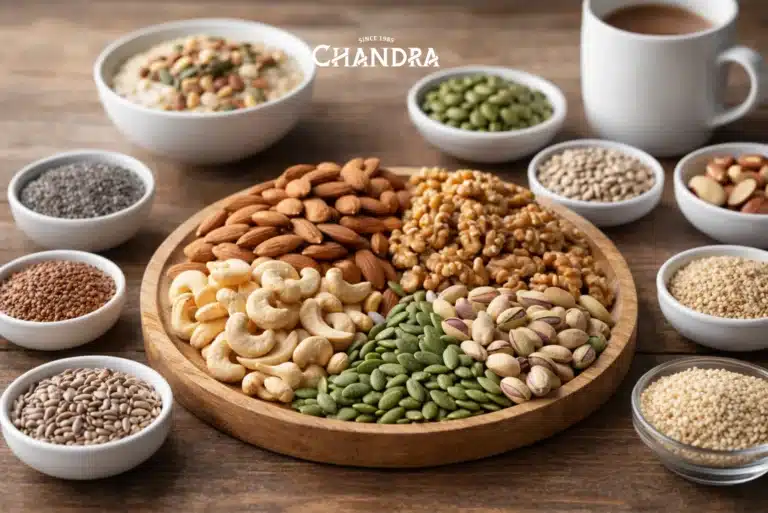
Nuts are an obvious starting point – almonds, cashews, and pistachios are all naturally rich in protein and healthy fats, and they slot easily into both traditional Indian snack mixes and standalone snacking. A dedicated protein-rich nuts selection is a great way to build a stock specifically geared toward this, especially useful for anyone snacking around workouts or trying to keep energy steady through the day.
Seeds bring their own protein and nutrient boost, particularly pumpkin seeds and hemp seeds, both of which pack a genuinely impressive amount of protein into a small serving. Browsing the wider seeds range is a good way to find a few favourites to keep stocked alongside your usual nuts.
Dal-based and lentil snacks, like roasted moong dal or masala chana dal, are another excellent protein source that’s deeply rooted in Indian snacking traditions. They’re light, crunchy, and easy to eat by the handful, all while offering a meaningfully higher protein content than most conventional crisps or crackers.
Fibre and Gut-Friendly Choices
Alongside protein, fibre is another area where traditional Indian snacks genuinely shine. Chickpea and lentil-based snacks, along with whole grain options, bring a natural fibre boost that supports digestion and helps snacks feel more satisfying overall.
For anyone specifically looking to build fibre into their snacking routine, it’s worth exploring options across the high fibre and gut health ranges, both of which pull together snacks naturally suited to this goal – think chickpea-based crunches, seed mixes, and whole-grain options that support digestion while still delivering the flavour and texture people love about Indian snacking.
Naturally Plant-Based and Dairy-Free by Design
A large share of traditional Indian savoury snacks are naturally vegan and dairy-free, simply because they’re built around gram flour, rice, lentils, and spices rather than dairy-based ingredients. This makes the category a genuinely easy place to find plant-based options without needing to hunt for a specific “free-from” label.
For anyone following a plant-based diet, or simply looking to include more plant-based snacking in their week, the vegan snacks range brings together a wide selection that fits naturally into this way of eating, from classic namkeen to nut and seed-based options.
Building a Balanced Healthy Indian Snacks Cupboard
The best approach to healthy Indian snacking isn’t about restricting yourself to one narrow category – it’s about building a varied, well-rounded stock that covers different needs across the week.
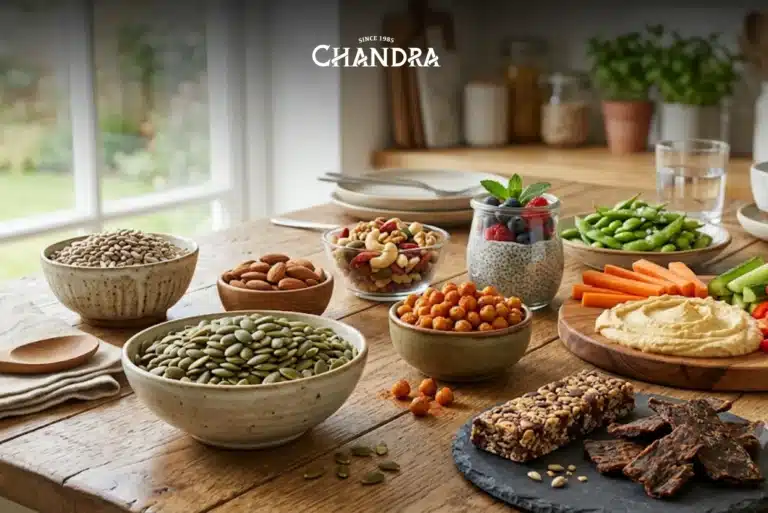
A good everyday cupboard might include a roasted chana or nut mix for a protein boost, a pack of khakhra for a lighter, crunchy option, some seeds for a fibre-rich addition to porridge or yoghurt, and a favourite classic namkeen kept for the days you want something with a bit more indulgence. Browsing the broader healthy snacks range is a great way to see the full spread of lighter, well-balanced options in one place, making it easy to build a cupboard that covers all these bases at once.
Snacking Well at Work
Healthy Indian snacking translates particularly well to the workplace, where a satisfying, protein-rich snack can make a genuine difference to focus and energy through an afternoon slump. Roasted chana, a small handful of nuts, or a pack of khakhra all travel well, don’t require refrigeration, and offer far more staying power than a sugary snack from a vending machine.
For anyone looking to build a desk drawer stash that actually helps rather than just fills a gap, the office snacks range is worth a look, bringing together a good mix of protein and fibre-forward options suited to exactly this kind of everyday snacking.
A Few Tips for Snacking Well, the Indian Way
Lean into variety. The strength of Indian snacking is its range – mixing roasted, baked, and nut or seed-based options across the week keeps things interesting while covering different nutritional bases.
Let portion size do some of the work. A small, satisfying handful of a protein-rich snack, like roasted chana or nuts, tends to keep you fuller for longer than a larger portion of something lighter, so it’s worth trusting a smaller serving rather than assuming more is always better.
Pair snacks with what you need that day. A workout day might call for something protein-heavy, like nuts or dal-based snacks, while a lighter afternoon might suit something like khakhra or roasted chana instead.
Keep a rotating stock rather than one go-to. Having a small variety on hand – something roasted, something baked, something seed-based – makes it easier to reach for a genuinely good option every time, rather than defaulting to whatever’s left in the cupboard.
The Hidden Benefit of Traditional Spices
It’s easy to overlook, but the spices woven through Indian snacking bring their own quiet advantages. Cumin, ajwain (carom seeds), turmeric, and black pepper aren’t just there for flavour – they’re the same spices long used in Indian cooking for their warming, digestion-friendly qualities. Ajwain in particular is a common addition to snacks like gathiya and mathri specifically because of its traditional association with easy digestion, which is a nice bonus layered on top of an already satisfying, protein-rich snack.
This is part of what makes Indian snacking feel different from a lot of other snack categories: the flavour and the wellness angle aren’t separate considerations bolted on afterwards – they’ve been part of the same recipe for generations.
Making Room for Everything You Love
None of this is about drawing a hard line between “good” snacks and “bad” ones. Part of what makes Indian snacking so enjoyable is the balance it naturally strikes – a spicier, more indulgent namkeen alongside something lighter like khakhra, both with their own place in a well-rounded week of eating. The goal isn’t to cut anything out, but to make sure the healthier, protein and fibre-rich options are just as easy to reach for as the more indulgent ones.
Framed this way, healthy snacking becomes less about restriction and more about having genuinely good options on hand – so that whatever mood or moment calls for a snack, there’s something satisfying, tasty, and good for you within easy reach.
Snacking Smart, Without Losing the Joy of It
The real takeaway here is a positive one: Indian snacking, as a whole tradition, already leans naturally toward wholesome, satisfying ingredients – chickpeas, lentils, nuts, seeds, and spices that have been part of everyday eating for generations. With a bit of intention around roasted, baked, and protein-rich options, it’s entirely possible to snack often, snack well, and never feel like you’re missing out on flavour.
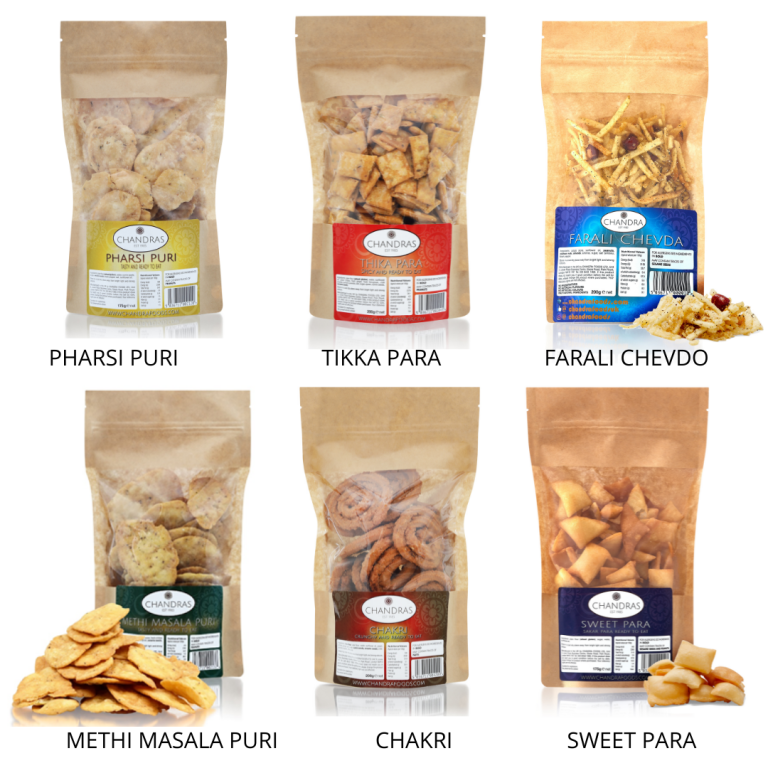
For a good starting point, browsing Chandra Foods‘ range of healthy, protein-rich, and naturally wholesome snacks is a genuinely enjoyable way to build a cupboard you’ll actually want to reach into every day.
Frequently Asked Questions
- Are roasted Indian snacks healthier than fried ones?
- Roasted snacks such as roasted chana and roasted nuts generally use less oil than deep-fried alternatives while still providing flavour and crunch, making them a practical option for everyday snacking.
- What is the best high-protein Indian snack?
- Roasted chana, masala chana dal and mixed nuts and seeds are good protein-rich snack options. They can provide more protein than many conventional snack foods.
- Are Indian snacks naturally suitable for a vegan diet?
- Many traditional savoury Indian snacks can be suitable for vegan diets. Snacks such as sev, gathiya, chakri and roasted chana are commonly made with ingredients such as gram flour, rice, lentils and spices. Always check the product label for specific ingredients and allergen information.
- What’s a good healthy Indian snack for the office?
- Roasted chana, nuts and khakhra are convenient options for the office because they travel well, do not usually require refrigeration and can make a satisfying snack between meals.
- Is khakhra a healthy alternative to other Indian snacks?
- Khakhra is typically roasted rather than deep-fried, making it a lighter alternative to many fried Indian snacks. It can provide a crisp texture while still offering traditional Indian flavours.
- How can I build a balanced Indian snack cupboard?
- A varied snack cupboard can include roasted options such as nuts or chana, a lighter snack such as khakhra, seeds for variety and a favourite traditional namkeen. This gives you different textures and flavours to choose from throughout the week.