Open the dried fruit shelf and you’ll usually find two bags of raisins sitting side by side: one dark, plump and almost black, the other pale and golden. They look like relatives, and they are, but they don’t behave the same way in the kitchen. If you’re about to buy golden raisins online, or wondering whether kali kishmish would do the job instead, this guide explains the difference. It also shows when each one earns its place, from the sheera pan to the scone tray.
What Is Kali Kishmish?
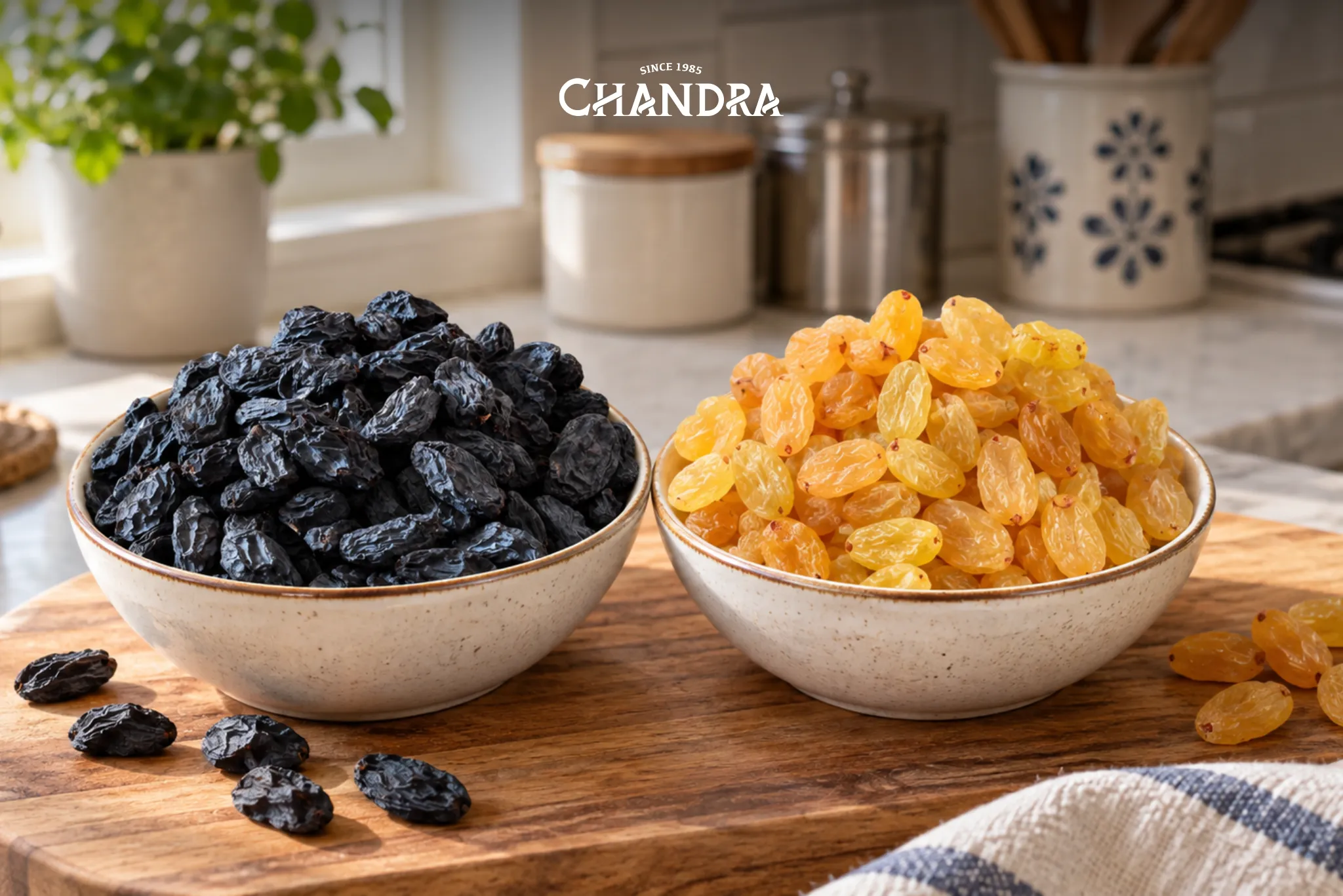
Kali kishmish simply means black raisins. The word kishmish came into Hindi from Persian, and in Gujarati kitchens you’ll also hear draksh, which covers both grapes and raisins. Kali kishmish are made from dark seedless grapes that are dried until they wrinkle, darken and turn soft and chewy.
The flavour is rich and rounded, close to caramel, and the thicker skin gives a proper chew. Jumbo black raisins are the same fruit in a bigger, plumper size, which is why they feel juicier and stay soft in cooking. If you ever come across munakka, those are usually larger dark raisins, often with seeds, and a slightly different product.
That deep sweetness is why jumbo black raisins are a favourite in slow, milky, spiced dishes, where a bold fruit can hold its own.
What Are Golden Raisins?
Golden raisins come from green seedless grapes, usually Thompson Seedless, the same grape behind sultanas. In everyday UK cooking, sultanas and golden raisins can be treated as the same thing. Left to dry in the sun, green grapes turn brown. So golden raisins are usually dried under controlled conditions, and many are treated with sulphur dioxide to hold that bright colour. If you’re sensitive to sulphites, read the label.
The taste is lighter and fruitier than black raisins, with a gentle tang that stops them tasting heavy. The texture is soft and juicy rather than deeply chewy. That milder character makes them easy to use. They add sweetness and colour without taking over the dish.
Kali Kishmish vs Golden Raisins at a Glance
| Kali kishmish (black raisins) | Golden raisins | |
| Grape | Dark seedless grapes | Green seedless grapes |
| Colour | Deep brown to black | Light amber to golden |
| Taste | Rich, deep, caramel-like sweetness | Lighter, fruity, slightly tangy |
| Texture | Thick skin, chewy, very plump when jumbo | Soft, juicy, gentle chew |
| Best for | Sheera, kheer, pulao, fruit cake, porridge | Scones, muffins, salads, chutneys |
When to Use Kali Kishmish
Reach for black raisins when the dish is rich, warm or slow-cooked:
- Sheera and halwa. Fry a spoonful in ghee until the raisins puff up like tiny balloons, then fold them into the semolina. This is the classic move.
- Kheer and dudh pak. The deep sweetness stands up to cardamom and saffron.
- Pulao and biryani. Fried until plump alongside cashews, they add sweet pockets against the savoury rice.
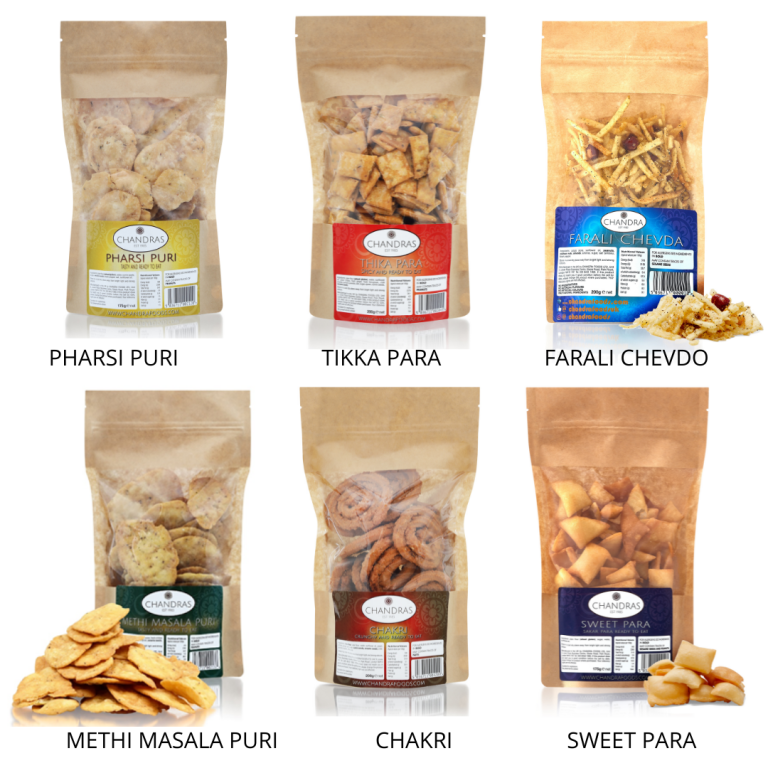
- Chevda. A few raisins in a mix like farali chevda give you a sweet bite between the salty, crunchy pieces.
- Fruit cake and spiced bread. Dark raisins bring colour and depth that lighter fruit can’t match.
- Porridge and overnight oats. Stir them in at the start, so they soften and sweeten the whole bowl.
When to Use Golden Raisins
Golden raisins suit lighter, brighter dishes:
- Salads and rice. A handful in a couscous or rice salad works well. So does a warm carrot salad tempered with mustard seeds and curry leaves, where a few golden raisins add a sweet-sour lift.
- Baking. For golden raisins for baking, scones, muffins and loaf cakes are where they shine. They stay soft and don’t tint pale batter.
- Oat cookies and granola. Their milder flavour lets the oats and spices come through.
- Chutneys. They add sweetness to sweet-and-sour chutneys without turning them dark.
- Light pulao and lemon rice. They keep the rice bright and pale.
- Lunchboxes. Their gentler sweetness makes them an easy sell to children.
Can You Swap One for the Other?
Mostly, yes. Swap by weight, one for one, and expect small differences. Black raisins make a bake darker and deeper, while golden raisins keep it lighter and slightly tangier. In a fruit cake, black usually wins. In a lemon loaf, golden does.
A few kitchen habits work with either type:
- Soak dry ones. Ten to fifteen minutes in hot water, tea or orange juice plumps them up.
- Pat them dry. Drain soaked raisins well so they don’t add extra moisture to a batter.
- Toss in flour. Coat them in a spoonful of flour before folding in, so they don’t all sink to the bottom.
- Pair with nuts. Golden raisins and chopped almonds are a natural match in loaf cakes and granola.
Buy Golden Raisins Online: What to Check Before You Order
Type “golden raisins buy online UK” into a search bar and dozens of near-identical listings appear. The difference shows once the bag is open. A few things are worth checking:
- Softness. Good raisins are plump and pliable. Hard, dry or sugar-crusted ones are old.
- Size. For black raisins, “jumbo” means bigger, juicier fruit. If you compare jumbo black raisins 500g price UK listings, look at the price per kilo rather than the price per pack. If you bake often or cook for a big family, jumbo black raisins bulk UK packs can make sense. Just keep a small jar for everyday use and reseal the rest.
- Ingredients. It should be fruit and nothing else. For golden raisins, check for sulphites if that matters to you.
- Organic. If you want organic golden raisins UK delivery, look for a recognised organic certification on the pack or product page, not just words like “natural”.
- Allergens. Read the allergen statement, especially if you’re buying for someone with a nut or sesame allergy.
Once your raisins are sorted, pitted prunes make a sensible third bag for the dried fruit shelf. They’re soft and deeply sweet, and they work in the same porridges and bakes.
Storing Raisins
Keep raisins in an airtight container in a cool, dry cupboard, away from the cooker and kettle. Use a dry spoon each time, since moisture can turn them sticky and encourage mould. If a batch goes hard, soak it briefly and use it in cooking rather than snacking. Larger bags are best decanted, with only a small jar kept out.
Which One Should You Buy?
If you cook a lot of rich Indian sweets, or you love a dark fruit cake, start with kali kishmish. If you bake scones, make salads or want something lighter, start with golden raisins. Most kitchens end up with both, and that’s perfectly reasonable. When you buy golden raisins online, add a bag of jumbo black raisins alongside and you’ll be covered for almost any recipe. To see what else fits on the shelf, browse the full range of dried fruits.
Frequently Asked Questions
- What is the difference between black raisins and golden raisins?
Black raisins (kali kishmish) come from dark grapes and taste rich, deep and chewy. Golden raisins come from green grapes and taste lighter, fruitier and slightly tangy, with a softer texture. - Are golden raisins the same as sultanas?
They’re very close. Both come from green seedless grapes, and in everyday cooking you can use them interchangeably. Colour and drying methods can differ slightly between brands. - Which is better for baking, black or golden raisins?
Neither is better outright. Golden raisins suit pale, delicate bakes like scones and lemon loaf. Black raisins suit darker, spiced bakes like fruit cake and hot cross buns. - Do I need to soak raisins before using them?
Only if they feel dry. A quick soak in hot water, tea or juice for ten to fifteen minutes makes them plump and juicy. Drain and pat them dry before adding them to batter. - Are raisins high in sugar?
Yes. Raisins are naturally sweet and concentrated, so they’re best enjoyed in small handfuls or as part of a recipe. If you have a health condition, check with your GP or a registered dietitian. - Where can I buy golden raisins online in the UK?
Look for a UK seller with clear labelling, fresh stock and resealable packs. Chandra Foods sells golden raisins and jumbo black raisins online with UK delivery.