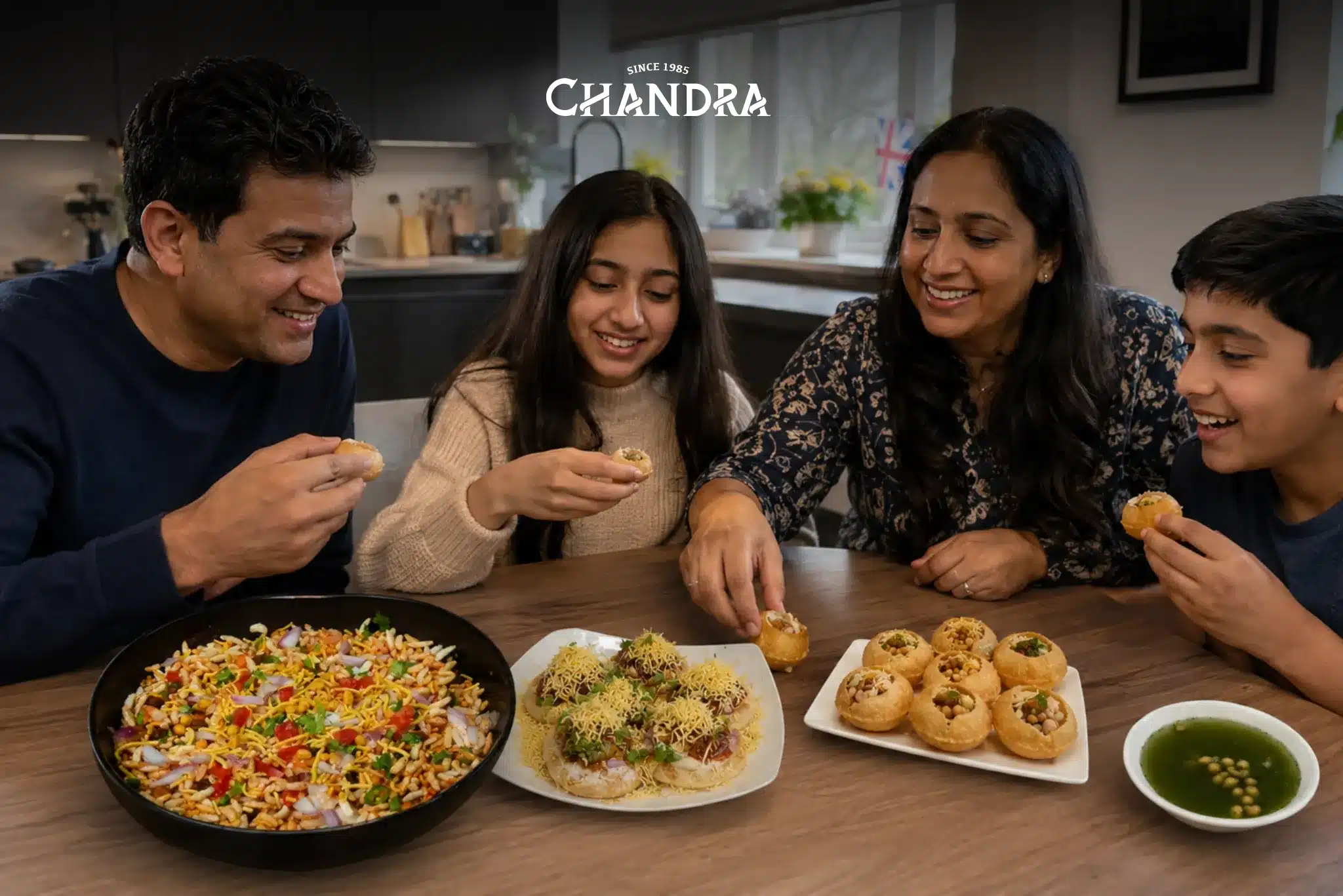
If you’ve ever stood in front of an Indian street food stall, or scrolled through a chaat menu at a restaurant, you’ve probably seen these three names sitting side by side: bhel puri, sev puri, and pani puri. They sound similar, they’re all served in small bowls or on little plates, and they all fall under the broad umbrella of “chaat” – but they’re actually quite different dishes, each with its own base, texture, and way of eating it.
If you’ve ever ordered one expecting the other, or you’re simply curious about what sets them apart before trying to recreate them at home, this guide breaks down exactly what goes into each one, how they differ, and how to put together a proper chaat snacks UK spread using ingredients you can actually get delivered to your door.
What Is Chaat, Exactly?
Before getting into the differences, it helps to understand the category they all belong to. Chaat is a broad term for Indian street food snacks that are typically savoury, tangy, and layered with a mix of textures – crunchy, soft, spicy, sweet, and sour, often all in the same bite. The word itself comes from the Hindi “chaatna,” meaning “to lick,” which gives you a fairly good idea of how moreish these dishes are meant to be.
Bhel puri, sev puri, and pani puri are three of the most popular chaat dishes, and while they share some ingredients – puffed rice, sev, chutneys, papdi – the way those ingredients come together is completely different in each one.
Bhel Puri: The Mixed, Tossed Chaat
Bhel puri is essentially a mixed salad-style chaat. The base is puffed rice (murmura), which is tossed together with chopped onions, tomatoes, boiled potatoes, sev, and a combination of tangy tamarind chutney and spicy green chutney. Everything is mixed in a bowl right before serving, so every bite has a bit of everything – crunchy puffed rice, soft vegetables, and that sweet-and-sour chutney flavour running through it.
Because it’s tossed rather than assembled piece by piece, bhel puri has a softer, more “eaten with a spoon” quality compared to the other two. It’s also the most forgiving to make at home, since there’s no precise assembly involved – you’re essentially building a flavourful, crunchy salad. A good sev is essential here, since it’s what gives bhel puri its final layer of crunch and its slightly nutty, savoury edge.
Sev Puri: The Bite-Sized, Layered Chaat
Sev puri takes a completely different approach. Instead of being mixed together, it’s assembled on individual crisp puris (small, flat, fried discs, sometimes called papdi), each topped with a spoonful of boiled potato, chopped onion, a drizzle of both chutneys, and a generous scattering of sev on top.
The result is a bite-sized, layered snack rather than a mixed one – each puri is its own little construction, meant to be eaten in one or two bites before the base softens. That crisp-to-soft contrast, right as you bite down, is really the whole point of sev puri. It relies heavily on the quality of the papdi used as the base, since a papdi that’s too thick or not crisp enough changes the entire texture of the dish.
Pani Puri: The Filled, Burst-in-Your-Mouth Chaat
Pani puri is probably the most theatrical of the three, and the one most people recognise instantly. It uses small, hollow, puffed spheres (also called golgappa or puchka, depending on the region) that are cracked open at the top, filled with a mixture of boiled potato, chickpeas, and spices, and then dunked into flavoured water – typically a tangy, spiced tamarind and mint water – right before eating.
The entire puri is eaten in one go, which means the “pani” (water) bursts out as you bite into it. It’s less about texture layering, like sev puri, and more about that sudden hit of cold, spiced, tangy liquid combined with the crunch of the shell. Making pani puri at home is genuinely easier than people expect once you have the right components – hollow puris, a good pani mix, and the potato-chickpea filling – which is why a ready-put-together kit tends to save a lot of hassle. The Family Pani Puri Combo is built exactly for this, bringing the puris and core ingredients together so you’re not sourcing everything separately.
Side-by-Side: How They Actually Differ
Base: Bhel puri uses puffed rice as its foundation. Sev puri uses flat, crisp papdi. Pani puri uses hollow, puffed shells.
Assembly: Bhel puri is mixed together in a bowl. Sev puri is layered on individual pieces. Pani puri is filled and dunked just before eating.
Texture: Bhel puri is a soft, crunchy mix eaten with a spoon. Sev puri is crisp with a soft topping, eaten in a bite or two. Pani puri is crunchy on the outside with a sudden burst of liquid inside.
Best for: Bhel puri works well as a shareable snack or light meal. Sev puri suits smaller bites at a gathering. Pani puri is the most interactive and fun to eat as a group, which is part of why it’s such a popular party food.
Bringing These Chaat Snacks Together at Home
The good news is that a lot of the groundwork overlaps. If you keep a stock of good sev, crisp papdi, and either ready-made or homemade puris, you can put together all three dishes without a huge amount of extra shopping. What tends to trip people up is sourcing the individual components at the right quality – papdi that’s too soft, sev that’s stale, or puris that have gone chewy instead of crisp all change the final result more than people expect.
For anyone assembling a full chaat spread, a Papdi Chaat Combo is a straightforward way to get the sev puri side sorted, since it pairs papdi with the chutneys and toppings needed to build it properly. If you’re leaning more toward a full party spread with a bit of everything, the Best of Chandra Combo includes a broader mix of chaat-style snacks, which is useful if you don’t want to commit to just one dish.
It’s also worth browsing the wider chaat snacks range if you want to build your own combination rather than relying on a pre-set box – picking your own puris, sev, and papdi gives you more control over quantities, especially if you’re cooking for a larger group.
A Few Practical Tips
Assemble sev puri and pani puri right before eating. Both rely on crunch, and both go soft quickly once liquid or wet toppings are added. Bhel puri holds up slightly longer since it’s meant to be a touch softer anyway, but even that’s best eaten within 15–20 minutes of mixing.
Don’t skip the boiled potato. All three dishes lean on boiled, lightly seasoned potato as a base filling or topping – it’s an easy step to rush, but it makes a noticeable difference to the final flavour and texture.
Balance sweet and spicy chutneys. The tamarind chutney brings sweetness and tang, while the green chutney brings heat and freshness. Getting the ratio right (rather than drowning everything in one or the other) is really what makes chaat taste properly balanced.
Keep your papdi and puris airtight. Both lose their crunch quickly once exposed to air, especially in a humid kitchen. Store them properly and only take out what you need for each batch.
Which One Should You Try First?
If you’re new to making chaat at home, bhel puri is the easiest starting point – there’s no precise assembly, and a slightly uneven mix still tastes good. Sev puri is a good next step once you’re comfortable with the flavours, since it just adds a layer of presentation. Pani puri takes a little more setup (particularly getting the pani water right), but it’s also the most fun to serve at a gathering, since guests can fill and eat their own.
However you approach it, all three dishes come back to the same idea: a mix of crunchy, soft, spicy, and tangy in one bite. Once you understand what each dish is actually built from, choosing between them – or making all three – becomes a lot less confusing.
Frequently Asked Questions
- Is bhel puri the same as sev puri?
- No. Bhel puri is a mixed dish made with puffed rice, tossed together with vegetables, chutneys, and sev. Sev puri is built on individual crisp papdi, topped rather than mixed, and eaten in small bites.
- What makes pani puri different from the other two chaats?
- Pani puri uses hollow, puffed shells that are filled with potato and chickpeas, then dipped into spiced tamarind water just before eating. It’s eaten whole in one bite, unlike bhel puri or sev puri.
- Can I make all three chaat dishes with the same base ingredients?
- There’s some overlap – sev, boiled potato, and the two chutneys are used across all three – but the crisp base differs: puffed rice for bhel puri, papdi for sev puri, and hollow puris for pani puri.
- Which chaat dish is easiest to make at home for beginners?
- Bhel puri tends to be the simplest, since it’s a tossed mix rather than something that needs to be assembled piece by piece or filled with liquid at the last moment.
- How do I keep papdi and puris crisp before serving?
- Store them in an airtight container away from moisture and heat, and only assemble the dishes right before eating, since both lose their crunch quickly once toppings or liquid are added.
- Is chaat always vegetarian?
- Traditional bhel puri, sev puri, and pani puri are all vegetarian dishes, built around puffed rice, potatoes, chickpeas, sev, and chutneys, with no meat involved in the classic versions.
Shop the Products Mentioned in This Guide
You can order bhel puri mix and pani puri shells from Chandra Foods, with free UK delivery on orders over £40.