Ask most people outside Gujarat what Indian breakfast looks like, and they’ll picture something sweet – a laddoo, a bowl of sheera, maybe a paratha with jam. Ask a Gujarati household, and the answer is almost always the opposite. Breakfast in Gujarat is savoury, spiced, and built around a category of food that doesn’t have a clean English translation: nashto.
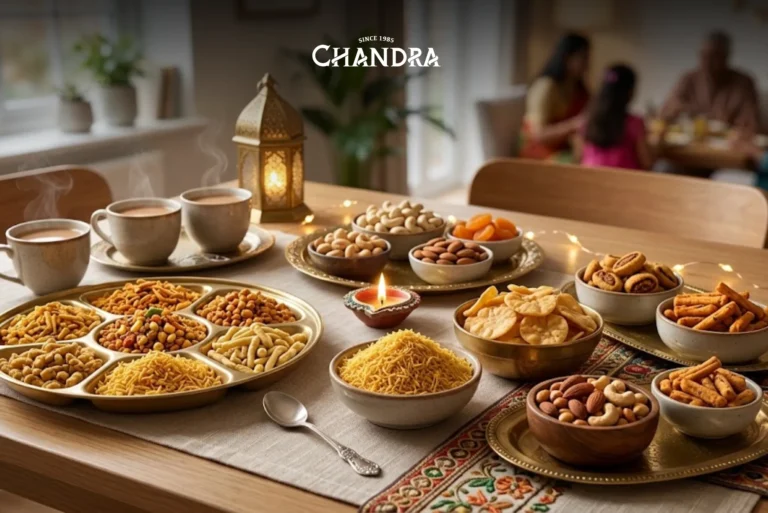
Nashto isn’t one dish. It’s a whole tradition of savoury morning eating – fried, steamed, or roasted, always spiced, rarely sweet, and eaten with chai rather than after it. For anyone trying to understand savoury indian snacks beyond the Bombay-mix-and-samosa version most of the UK is familiar with, nashto is the real starting point.
What “Nashto” Actually Means
The word itself just means “snack” or “breakfast” in Gujarati, but in practice it carries a much more specific meaning: the first savoury food of the day, eaten fresh and usually standing up, on the way somewhere. It’s closer to what a croissant-and-coffee routine is in France than to a sit-down cooked breakfast – quick, habitual, and completely unremarkable to the people eating it, which is exactly why it rarely gets written about.
What sets nashto apart from traditional indian food uk shoppers usually encounter in restaurants is that it was never designed as a starter or a side dish. It’s a meal in its own right, built to be filling, spiced enough to wake you up, and dry enough to eat on the move without cutlery.
The Core Nashto Lineup
There isn’t a single definitive nashto menu – it varies by household, by town, by what’s fresh that morning – but a handful of dishes show up constantly enough to count as the backbone of the tradition.
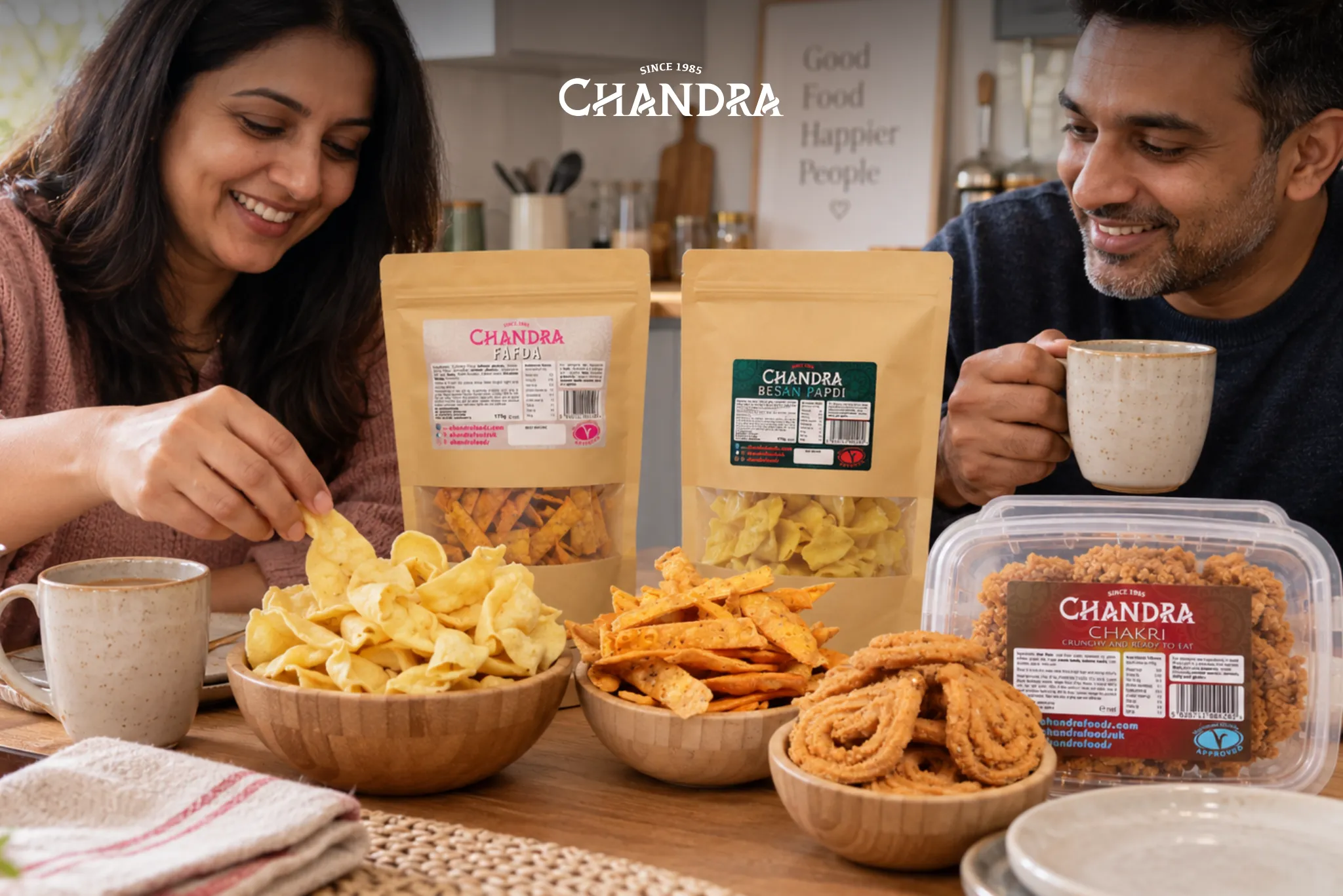
Fafda. Thin, crisp strips of gram-flour dough, fried until they shatter rather than bend, traditionally served with a green chilli and a scoop of fresh papaya kachumber on the side. Fafda is arguably the single most recognisable nashto item, and it’s eaten almost exclusively in the morning – ordering it in the afternoon would raise eyebrows in Ahmedabad the way ordering a full English at 9pm would here.
Khakhra. Thin, dry, roasted wheat crackers, often flavoured with methi (fenugreek), jeera (cumin), or plain masala. Khakhra keeps for weeks without refrigeration, which made it a practical travel food long before “shelf-stable snack” was a marketing term – it’s genuinely built for exactly that purpose.
Dhokla and khaman. Steamed, spongy, slightly tangy gram-flour cakes, tempered with mustard seeds and curry leaves. Lighter than fafda, and the closest thing on this list to what a Western palate might call “healthy” in texture – steamed rather than fried, and low in oil by nashto standards.
Thepla. Spiced flatbread, usually made with methi or other greens folded into the dough, rolled thin and cooked dry on a tawa. Thepla travels even better than khakhra – Gujarati families packing for long train journeys or flights have relied on thepla for generations, precisely because it doesn’t need reheating or refrigeration to stay good.
Why Nashto Skews Savoury, Not Sweet
The pattern isn’t random. Gujarati cuisine as a whole has a reputation – accurate, mostly – for balancing sweet and savoury within a single meal, sometimes within a single dish. But breakfast specifically leans hard savoury, for a fairly practical reason: nashto was built as fuel for physical work, in a state with a large trading and farming population that needed something substantial before a long day, not a quick sugar hit.
That’s part of why nashto has aged well as a category, even as eating habits have shifted. A lot of what counts as healthy indian snacks uk shoppers look for today – lower sugar, higher protein from gram flour, portion-controlled, not overly processed – was already baked into nashto’s design a century before “healthy snacking” became a supermarket aisle. It wasn’t designed to be healthy. It was designed to be efficient. The two overlapped by accident.
Nashto vs Chaat: A Common Mix-Up
It’s worth separating nashto from chaat, because UK shoppers often lump all Gujarati savoury food into one bucket. Chaat – pani puri, papdi chaat, bhel – is assembled, sauced, and eaten as a treat, usually in the afternoon or evening, often from a street vendor. Nashto is cooked, dry or lightly tempered, and eaten in the morning as a meal.
The crossover point is items like gathiya, which can appear in both categories depending on how they’re served. A plate of plain gujarati savoury snacks uk shoppers might recognise as gathiya, eaten dry with tea, is nashto. The same gathiya broken up into a chaat with yoghurt, chutney and sev is no longer nashto – it’s become a different dish entirely, just by changing how it’s served.
Bringing Nashto Into a UK Kitchen
The realistic challenge for anyone trying to recreate nashto in the UK isn’t the ingredients – gram flour, spices, chillies are all easy to source – it’s the freshness. Fafda in particular is meant to be eaten within hours of frying; it loses its signature snap fast. That’s less of an issue with packaged versions made to hold their texture, which makes them a genuinely closer substitute for fresh-fried fafda than most people assume, rather than a compromise.
For households trying to build an authentic gujarati snacks uk breakfast routine without frying from scratch every morning, the practical approach most people land on is keeping a small stock of two or three nashto staples on hand and rotating through them, the same way a British household might rotate cereals – fafda one morning, khakhra the next, dhokla on a slower weekend.
Buying Fafda in the UK: What to Look For
Since fafda anchors most nashto plates, it’s worth being specific about what separates a decent packet from a disappointing one.
Texture is the giveaway. Fresh, well-made Fafda UK shoppers buy should shatter cleanly, not bend or feel chewy. A soft or leathery fafda usually means it’s either stale or was fried at the wrong temperature – both common issues with lower-quality packaged versions.
Thickness matters more than people expect. Traditional Fafda is rolled thin and cut into flat strips – thicker versions might still taste fine, but they lose the specific crunch-and-shatter texture that defines the dish, and they won’t hold up as well alongside a papaya kachumber.
Freshness dates matter for fried gram-flour snacks specifically, more than for most packaged food, because the oil used in frying can turn slightly rancid faster than people expect once a pack is opened. If you’re after genuinely crispy fafda online, checking production dates rather than just best-before dates is worth the extra thirty seconds.
Serve it the traditional way if you want the full experience. Fafda on its own is good; fafda with a fresh green chilli and a spoonful of papaya kachumber is the actual dish it was designed to be. Skipping the kachumber is a bit like eating fish and chips without vinegar – not wrong, just missing the point.
For anyone specifically hunting puffed chaat papdi listings, it’s also worth checking whether the brand sources its gram flour from suppliers with a genuine Gujarati snack-making background, rather than a generic Indian snack manufacturer – the spice balance and frying technique for fafda specifically is a narrower skill than it looks from the outside.
A Few Common Questions
- Is nashto the same as chaat?
No. Nashto is a morning meal, cooked and typically eaten dry or with a simple side like kachumber. Chaat is an assembled, sauced dish eaten any time of day, usually as a treat rather than a meal. - What’s the healthiest nashto option?
Dhokla and khaman are the lightest, since they’re steamed rather than fried. Khakhra is dry-roasted and low in oil. Fafda, being deep-fried, is the richest of the core options – fine as an occasional breakfast, less so as a daily one. - Can nashto items be frozen?
Thepla freezes reasonably well and reheats decently on a dry pan. Fafda and khakhra don’t freeze well – their whole appeal is the crisp, dry texture, which doesn’t survive freezing and thawing intact. - Where can I buy fafda in UK alongside other nashto-style snacks?
Most UK Indian grocers carry packaged fafda, khakhra and dhokla mixes, though quality and freshness vary considerably between brands – checking production dates and reviewing texture feedback before buying in bulk is the safest approach.