Gathiya looks simple from the outside – fried gram-flour strands, pale gold, sold in bags labelled with a dozen slightly different names. But anyone who grew up in Gujarat, or who’s spent time in a Gujarati kitchen, will tell you gathiya isn’t one thing. It’s a category, and within that category, Bhavnagari gathiya occupies its own distinct place – thicker, spicier, and rooted in a specific region rather than being a generic variant of the same recipe.
Understanding the difference matters if you’re trying to buy the real thing rather than whatever’s labelled “gathiya” on a shelf. This is a guide to what actually separates bhavnagari gathiya uk shoppers are looking for from the regular version most people default to.
What Gathiya Is, Before the Regional Split
At its most basic, gathiya is made from besan (gram flour) dough, seasoned, extruded through a press into thick strands, and deep-fried until crisp. That’s true of every regional variety – the base process doesn’t change much. What changes is thickness, spice level, and the specific additions each region folds into the dough.
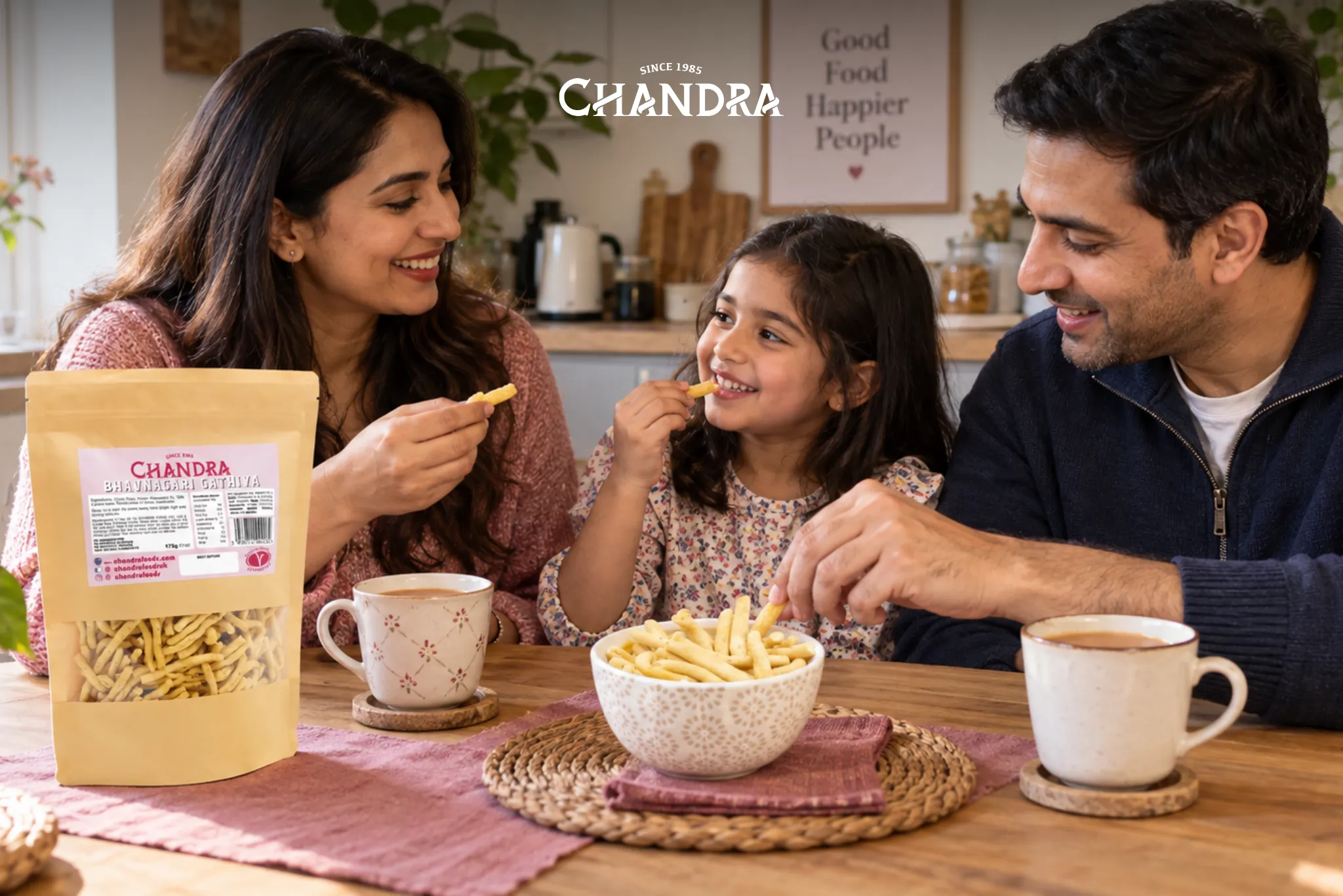
Plain gathiya, the kind most commonly sold and eaten across Gujarat as an everyday nashto item, is mild, thin-to-medium in thickness, and usually eaten with little more than a cup of chai. It’s the neutral, default version – the one most people picture when they hear the word.
Where Bhavnagari Gathiya Comes From
Bhavnagari gathiya takes its name from Bhavnagar, a city in the Kathiawad region (Saurashtra) of Gujarat, known more broadly for spicier, more robustly seasoned snacks than much of the rest of the state. Kathiawadi food in general has a reputation for bolder chilli use and heavier tempering than Gujarati cuisine’s more commonly known sweet-savoury balance, and Bhavnagari gathiya is a direct product of that regional style.
The gathiya itself is thicker than the standard version – noticeably so, closer in diameter to a thick noodle than a thin strand – and it’s built to carry more spice without losing structural integrity during frying. That thickness isn’t incidental. A thinner gathiya loaded with the same spice level as Bhavnagari would burn or turn bitter faster in the fryer, since there’s less mass to buffer the seasoning against high heat.
The Texture Difference: Why Thickness Changes Everything
This is the part that’s easy to underestimate. Because Bhavnagari gathiya is rolled and extruded thicker, it fries to a different internal texture than thinner gathiya varieties – less uniformly crisp all the way through, with a slightly denser, chewier core underneath the crisp exterior. Thin gathiya, by contrast, crisps almost entirely through, with very little soft interior left once it’s properly fried.
Neither is “better” in absolute terms – it comes down to what you’re using it for. A plate of traditional gathiya uk eaten plain with tea benefits from the lighter, thinner style, since it’s meant to be a quick, dry nashto item. Bhavnagari’s denser bite holds up better in more substantial preparations, like being mixed into a sabzi or eaten as a more filling standalone snack.
Spice Level: The Most Obvious Tell
If texture is the subtle difference, spice is the obvious one. Regular gathiya is seasoned lightly – usually just salt, a touch of turmeric, maybe ajwain (carom seed) folded into the dough for flavour and digestibility. It’s designed to be neutral enough to pair with almost anything.
Bhavnagari gathiya carries considerably more chilli, both in the dough itself and often in a coating applied after frying. This is where the Kathiawadi influence is most visible – Saurashtra’s food culture generally runs spicier than central Gujarat’s, and Bhavnagari gathiya is essentially that regional heat translated into a snack format. It’s not uncommon for a well-made batch to carry a genuine, lingering heat rather than the mild warmth most other Gujarati namkeen varieties offer.
Bhavnagari Gathiya’s Place Within Gujarati Namkeen
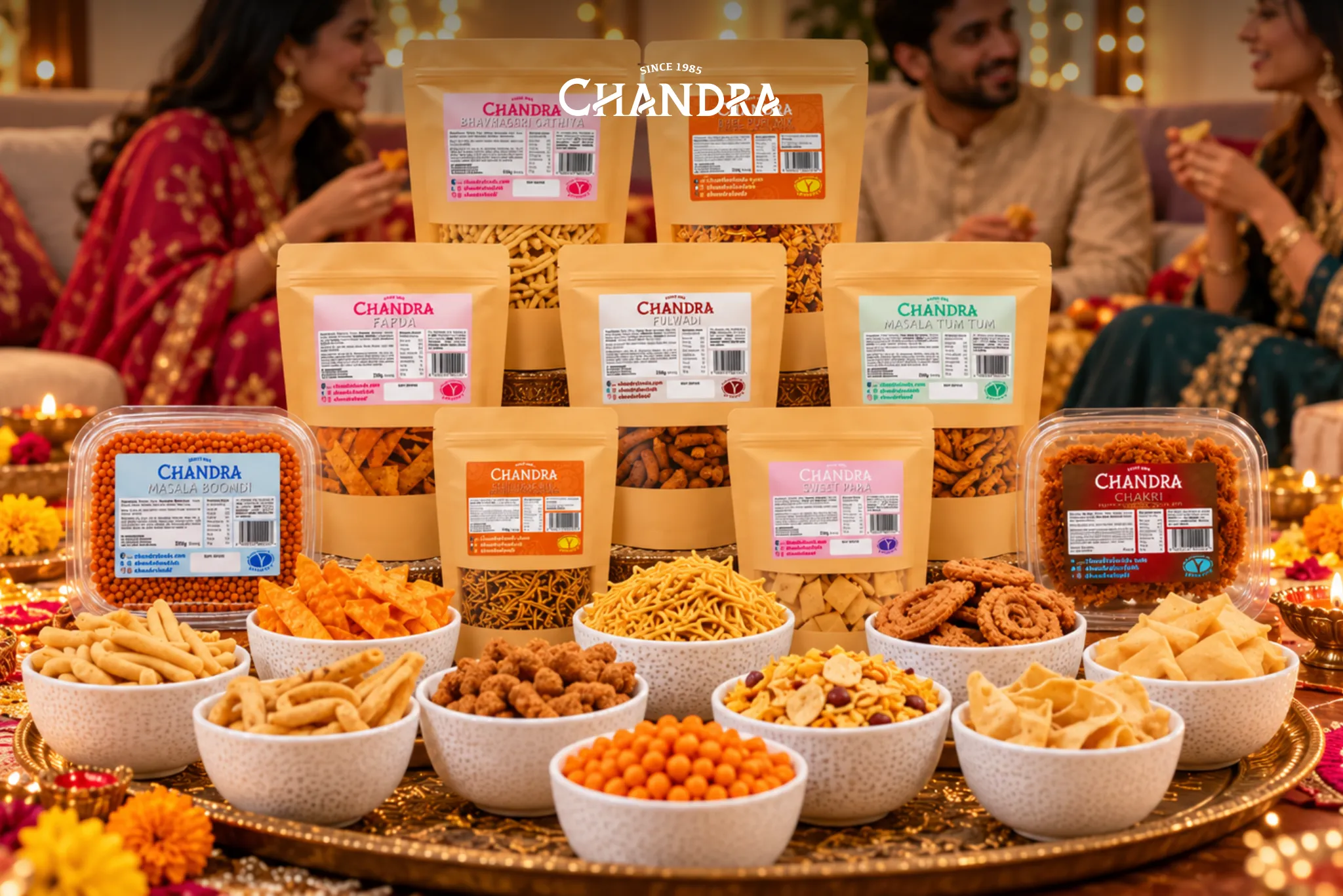
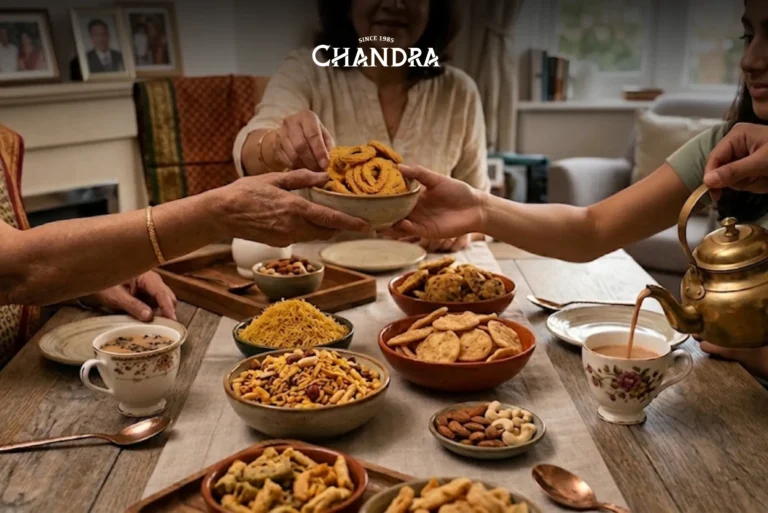
It’s worth situating Bhavnagari gathiya within the broader namkeen landscape, because it doesn’t stand alone – it’s one style within a much larger family of savoury Gujarati snacks that includes sev, chevda, chakri, and dozens of regional gathiya variants. Anyone browsing gujarati namkeen uk listings will find Bhavnagari gathiya sitting somewhere near the spicier end of that spectrum, alongside things like masala sev and thikha chevda, rather than near the milder end where plain gathiya and khakhra sit.
That positioning matters for anyone building a namkeen selection for a specific occasion – a tea-time spread calls for milder options, while a Diwali or festival snack table, where bolder flavours are expected, is exactly where Bhavnagari gathiya tends to show up.
What to Look for When Buying Bhavnagari Gathiya in the UK
A few practical markers separate a well-made batch from a mediocre one:
Colour should be deeper, not just redder. A good Bhavnagari gathiya gets its colour from red chilli powder worked into the dough and coating, not from artificial colouring. If the colour looks unnaturally uniform or bright rather than a deeper, slightly uneven reddish-brown, that’s worth questioning.
It shouldn’t be greasy. Because the strands are thicker, poorly fried Bhavnagari gathiya can end up oilier than it should, since more oil gets trapped in the denser interior if the frying temperature isn’t managed properly. A well-made batch should feel dry to the touch, not slick.
Genuine heat, not just surface spice. The chilli in a properly made batch should be worked into the dough itself, giving consistent heat throughout, rather than just dusted on top for visual effect. If the outer coating is spicy but the interior tastes bland, that’s a sign of a shortcut version rather than one made to the traditional recipe.
Shoppers specifically trying to buy bhavnagari gathiya uk stockists carry should check whether the product is described as genuinely Kathiawadi-style or just labelled “spicy gathiya” as a generic catch-all – the two aren’t always the same thing, and some UK-packaged versions blur the line for convenience.
Regular Gathiya’s Case: Why It’s Still the Default
None of this makes plain gathiya inferior – it’s simply built for a different role. Its mildness is exactly what makes it work as a daily nashto item, something you can eat every morning without the fatigue that a spicier snack would eventually cause. Its lighter, crisper texture also makes it a more versatile add-in – plain gathiya breaks well into chaat, mixes cleanly into chevda blends, and doesn’t overpower other flavours the way a spicier version would.
For anyone trying to understand gujarati gathiya uk as a category rather than chasing one specific regional style, it’s worth stocking both – plain for everyday eating, Bhavnagari for when a bolder, more occasion-worthy snack is called for.
Finding the Real Thing
The honest answer is that quality varies a lot between UK-packaged gathiya brands, and price isn’t always a reliable indicator. What separates a genuinely authentic gujarati snacks uk brand from a generic one is usually traceable to whether the recipe follows the actual regional proportions – thickness, spice ratio, frying method – rather than approximating “spicy gathiya” with a standard base recipe and extra chilli powder dusted on afterward.
If you’re after what’s genuinely considered the best gujarati gathiya uk stockists offer, checking whether a brand specifies Kathiawadi or Bhavnagari heritage in its sourcing – rather than just using the name as a flavour descriptor – is usually the clearest signal.
Buying Spicy Gathiya Online: A Few Practical Notes
Since heat level is the main variable people care about when shopping for this specific style, it’s worth knowing that “spicy gathiya” as a label isn’t standardised – one brand’s spicy might be another’s mild. Reading ingredient lists for chilli powder position (further up the list generally means more of it) is a more reliable indicator than the word “spicy” on the packaging alone.
For those specifically hunting spicy gathiya uk options with real, sustained heat rather than a mild kick, checking customer reviews for mentions of genuine spice level is usually more reliable than trusting packaging descriptions, since “spicy” gets used fairly loosely across the category.
If you’re ready to buy spicy gathiya online uk delivers reliably, it’s also worth checking whether the retailer ships in sealed, airtight packaging – gathiya’s crispness degrades quickly once exposed to air, and a spicier variety with a softened texture loses most of what makes it worth seeking out in the first place.
A Few Common Questions
- Is Bhavnagari gathiya always spicier than regular gathiya?
Generally, yes – that’s its defining characteristic. But spice levels vary between brands, so it’s worth checking ingredient lists or reviews rather than assuming every Bhavnagari-labelled product carries the same heat. - Can I substitute regular gathiya for Bhavnagari in a recipe?
For plain snacking, yes, though you’ll lose the heat and denser texture. In cooked dishes where gathiya is simmered into a sabzi, the thicker Bhavnagari style holds up better without going mushy, so a straight swap isn’t always ideal. - Why is Bhavnagari gathiya thicker than other varieties?
The thickness is deliberate – it gives the strand enough structure to carry a heavier spice load without burning or turning bitter during frying, which a thinner strand couldn’t manage at the same spice level. - Does Bhavnagari gathiya keep as well as regular gathiya?
Roughly the same, assuming proper airtight storage – a few weeks at room temperature once opened. The denser texture doesn’t meaningfully change shelf life either way; exposure to air is the main factor for both.