Pesto is one of those kitchen staples that can transform a simple meal in seconds. Toss it through pasta, spread it on a sandwich or drizzle it over roasted vegetables, and an ordinary dish suddenly feels special.
The catch is that traditional pesto relies on pine nuts, which are one of the priciest ingredients in many UK kitchens. For households watching their food budget, buying them every week is not always practical. Nut allergies are also more common than ever, which rules out classic pesto for some families and school lunchboxes.
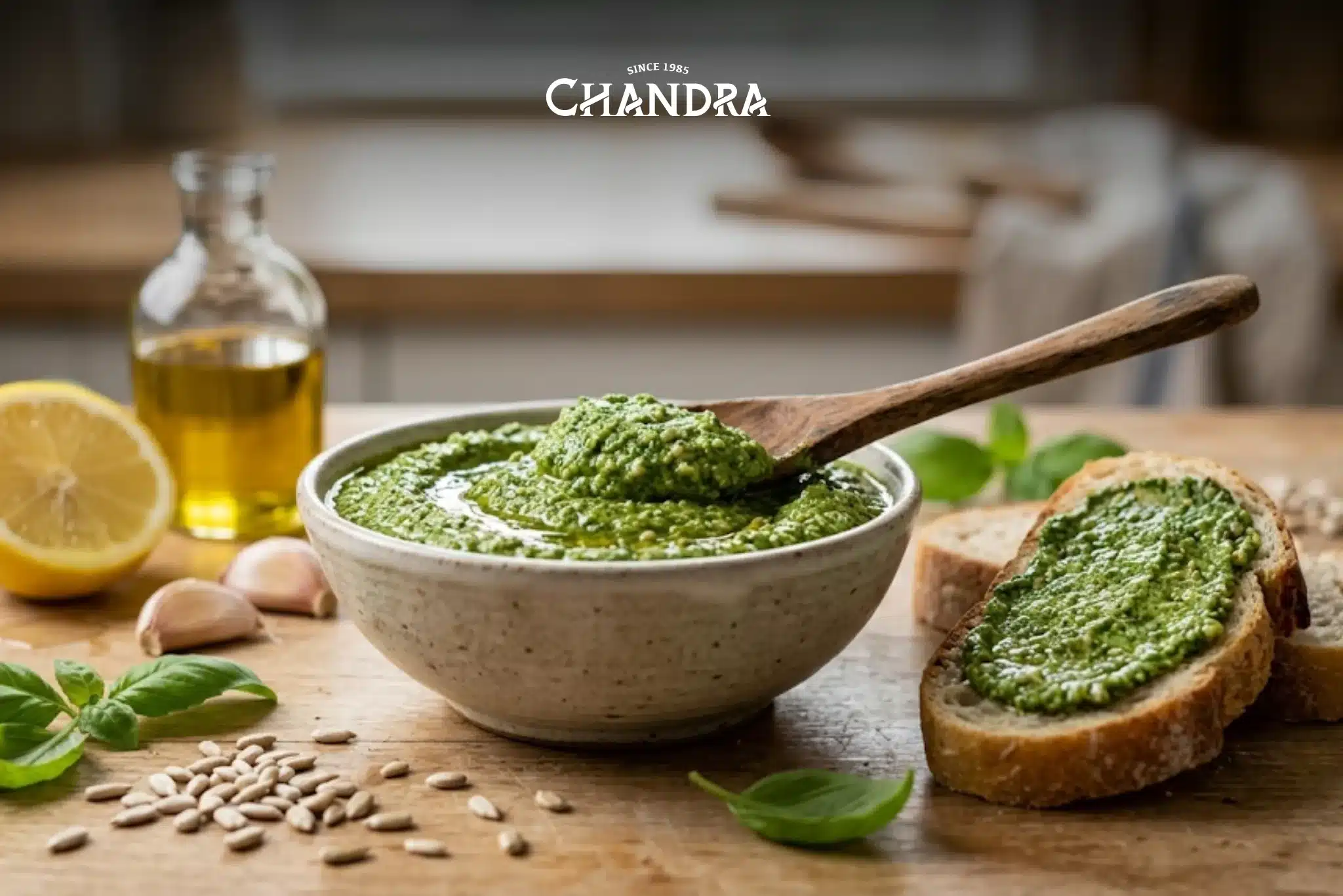
Fortunately, there is a simple solution: seed pesto, made with sunflower seeds instead of pine nuts. It delivers the same fresh, herby character that makes pesto so popular, at a fraction of the cost, and it is made without nuts. This sunflower seed pesto recipe UK cooks love uses everyday ingredients, takes about ten minutes and gives you the same vibrant green sauce, the same versatility and the same satisfaction of homemade cooking.
Same bold flavour, lower cost, no compromise on taste.
A Classic Sauce with a Smart Twist
Pesto comes from Italy, where it is traditionally made with fresh basil, garlic, olive oil, Parmesan and pine nuts, blended into a rich, aromatic paste. Its appeal lies in its simplicity: a handful of ingredients creates layers of fresh, savoury flavour.
Sunflower seed pesto follows exactly the same principle. Instead of pine nuts, sunflower seeds form the base, adding creaminess, body and a gentle nutty flavour that pairs beautifully with basil. It still tastes like pesto. It is simply a more practical, budget-friendly version for everyday cooking.
Why Seed Pesto Makes So Much Sense
Affordability
Pine nuts are the most expensive part of traditional pesto. Sunflower seeds are widely available and far cheaper, and buying a larger pack makes them even more economical. Chandra Foods sunflower seeds come in resealable packs from 350g up to 1kg, so they are an easy pantry staple to keep on hand.
A Nut-Free Alternative
Sunflower seeds are seeds, not tree nuts, yet they give recipes a similar richness. That makes this pesto a useful option for households avoiding nuts. If you are cooking for someone with a severe allergy, always check the packaging of every ingredient, as many seeds, including ours, are packed in facilities that also handle peanuts, sesame and wheat.
Nutrition
Sunflower seeds contain vitamin E, an antioxidant, along with magnesium, healthy fats, plant-based protein and fibre, helping make your pesto a more balanced sauce.
Flavour
With a mild, slightly earthy taste, sunflower seeds blend naturally with basil, garlic, olive oil and lemon, enhancing the pesto without overpowering it.
That combination of affordability, accessibility and flavour is why more home cooks are searching for a sunflower seed pesto recipe UK kitchens can rely on. If you enjoy cooking with seeds, our guide to using seeds in everyday meals has plenty more ideas.
Ingredients for Sunflower Seed Pesto
Makes one medium jar (about 4 servings).
- 60g sunflower seeds
- 50g fresh basil leaves (about two supermarket bunches)
- 1 to 2 garlic cloves
- 100ml extra virgin olive oil
- Juice of half a lemon
- Salt and black pepper, to taste
Optional additions:
- 30g grated Parmesan, or a vegan cheese alternative
- 2 tbsp nutritional yeast for a dairy-free cheesy flavour
- A handful of fresh spinach or kale
- A pinch of chilli flakes
Everything here is easy to find in UK supermarkets, and you can stock up on quality seeds online for weekly meal planning.
How to Make Sunflower Seed Pesto
- Toast the seeds (optional). Dry-toast the sunflower seeds in a frying pan over a medium heat for 3 to 4 minutes, stirring often, until lightly golden. Let them cool.
- Prepare the basil. Wash the basil, pat it dry and peel the garlic.
- Blend the base. Add the sunflower seeds, basil and garlic to a food processor and pulse until roughly chopped.
- Add the oil gradually. With the processor running, slowly drizzle in the olive oil. Adding it little by little gives you better control over the texture.
- Brighten and season. Add the lemon juice, salt and pepper, plus Parmesan or nutritional yeast if using, and pulse briefly.
- Adjust the consistency. Too thick? Add a splash of olive oil or water. Too thin? Blend in a few more sunflower seeds.
- Taste and finish. Adjust the seasoning, and your pesto is ready.
That simple method is exactly why this sunflower seed pesto recipe is popular with beginner cooks and experienced home chefs alike.
What Does Sunflower Seed Pesto Taste Like?
Honestly, it does not taste exactly like pine nut pesto, but it comes remarkably close. Basil stays the star, giving that fresh, aromatic character. Sunflower seeds add a gentle nuttiness that is slightly milder and earthier than pine nuts. Garlic brings depth, and lemon adds brightness.
The texture is creamy with a slight, pleasant graininess. It feels rich and satisfying yet light enough for everyday meals, and many people who first make it to save money keep making it simply because they love the flavour.
Everyday Ways to Use Sunflower Seed Pesto
One batch can brighten meals all week:
- Pasta: Stir a generous spoonful through freshly cooked pasta for a ten-minute lunch or dinner.
- Sandwiches and wraps: Spread it instead of mayonnaise for an instant flavour boost.
- Salad dressing: Loosen with a little olive oil and lemon for a vibrant dressing.
- Roasted vegetables: Toss through potatoes, carrots, courgettes, peppers or broccoli.
- Dip: Serve with crackers, breadsticks, vegetable sticks or toasted sourdough.
- Toppings: Spoon over grilled chicken, fish, baked potatoes or grain bowls, and finish with a sprinkle of pumpkin seeds for crunch.
Easy Seed Pesto Variations to Try
- Vegan sunflower seed pesto: Skip the Parmesan and use nutritional yeast for a savoury, cheesy flavour. Sunflower seeds carry a Vegan Approved badge, and you can find more plant-based staples in our vegan range.
- Extra greens: Add spinach or kale with the basil to boost nutrition and stretch the batch.
- A little heat: A pinch of chilli flakes adds warmth without overpowering the herbs.
- Mixed seed pesto: Swap some of the sunflower seeds for pumpkin seeds for a deeper green colour and extra protein, or stir in a teaspoon of chia seeds or ground flax seeds for added fibre and omega-3.
- Nut-based twist: If nuts are not a concern, try blending in a few walnut halves or cashew nuts for a richer, creamier pesto. Browse our full nuts range for more options.
Love using seeds in the kitchen? The Super Seeds Combo keeps several varieties in your cupboard, ready for pesto, salads and baking.
Common Mistakes to Avoid
- Over-blending: Blending too long makes the pesto pasty and dulls its fresh flavour. Pulse instead.
- Adding all the oil at once: A slow pour gives you far better control over consistency.
- Under-seasoning: Pesto depends on balance. Salt, garlic, lemon and basil all need to work together.
- Using dried basil: Always use fresh basil. Dried basil cannot deliver the same aroma or colour.
- Burning the seeds: Watch them closely when toasting, as they turn from golden to bitter quickly.
Storage and Meal Prep Tips
Spoon your pesto into a clean, airtight jar and keep it in the fridge. It is best used within about 5 days. To help prevent browning, pour a thin layer of olive oil over the top before sealing.
Pesto also freezes well. Spoon it into an ice cube tray, freeze, then transfer the cubes to a freezer bag for handy single portions. Making a batch at the start of the week saves valuable time on busy weeknights.
Keep your unopened sunflower seeds fresh by resealing the pack and storing it in a cool, dry place. Our guide on how to store nuts and seeds has more tips.
Why UK Households Love This Recipe
- Budget-friendly: Sunflower seeds cost far less than pine nuts but still make a delicious pesto.
- Nut-free: A practical choice for families avoiding nuts at home and in packed lunches.
- Accessible: Every ingredient is easy to find in the UK.
- Quick: Ready in about ten minutes and useful all week.
It is easy to see why this sunflower seed pesto has become a favourite with busy households looking for affordable, flavour-packed cooking.
Quality Ingredients Make a Difference
Even the simplest recipes benefit from great ingredients. At Chandra Foods, we believe good cooking starts with reliable pantry essentials. Our sunflower seeds are 100% natural, with no additives or preservatives, and come in resealable packs to keep them fresh.
Whether you are making homemade pesto, baking healthy snacks or cooking family meals, quality seeds give better texture, fresher flavour and more consistent results. Pair them with other pantry staples from our baking essentials range, and enjoy free mainland UK delivery on orders over £40.
More Recipes with Seeds and Nuts
If you enjoyed this recipe, try our no-bake energy ball recipes using nuts, seeds and dried fruit, or explore these easy everyday recipes using Indian wholefoods.
Frequently Asked Questions
1. What is seed pesto?
Seed pesto is a version of classic pesto that uses seeds, such as sunflower or pumpkin seeds, instead of pine nuts. It keeps the fresh basil flavour while being cheaper and made without nuts.
2. Can I use roasted sunflower seeds instead of raw ones?
Yes. Lightly toasted or raw seeds give the freshest flavour and more control over saltiness. If you use pre-salted roasted seeds, reduce the added salt.
3. Does sunflower seed pesto taste like pine nut pesto?
It is very similar, with a slightly milder, earthier note. Once tossed through pasta or spread on toast, most people barely notice the difference.
4. Can this pesto be made dairy-free or vegan?
Yes. Replace the Parmesan with nutritional yeast for a savoury bite, or leave the cheese out entirely.
5. Is sunflower seed pesto nut-free?
The recipe contains no nuts. If you are cooking for someone with a nut allergy, check every ingredient’s packaging, as seeds are often packed in facilities that also handle nuts or peanuts.
6. How long does homemade sunflower seed pesto keep?
Stored in an airtight jar in the fridge, it is best used within about 5 days. For longer storage, freeze it in portions.
7. Can I make sunflower seed pesto without a food processor?
Yes. Use a hand blender, or finely chop the basil, garlic and seeds and stir in the oil and lemon for a rustic, chunkier pesto.
Conclusion
Sometimes the smartest recipes come from simple swaps. Replacing pine nuts with sunflower seeds creates a pesto that is affordable, practical and genuinely delicious, with the same fresh basil flavour people love.
It is quick to prepare, endlessly versatile and suitable for all kinds of meals. Whether you want to cut grocery costs, cook nut-free or simply try something new, this sunflower seed pesto recipe UK home cooks love is well worth making. Try it at home and discover how one simple ingredient swap can transform your everyday meals.