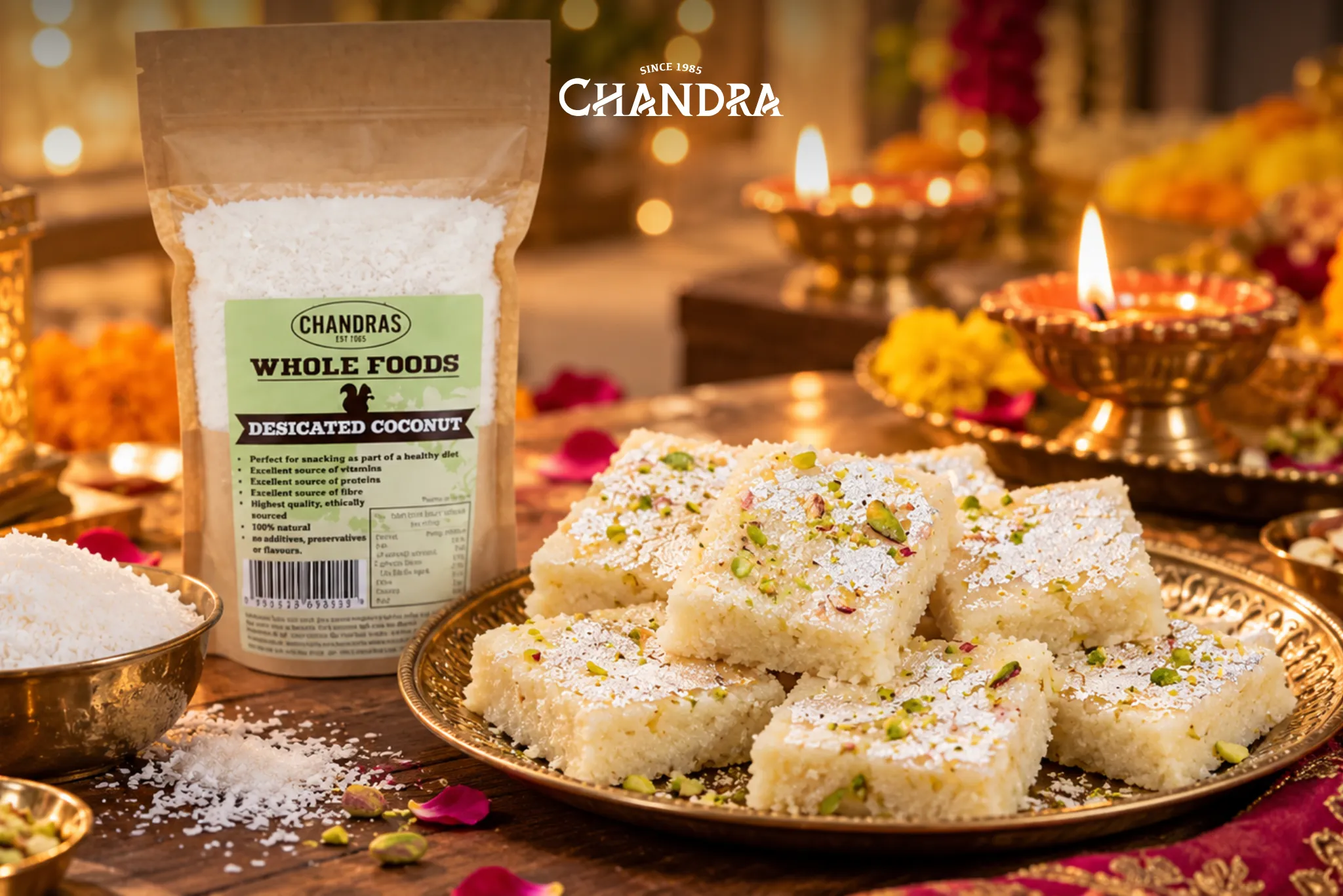
Every family has one Diwali sweet that appears without fail. In plenty of Gujarati and South Indian homes, it’s coconut barfi. Soft, fragrant with cardamom, finished with a scatter of nuts, and usually gone from the tin before the guests have even arrived. The good news is that you don’t need fresh coconuts, a grater or a whole afternoon to make it. A pack of desiccated coconut, a pint of milk and about 40 minutes is all it takes.
This coconut barfi recipe is the one we come back to every year. It’s simple enough for a first attempt, forgiving if you’re juggling three other things in the kitchen, and it sets into neat squares that look lovely on a Diwali plate or in a gift box. We’ve also included a quicker condensed milk version, a few flavour ideas and some tips on what to do with the rest of your coconut.
Why Desiccated Coconut Barfi Works So Well
Traditionally, nariyal barfi is made with freshly grated coconut. It’s delicious, but in the UK fresh coconuts can be hit and miss, and cracking and grating one takes time you don’t have the week before Diwali. Desiccated coconut barfi gives you almost the same result with far less effort.
- Consistent texture. Fine desiccated coconut cooks evenly, so you don’t get chewy strands next to soft ones.
- It keeps. A pack sits happily in the cupboard, so you can make a batch whenever guests are coming.
- It soaks up flavour. Dried coconut absorbs milk and cardamom beautifully, giving a rich, fudgy barfi.
- No waste. Use what you need and the rest goes into cakes, curries and breakfast bowls.
The one thing that matters is choosing unsweetened desiccated coconut. Sweetened coconut flakes from the baking aisle make the barfi far too sugary and change the texture. Chandra’s desiccated coconut is fine, unsweetened and 100% natural, so you control the sweetness yourself. If you’d like to know more about how it’s made and what else it’s good for, our guide on what desiccated coconut is covers it in detail.
Coconut Barfi Recipe (Made with Milk)
This is the classic method. It takes a little longer than the condensed milk version, but the flavour is cleaner and you can adjust the sugar to suit your family.
Makes: about 16 squares
Prep time: 5 minutes
Cooking time: 30 to 35 minutes
Setting time: 1 to 2 hours
Ingredients
- 200g unsweetened desiccated coconut
- 400ml whole milk
- 150g caster sugar (use 120g for a less sweet barfi)
- 2 tbsp ghee, plus a little extra for greasing
- ½ tsp ground cardamom
- A pinch of saffron soaked in 1 tbsp warm milk (optional)
- 2 tbsp sliced almonds and a few chopped pistachios to garnish
Method
- Prepare the tin. Grease a 20cm square tin or a steel thali with a little ghee and line the base with baking paper.
- Toast the coconut. Melt the ghee in a heavy-based, non-stick pan over a low heat. Add the desiccated coconut and stir for 2 to 3 minutes until it smells toasty but hasn’t changed colour. Don’t let it brown, or the barfi will look dull.
- Add the milk. Pour in the milk and turn the heat to medium. Stir often as the coconut soaks it up. This takes about 12 to 15 minutes. You’re looking for a thick, porridge-like mixture with very little liquid left.
- Add the sugar. Stir in the sugar. It will melt and loosen the mixture at first. Keep stirring for another 10 to 12 minutes.
- Check it’s ready. The barfi mixture is done when it pulls away from the sides of the pan and comes together in one soft mass when you push it with a spatula. A small piece rolled between your fingers should hold its shape.
- Flavour it. Turn off the heat and stir in the cardamom and the saffron milk, if using.
- Set it. Tip the mixture into the tin and press it flat with the back of a greased spoon or a piece of baking paper. Scatter over the almonds and pistachios and press them in lightly.
- Cut and cool. While it’s still warm, mark it into squares or diamonds with a sharp knife. Leave it to cool and set for 1 to 2 hours, then cut through and lift out.
Tips for Getting It Right
- Use a heavy pan. Thin pans catch on the bottom and give the barfi a burnt taste.
- Keep stirring once the sugar goes in. This is the stage where it’s most likely to stick.
- If it won’t set, it needed a few more minutes on the hob. Scrape it back into the pan and cook for another 3 to 5 minutes.
- If it’s crumbly, it was cooked too long. Add a splash of warm milk, stir over a low heat and set it again.
Quick Version: Coconut Barfi with Condensed Milk
Short on time? This version is ready to set in about 15 minutes and is very hard to get wrong.
- 200g unsweetened desiccated coconut
- 1 tin (397g) sweetened condensed milk
- 1 tbsp ghee
- ¼ tsp ground cardamom
Lightly toast the coconut in the ghee for 2 minutes. Add the condensed milk and stir over a low to medium heat for 8 to 10 minutes until the mixture leaves the sides of the pan. Add the cardamom, press into a greased tin, garnish and leave to set. Because condensed milk is already sweet, there’s no need to add sugar.
This version is a little softer and richer. The milk version is lighter and closer to the barfi you’d get from a traditional mithai shop. Both are good, so make whichever suits your week. If you only have time for one Diwali sweets recipe this year, the condensed milk version is the safest bet.
Flavour Variations to Try
Once you’ve made the basic barfi, it’s easy to change it up for the Diwali plate.
- Kesar coconut barfi. Double the saffron for a golden colour and a gentle floral flavour.
- Rose and pistachio. Add a few drops of rose water with the cardamom, and finish with plenty of pistachios. You can shell your own from a bag of pistachios in shell.
- Cashew and coconut. Stir 50g of roughly chopped cashew nuts into the mixture just before setting for extra bite.
- Golden raisin. Add a handful of golden raisins with the sugar. They plump up as they cook and add little bursts of sweetness.
- Two-layer barfi. Split the mixture in half. Colour one half pink with a drop of beetroot juice or food colouring, and layer it over the plain half.
- Chocolate coconut. Stir 2 tbsp cocoa powder into half the mixture for a version the children will fight over.
For the garnish, thin sliced almonds are the easiest choice. They sit flat, look neat and add a gentle crunch.
How to Serve and Store Coconut Barfi
Coconut barfi keeps well, which makes it ideal for making ahead of Diwali.
- At room temperature: 2 to 3 days in an airtight tin in a cool spot.
- In the fridge: up to a week. Bring it out 20 minutes before serving so it softens slightly.
- In the freezer: up to a month. Layer the pieces between baking paper and defrost in the fridge overnight.
On the Diwali table, serve barfi on its own plate rather than mixing it in with the savoury snacks. Moisture from the sweets can soften crisp pieces like chakri and para. Our guide to Gujarati Diwali snacks explains how families usually lay out the sweet and savoury sides of the festive plate. For the savoury side, the Diwali Indian savoury snacks festive collection covers the classics in one order.
Coconut Barfi as a Diwali Gift
Homemade mithai is one of the nicest things to give at Diwali. Pack six or eight squares into a small box lined with baking paper, add a ribbon and a handwritten card, and you’ve got a present that means far more than anything shop-bought. Pair it with a bag of nuts or dried fruit for a fuller box. Our guide to traditional Diwali gifts has more ideas for family, friends and colleagues.
More Ways to Use Desiccated Coconut
A pack of desiccated coconut goes a long way, and once Diwali is over you’ll find plenty of uses for the rest.
- Coconut ladoo. Use the same barfi mixture, but roll it into balls while warm and coat them in more coconut.
- Curries and chutneys. A spoonful thickens South Indian curries and adds sweetness to green chutney.
- Breakfast. Toasted coconut works beautifully in granola and porridge. Try our coconut and goji berry granola for an easy start.
- Coconut for baking. It’s the key ingredient in macaroons, Victoria sponge fillings, Bakewell-style traybakes and coconut cake. As the Christmas baking season begins, it’s worth keeping a pack in the cupboard.
If you bake a lot, the Baking Essentials Bundle brings almond flour, nuts and coconut together in one order, so you’re set for Diwali sweets and Christmas bakes alike.
Frequently Asked Questions
Can I make coconut barfi with desiccated coconut instead of fresh coconut?
Yes. Desiccated coconut works very well for barfi. Lightly toast it in ghee first, then cook it in milk so it softens and absorbs the liquid. The result is close to fresh coconut barfi, with a more even texture.
Should I use sweetened or unsweetened desiccated coconut for barfi?
Always use unsweetened desiccated coconut. Sweetened coconut makes the barfi overly sweet and can stop it setting properly. Unsweetened coconut lets you control the sugar.
How do I make coconut barfi without condensed milk?
Cook desiccated coconut in whole milk until the liquid is absorbed, then add sugar and keep stirring until the mixture leaves the sides of the pan. Add cardamom, press into a greased tin and leave to set for 1 to 2 hours.
Why is my coconut barfi not setting?
It usually means the mixture wasn’t cooked for long enough after the sugar went in. Return it to the pan and cook for a few more minutes over a low heat, stirring constantly, until it comes together in one mass.
How long does coconut barfi last?
Coconut barfi keeps for 2 to 3 days at room temperature in an airtight tin, up to a week in the fridge and up to a month in the freezer.
What is the easiest Diwali sweets recipe for beginners?
Coconut barfi made with condensed milk is one of the easiest. It needs only four ingredients, takes about 15 minutes on the hob and sets without any special equipment.
What other Diwali sweets can I make with desiccated coconut?
Coconut ladoo, coconut and jaggery barfi, coconut kheer and stuffed karanji (gujiya) all use desiccated coconut. The barfi mixture in this recipe can also be rolled into ladoo while warm.
Can I use desiccated coconut for baking?
Yes. Desiccated coconut is ideal for baking, including macaroons, coconut cake, flapjacks and traybakes. Fine, unsweetened desiccated coconut gives the most even texture in cakes and biscuits.