
Most Indian kitchens already run on seeds. There’s jeera crackling in the tadka, saunf in a little bowl after dinner and til on the chikki. It’s easy to buy seeds online UK-wide, but the useful part is knowing what to do with them once the pouch arrives. When you add chia, flax, pumpkin or sunflower to the shelf, you’re not learning a new way of cooking. You’re extending the one you already have. This guide takes the four seeds one at a time, with ideas that suit a dal-chawal week as easily as a porridge morning.
Seeds Have Always Been in the Indian Kitchen
Think about a normal week of cooking. Mustard and cumin seeds pop in hot oil at the start of almost every dal and shaak. Ajwain goes into gathiya and puri dough. Sesame sits on chikki. Poppy seeds thicken a rich gravy, and fennel comes out after the meal. Seeds are so ordinary that we rarely call them seeds. We call them masala.
Chia, flax, pumpkin and sunflower are bigger cousins of the same idea. They just turn up in different places, at breakfast, in a snack tin or on top of a salad. Once you see them that way, they stop feeling like a wellness project and start feeling like pantry staples. Start with one seed and one habit, and add the rest later.
Chia Seeds: Not the Same as Sabja
Many Indian families meet chia and assume it’s sabja, the basil seeds floating in a glass of falooda. They look alike and both swell in liquid, but they come from different plants. Sabja is sweet basil. Chia comes from a Salvia plant. Chia is milder and more neutral in taste, and its gel is a little softer.
The technique, though, is one you already know from sabja: soak first. Stir a spoonful into a glass of milk, plant milk or water, wait ten to fifteen minutes, then stir again so it doesn’t clump. Don’t eat a spoonful of dry chia and wash it down with water. Let it soak.
From there, the ideas are simple:
- Overnight pudding. Chia soaked in milk with crushed cardamom and a little jaggery, topped with mango or saffron.
- Chaas or lassi. A soaked spoonful adds body to a glass of buttermilk or sweet lassi.
- Smoothies. It thickens without changing the flavour.
- Jam. Stir into crushed fruit and leave for a few minutes for a quick, set jam.
If you want a mild, easy seed to start with, chia seeds are a sensible first pouch.
Flax Seeds: The Alsi Your Family May Already Know
Flax is alsi, and it has a long history in home cooking across India. In several regions, roasted alsi is ground into a dry chutney or pounded into winter sweets. So this is less a new ingredient than an old one with a new label.
One practical tip: grind it. Whole flax seeds are small and hard, and ground flax is much easier to mix into food. A small coffee grinder does the job in seconds. Here’s how flax fits into an ordinary day:
- In dough. Add a spoonful of ground flax to roti, thepla or paratha dough.
- In curd. Stir it into dahi or raita with a pinch of roasted cumin.
- As a chutney. Dry-roast lightly, then grind with chilli and salt to serve with rotla or khichdi.
- As an egg replacer. Mix one tablespoon of ground flax with three tablespoons of water, rest for five minutes and use it in baking.
Flax seeds, also sold as linseed, are worth buying whole and grinding in small batches. Ground flax goes stale faster, so keep it in a sealed jar.
Pumpkin Seeds: Kaddu ke Beej, Roasted and Spiced
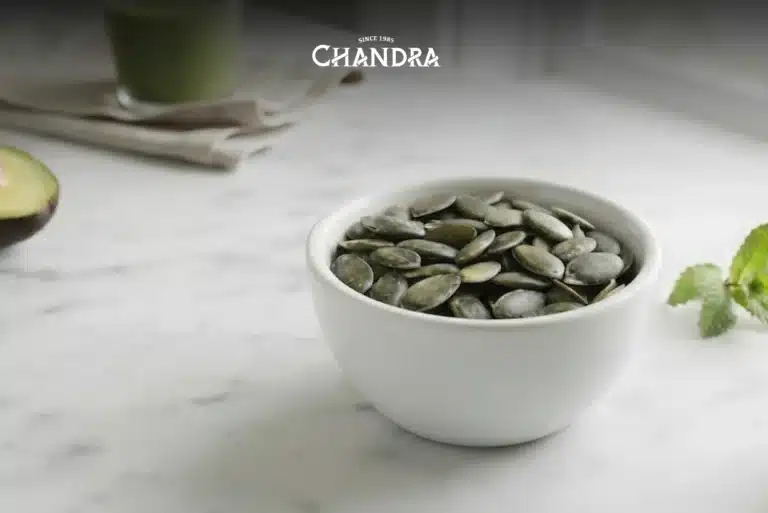
Pumpkin seeds are the easiest seed to like. They’re crunchy, mildly sweet and good straight from the pack. They’re also a source of magnesium and zinc, which is nice to know but not the reason to buy them. The reason is that they make everything more interesting.
Dry-roast them in a pan on medium heat for two or three minutes, until they puff up and begin to pop. Tip them into a bowl and toss with a pinch of salt, black pepper and a little chaat masala. That is your desk-drawer snack sorted.
Beyond snacking, they suit Indian food better than you’d expect:
- Scatter over poha or upma right before serving for a crunchy finish.
- Add to a cucumber or tomato raita for texture.
- Stir into a homemade trail mix with raisins and almonds.
- Press into jaggery chikki or fold into laddoo mixture.
If you’re stocking your first set of pumpkin seeds, buy a small pouch, roast half and see how quickly they disappear.
Sunflower Seeds: The Everyday Crunch
Sunflower seeds are the quiet all-rounder. They have a mild, nutty flavour that doesn’t compete with anything, so they slot into meals without a fuss. That makes them the easiest seed for fussy eaters and children.
Dry-roast them like pumpkin seeds, then keep a jar on the counter. Sprinkle over dahi, khichdi or a bowl of soup. Fold a handful into homemade granola. Add to a salad along with lemon and black pepper. Soaked and blended, they can also add body to a creamy sauce, as a lighter alternative to cashew paste.
They’re one of the friendliest seeds for baking too, because they hold their crunch in bread, muffins and flapjacks. When you’re ready for sunflower seeds, treat them as your everyday seed, the one that gets used up first.
A Quick Word on “Superfood” and Protein
You’ll see superfood seeds on plenty of labels. It’s a marketing word, not a scientific one, and no single seed transforms a diet. What seeds genuinely do is add fibre, healthy fats and crunch to meals you’re already eating. That’s plenty.
The same goes for high protein seeds. Pumpkin seeds are among the more protein-rich of the four, and chia and flax contribute some too. But you eat them by the spoonful, so think of them as a top-up. Dal, curd, paneer and pulses still do the heavy lifting.
Seeds for Baking and Seeds for Smoothies
Seeds for baking earn their place quickly. Fold sunflower and pumpkin seeds into bread dough or banana loaf. Use ground flax as an egg replacer, as above. Stir a spoonful of chia into fruit compote before spooning over a cake. A mix of all four, bound with dates or jaggery, makes decent homemade energy bars.
Seeds for smoothies work on a simple rule: one to two spoonfuls, no more. Chia thickens the drink, ground flax blends in smoothly, and a small spoon of pumpkin seeds adds body. Pair them with banana, mango or spinach. Too many seeds and the smoothie turns into pudding.
If you’re building a starter set, a few pouches of healthy seeds will cover baking, smoothies and snacking.
Buy Seeds Online UK: What to Check Before You Order
Not all seeds are equal, and the difference shows once the pouch is open. A few checks help:
- Freshness. Seeds contain natural oils, so old ones can taste flat or stale. Check the best-before date, and smell them when they arrive. They should smell mild and nutty.
- Ingredients. A seed pouch should contain only the seed. Nothing added.
- Packaging. A resealable pouch keeps seeds fresh for longer, and matters if you’ll use a little at a time.
- Allergen information. Seeds are often packed in facilities that also handle nuts, sesame or wheat. Read the allergen statement if it matters in your home.
- Pack size. Buy what you’ll use in a couple of months, not a year.
If you’d like to see the whole range in one place, you can browse premium healthy seeds online from Chandra Foods and choose a few to start with.
How to Store Seeds
Keep seeds in an airtight container in a cool, dark cupboard, away from the cooker and kettle. Use a dry spoon every time, since moisture is the enemy. If you buy in larger quantities, keep a small jar for everyday use and reseal the rest. Ground flax is best kept in the fridge. Roasted seeds should cool completely before going into the jar, or they’ll soften.
Bringing It All Together
Seeds don’t need a new kitchen or a new way of eating. They need one pouch, one habit and a bit of curiosity. Chia goes into a soaked pudding. Flax goes into dough or chutney. Pumpkin gets roasted and spiced. Sunflower goes on everything. The next time you buy seeds online UK-wide, start with the seed that fits your breakfast, and see how quickly it becomes routine. For a few more ideas, have a look at more ways to use seeds on our site.
Frequently Asked Questions
- Which seed should I start with?
Pumpkin or sunflower seeds are the easiest, because you can eat them straight from the pack or roasted. Chia suits you if you like puddings and drinks. Flax works best if you cook with dough or make chutneys. - Are chia seeds the same as sabja seeds?
No. Sabja seeds come from sweet basil, while chia seeds come from a Salvia plant. Both swell in liquid, but chia is milder and has a softer gel. - Do I need to grind flax seeds?
It’s not essential, but ground flax is easier to mix into dough, curd and smoothies. Grind small batches and store them in a sealed jar. - Can I eat seeds every day?
A spoonful or two a day is a common serving. Seeds are energy-dense, so they work as an addition to meals, not a replacement. If you have a medical condition or an allergy, check with your GP or a registered dietitian. - How should I store seeds?
In an airtight container in a cool, dark, dry place. Keep ground flax in the fridge. - Where can I buy seeds online in the UK?
Look for a UK seller with clear labelling, resealable packs and fresh stock. Chandra Foods sells chia, flax, pumpkin and sunflower seeds online with UK delivery.