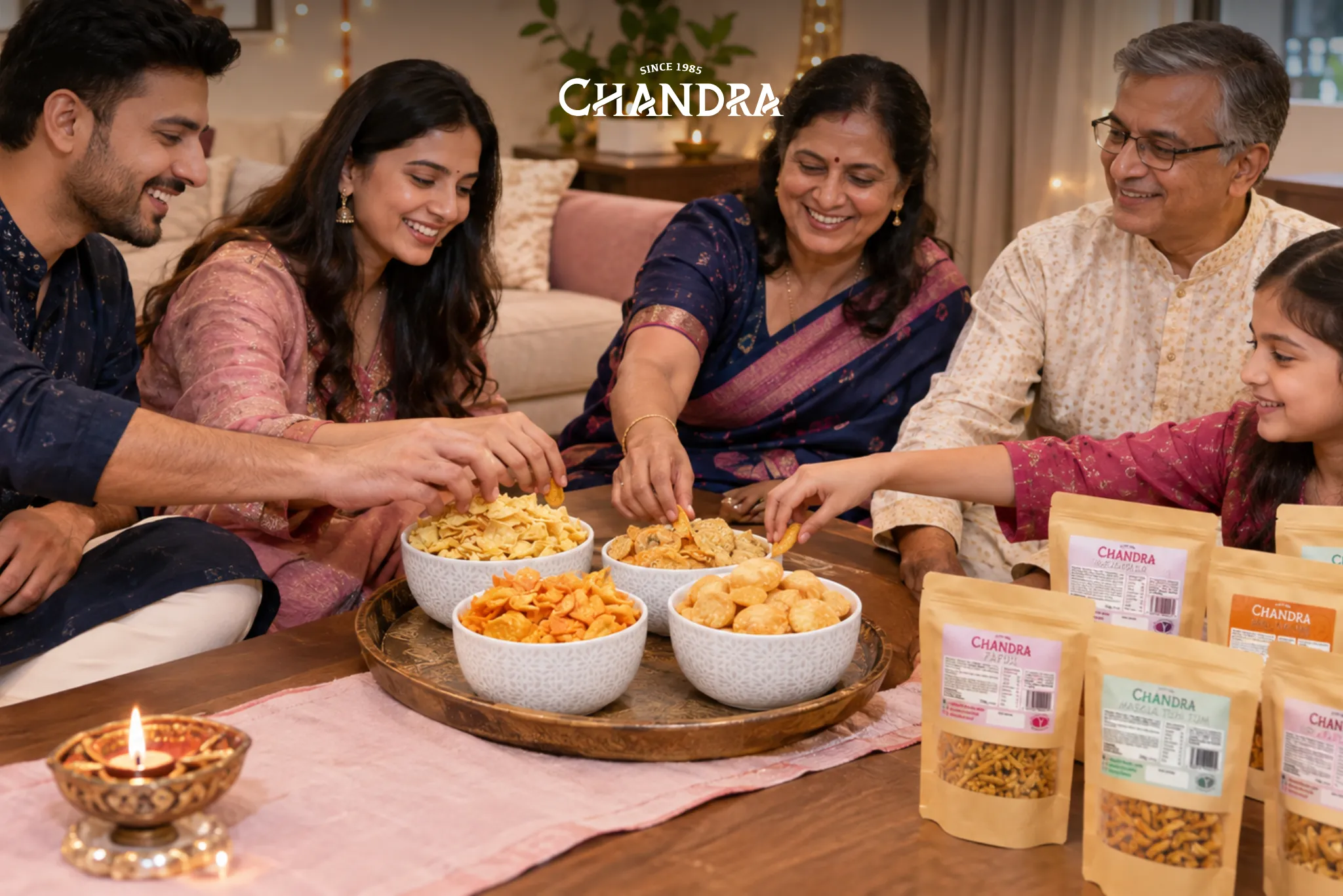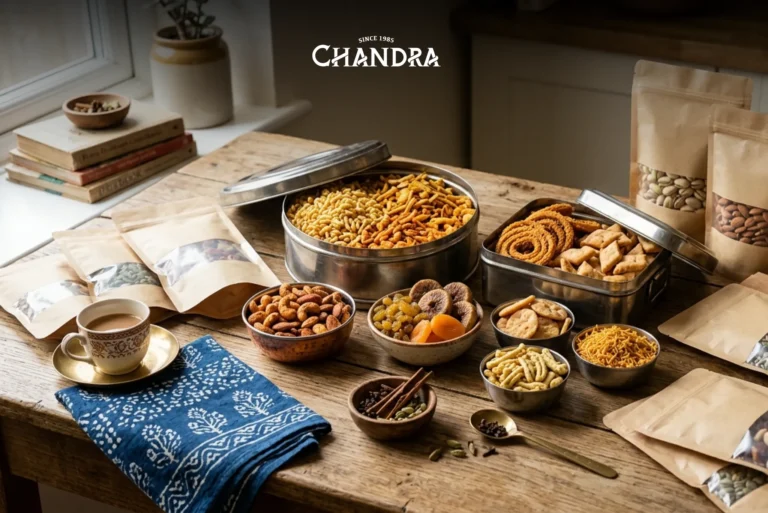


Indian chai-time snacks UK homes can rely on are more than just something to nibble alongside a hot cup of tea. Chai and something crunchy have always gone hand in hand in Indian households, whether it’s a simple afternoon break, a family gathering, or a quiet moment after a long day.
For many South Asian families living in the UK, chai time isn’t just about the drink. It’s a small daily pause, often shared with family or with a phone call home, and the snack that goes with it matters more than people give it credit for. From sev and gathiya to chakri, papdi and para, there are plenty of traditional Indian snacks that pair beautifully with chai.
In this guide, we’re rounding up 15 classic Indian chai-time snacks for UK homes, along with a little background on why they work so well together and how to bring them into your own tea-time routine.
Why Indian Snacks and Chai Are Such a Natural Pairing
Most traditional Indian snacks are savoury, spiced, and often fried or roasted – which is exactly what makes them such a good counterpoint to sweet, milky chai. The saltiness cuts through the sweetness of the tea, the crunch contrasts with the warmth of the drink, and the spice blends (think cumin, ajwain, black pepper, and asafoetida) actually complement the cardamom and ginger notes typically found in a good masala chai.
This isn’t a new idea, either. Across Gujarat, Maharashtra, and much of northern India, the four o’clock chai break has long been paired with something namkeen – the catch-all term for savoury Indian snacks. It’s less about a specific recipe and more about a rhythm: tea in one hand, a small bowl of something crunchy in the other.
If you’re building a routine like this in your own home, having a few reliable, good-quality Gujarati snacks on hand makes it much easier to keep the tradition going, even on busy weekdays.
15 Chai-Friendly Snacks Worth Keeping in Your Cupboard
1. Sev
Thin, crispy strands made from gram flour, sev is probably the most recognisable Indian snack of all. On its own, with a squeeze of lemon, or scattered over other dishes, it’s endlessly versatile. Nylon sev is finer and more delicate, while thicker varieties have more bite – both work brilliantly with chai. If you’re new to it, browsing a proper sev range is a good place to start, since texture and thickness vary more than people expect.
2. Gathiya
Made from besan (gram flour) dough that’s fried into ridged, savoury sticks, gathiya is a Gujarati staple that’s often eaten fresh in the morning with tea, but it holds up just as well in the afternoon. Bhavnagari gathiya, in particular, has a slightly spicier, more textured profile that pairs well with a strong cup of chai. For anyone wanting to explore the different styles, it’s worth looking at a dedicated gathiya selection rather than settling for whatever’s on the shelf at the local shop.
3. Chakri (Chakli)
These spiral-shaped, crunchy snacks are made from a spiced rice and gram flour dough, piped into rounds and deep-fried. Methi (fenugreek) chakri has a subtle bitterness that works surprisingly well against sweet chai, while the plain version is milder and more universally liked. Chakri also keeps well in an airtight container, which makes it a practical choice for stocking up.
4. Boondi
Tiny, crisp balls of gram flour, boondi is often eaten plain as a savoury snack or mixed into raita and chaat. The masala version, with its light coating of spice, is particularly good with chai because the small size means you can snack steadily without overdoing it.
5. Papdi
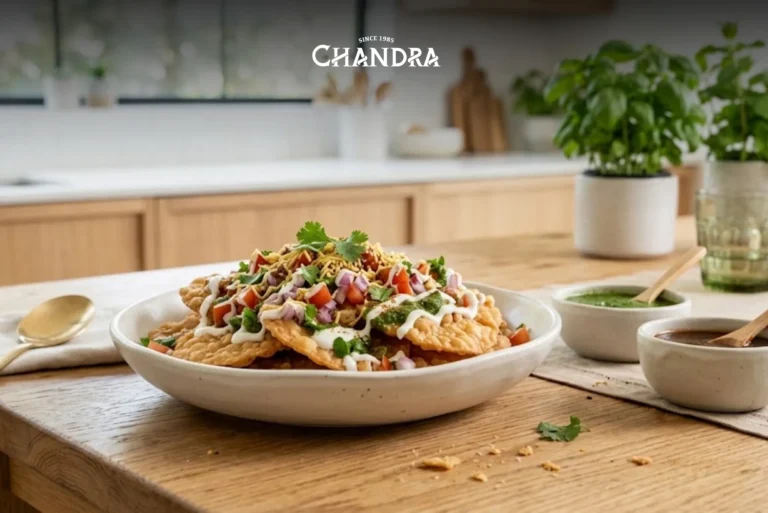
Flat, crisp discs made from a simple flour dough, papdi has a satisfying crunch and a mild, slightly salty flavour that doesn’t compete with the tea. It’s also the base for papdi chaat, so having a pack around means you’re set up for two different snacking occasions rather than just one.
6. Methi Chakri
Methi Chakri is a traditional Gujarati snack made with the earthy flavour of methi (fenugreek) and the familiar spiral shape and crunch of chakri. Its savoury, slightly herbal character makes it a natural pairing for sweet or milky chai. For anyone looking for methi chakri UK or traditional Gujarati snacks to enjoy at home, it is an easy addition to a tea-time snack cupboard.
7. Para (Shakarpara/Namak Para)
Diamond or strip-shaped fried dough pieces, para comes in both sweet and salty versions. The salty (namak) version, often flavoured with ajwain and black pepper, is a classic chai companion, especially in winter. It has a denser bite than sev or chakri, so a smaller handful tends to go further.
8. Fulwadi
A lesser-known but well-loved Gujarati snack, fulwadi is made from split moong dal and has a distinctive texture – crunchy on the outside with a slightly softer bite. It’s less commonly stocked outside specialist stores, which makes it a nice one to seek out if you want to introduce something a bit different to your usual chai spread.
9. Bhavnagari Gathiya
Worth calling out separately from regular gathiya, this thicker, spicier version originates from Bhavnagar in Gujarat and has a noticeably different character – chunkier, more textured, and with a more pronounced chilli kick. It’s a favourite among those who like their chai-time snacks with a bit more heat.
10. Ratlami Sev
Named after the city of Ratlam in Madhya Pradesh, this variety of sev is spicier and more aromatic than the standard version, often flavoured with black pepper, cloves, and other whole spices. It’s a good choice for anyone who finds regular sev a little one-note.
11. Pharsi Puri
Flaky, layered, and mildly spiced with ajwain, pharsi puri has a texture somewhere between a cracker and a puff pastry. It’s less immediately crunchy than sev or chakri but has a satisfying flakiness that works well alongside a milky chai.
12. Methi Puri
Similar in shape to pharsi puri but flavoured with fenugreek leaves, methi puri has a slightly bitter, herbal note that cuts through the sweetness of tea particularly well. It’s a good one for anyone who finds most namkeen a bit too salty or one-dimensional.
13. Black Pepper Papdi
Black Pepper Papdi brings a crisp texture and the distinctive warmth of black pepper to the traditional papdi-style snack. The peppery flavour pairs naturally with chai, particularly if you prefer savoury snacks with a little extra spice. It can be enjoyed straight from the pack as a tea-time snack, or kept on hand as a crunchy option for an Indian snack platter.
14. Mixed Namkeen
For days when you want variety without committing to a single snack, a mixed namkeen blend – usually a combination of sev, boondi, peanuts, and other small savoury bits – is the easiest option. It’s essentially the Indian equivalent of a bar snack mix, built for grazing over a longer chai session.
15. Masala Tum Tum
Masala Tum Tum is a crunchy Indian snack with a bold, savoury masala flavour, making it a good choice for anyone who likes a little more seasoning with their chai. Its crisp texture works particularly well with milky tea, giving you a satisfying contrast between the warm drink and crunchy snack. It is also a useful addition to a chai-time snack spread when you want something different from the usual sev and gathiya.
Building Your Own Chai-Time Snack Box
If you’re someone who wants a bit of everything rather than picking one snack at a time, a curated combo box takes the guesswork out of it. The Premium Tea Time Combo brings together several of the snacks mentioned above in one order, which is a practical option if you’re hosting guests, stocking up for the week, or simply don’t want to choose between sev and gathiya when you could have both.
It’s also worth thinking about how you store these snacks once they arrive. Most Indian namkeen items are best kept in airtight containers, away from direct sunlight and moisture – a humid kitchen cupboard near the kettle isn’t always the friendliest environment for anything fried or crisp. A few extra minutes spent decanting snacks into proper containers after opening will noticeably extend how long they stay crunchy.
A Few Tips for a Better Chai-and-Snacks Routine
- Match the spice level to the tea.
- A strongly spiced masala chai can hold its own against something like Ratlami sev or Bhavnagari gathiya, while a plainer, milkier chai might be better paired with something gentler, like khakhra or papdi.
- Keep portions small.
- Traditionally, chai-time snacking is about small handfuls over a longer period, not a full meal. A little bowl on the side, refilled as needed, tends to work better than a large plate all at once.
- Mix textures, not just flavours.
- Pairing something crisp (like chakri) with something flakier (like pharsi puri) makes for a more interesting spread than reaching for three variations of the same crunch.
- Don’t overlook the lighter options.
- Indian snacks UK
- Roasted chana and khakhra are easy ways to keep the tradition alive without leaning entirely on fried snacks, especially if chai time happens more than once a day.
Bringing the Tradition Home
Chai time, in most Indian households, was never really about the tea alone – it was about the pause it created and the small ritual of having something good alongside it. Recreating that in a UK home doesn’t require much: a decent chai recipe, a stocked cupboard of proper namkeen, and a few minutes set aside in the afternoon or evening.
Whether you’re after classic staples like sev and gathiya, something a little different like fulwadi, or a ready-made mix that takes the decision-making out of it entirely, Chandra Foods stocks a genuinely wide range of authentic snacks made with traditional recipes – the kind that make chai time feel like chai time again, rather than just tea with whatever’s left in the biscuit tin.
Frequently Asked Questions
- What is the most popular Indian snack to have with chai?
- Sev is probably the single most common choice, largely because it’s versatile, widely available, and comes in several different thicknesses and spice levels to suit different tastes.
- Are Gujarati snacks the same as Indian namkeen?
- Namkeen is the broader term for savoury Indian snacks in general, while Gujarati snacks refer specifically to the styles and recipes that originate from Gujarat, such as gathiya, chakri, and khakhra. Gujarati snacks are one large and well-known category within the wider namkeen family.
- What’s the difference between sev and gathiya?
- Sev is made purely from gram flour and pressed into thin strands, giving it a light, crispy texture. Gathiya uses a slightly different dough and is pressed into thicker, ridged sticks, which gives it a denser bite and a more pronounced flavour, especially in spicier varieties like Bhavnagari gathiya.
- Which chai-time snacks are a lighter option?
- Khakhra and roasted chana are generally considered lighter choices, since khakhra is roasted rather than fried and roasted chana is naturally low in added fat compared to most fried namkeen.
- How should I store Indian snacks to keep them fresh?
- Keep them in airtight containers away from direct heat, sunlight, and moisture. Kitchen cupboards near a kettle or hob can get humid, so a cooler, drier spot will help snacks like sev, chakri, and papdi stay crisp for longer.
- Can I order a mix of different chai-time snacks instead of buying them separately?
- Yes – a combo pack such as the Premium Tea Time Combo is designed to bring together a few different classic snacks in one order, which is a convenient way to build a varied chai-time spread without ordering each item individually.
Shop the Products Mentioned in This Guide
You can order boondi, nylon sev and tum tum from Chandra Foods, with free UK delivery on orders over £40.