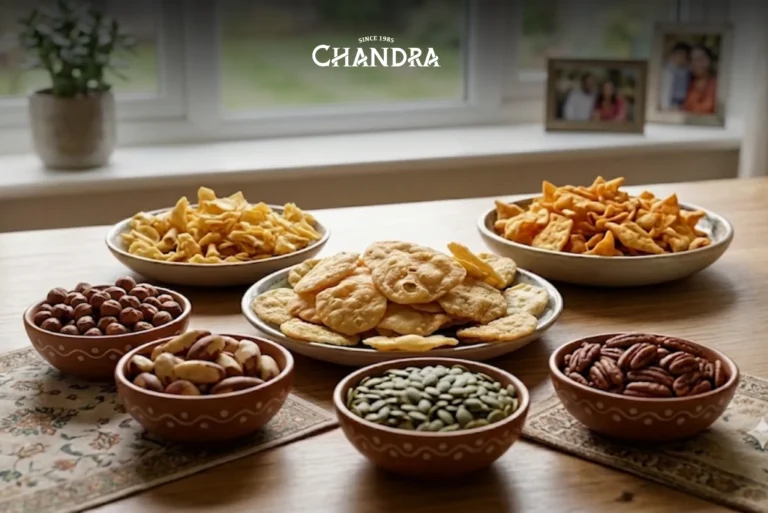

Where Heritage Meets Hygiene
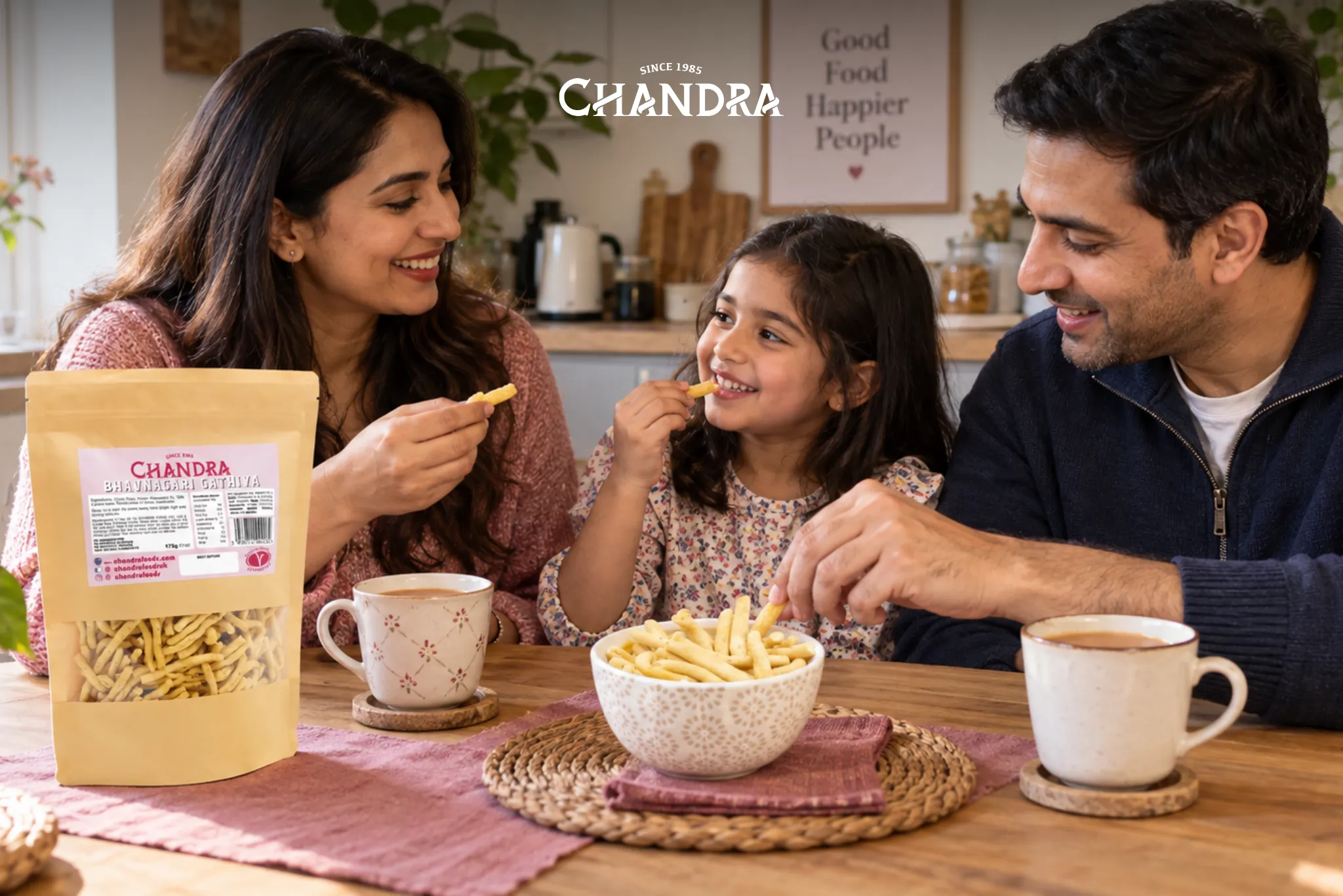
Walk into any Indian household during chai-time and you will find one thing: a tin of namkeen on the table, ready to be shared. These crispy, savoury snacks—known as indian savoury snacks uk or farsan in Gujarat—are more than just food. They are part of everyday rituals, celebrations, and the comfort of home.
At Chandra Foods, namkeen is not made by machines alone or by families alone—it is made where tradition and modern food safety come together. This is the story of how we bring Gujarati classics from our kitchen to yours, balancing recipes passed down through generations with the rigorous standards expected in the UK today.
The Gujarati Classics That Define Us
For over 40 years, Chandra Foods has been known for authentic Gujarati snacks that taste like something made at home—because in many ways, they are. Our back in stock Gujarati classics range includes favourites that have stood the test of time:
- Chakri – spiralled, deep-fried snacks made from gram flour and ajwain, with a satisfying crunch in every bite.
- Para – flaky, layered snacks (sweet or savoury) that pair perfectly with tea.
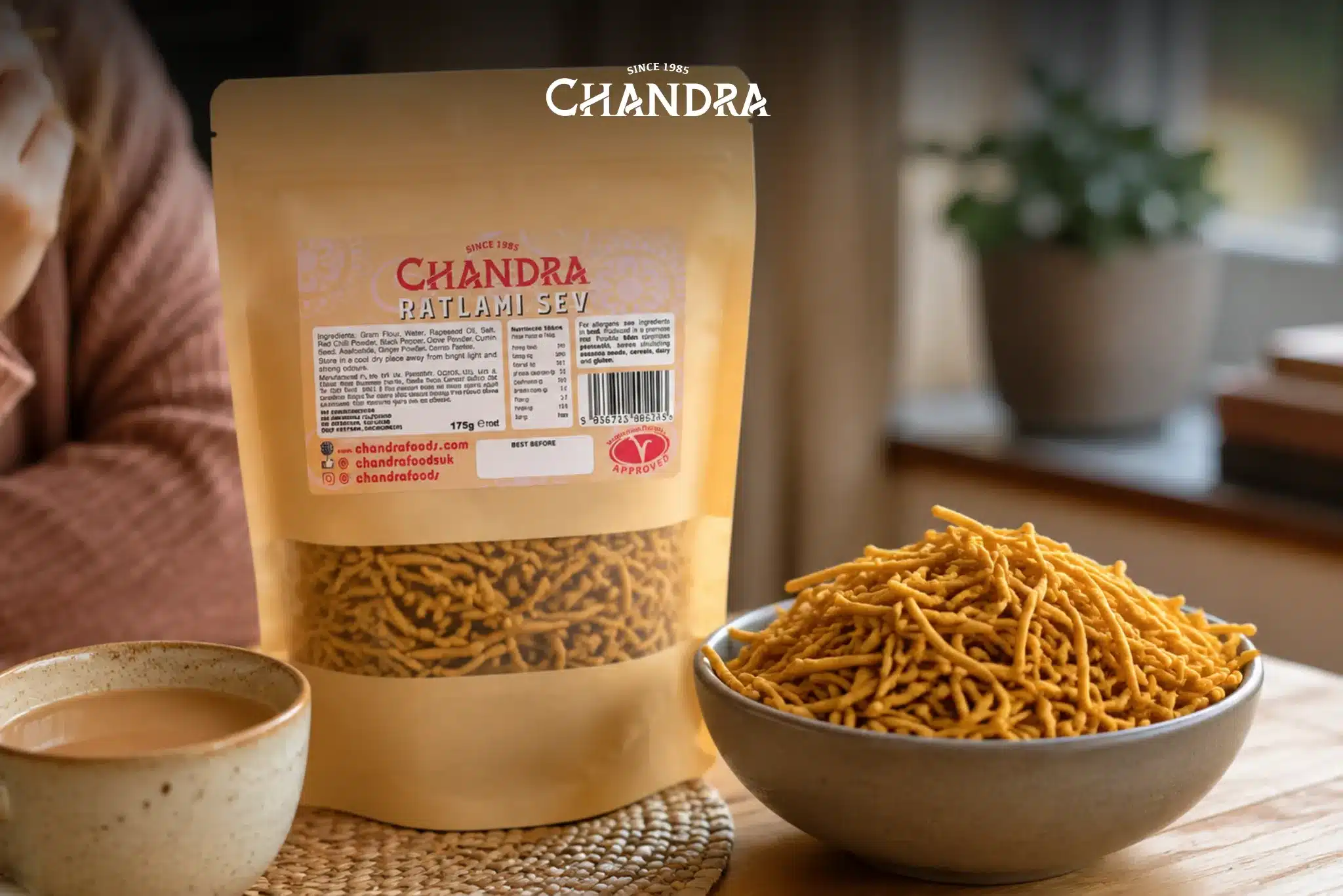
- Chevda – a mixed namkeen with peanuts, sev, spices and sometimes dried fruits, ideal for snacking or gifting.
- Farali Chevda – specially made for fasting days, using ingredients like potatoes, peanuts and sabudana.
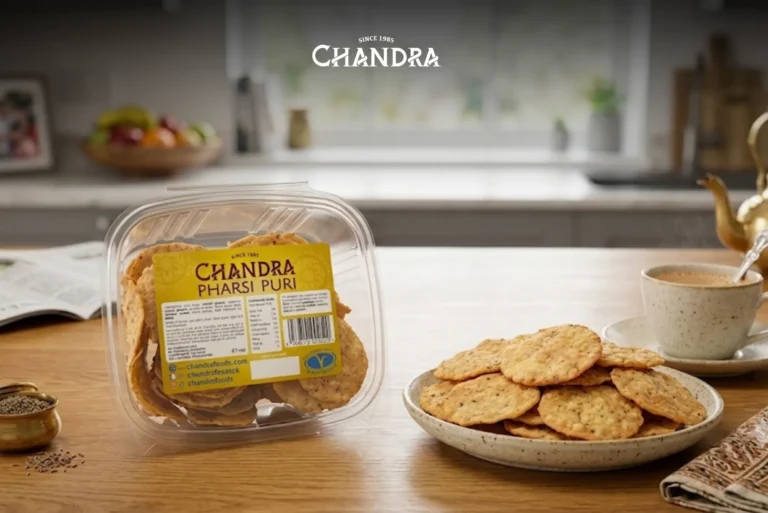
- Methi Masala Puri – crispy puris infused with fenugreek and spices, a teatime essential.
These snacks are not new inventions—they are time-tested recipes that have been enjoyed across Gujarat for generations. What makes Chandra Foods different is how we make them: with respect for the recipe, and respect for the people who eat them.
How Traditional Namkeen Is Made: The Process Behind the Flavour
Making authentic namkeen is not a quick process. It requires patience, precision, and an understanding of how ingredients behave at every stage.
1. Sourcing the right ingredients
Quality namkeen starts with quality ingredients. Gram flour (besan), rice flour, wheat flour, spices like ajwain and jeera, and fresh oil are all chosen carefully. In Gujarati cooking, even small differences in flour texture or spice freshness can change the final taste.
At Chandra Foods, we work with trusted suppliers to source ingredients that meet both traditional standards and UK food safety regulations.
2. Preparing the dough
Each snack has its own dough recipe. For chakri, gram flour is mixed with oil, ajwain, salt, and water to create a firm, pipeable dough. For para, the dough is layered and folded multiple times to create flakiness. For chevda, different components—sev, peanuts, spices—are prepared separately before mixing.
This stage is where the “hand-feel” of traditional cooking still matters. Experienced team members can tell by touch if the dough needs more water, more fat, or more resting time.
3. Shaping and frying
Once the dough is ready, it is shaped—either by hand, with moulds, or using traditional tools. Chakri is piped into spirals, para is cut into diamonds, and sev is pressed through fine sieves.
The frying process is critical. Too hot, and the snack burns on the outside while staying raw inside. Too cool, and it absorbs oil and loses crispness. Traditional namkeen makers watch the colour, listen to the sizzle, and adjust the heat constantly—a skill that takes years to master.
4. Seasoning and cooling
After frying, the snacks are drained and seasoned while still warm. For chevda, this is when peanuts, raisins, curry leaves, and spice powders are mixed in. The snacks are then cooled completely before packing, because even a little trapped moisture can ruin crispness.
This cooling and inspection stage is where modern food safety meets tradition: we check texture, taste, colour, and moisture content to ensure every batch meets our standards.
Where Modern Food Safety Comes In
Traditional recipes are the soul of our snacks, but modern food safety is what makes them safe, consistent, and trustworthy for UK customers.
Hygienic production environment
All production happens in a controlled, clean environment with proper ventilation, temperature monitoring, and hygiene protocols. Team members follow strict handwashing, PPE (personal protective equipment), and sanitation procedures—standards that go far beyond what a home kitchen could achieve.
Quality control at every stage
From raw material inspection to final packaging, quality checks happen throughout the process:
- Raw materials are checked for freshness, contamination, and compliance with UK food standards.
- In-process checks monitor dough consistency, frying temperature, and oil quality.
- Finished product testing ensures the right texture, flavour, moisture level, and shelf life.
This layered approach means that problems are caught early, not after the snack reaches your home.
Traceability and allergen management
Every batch is tracked from ingredient to pack, so if any issue arises, we can trace it back to the source. Allergen information is clearly labelled, and cross-contamination risks are managed through dedicated production lines and cleaning protocols.
For UK customers, this transparency matters—especially for families managing dietary needs or allergies.
Packaging that protects freshness
Once the snacks are cooled and checked, they are packed in airtight, food-grade packaging that locks in freshness and protects against moisture, light, and air. Proper packaging is not just cosmetic—it is what keeps chakri crisp and chevda crunchy for weeks, even after the pack is opened.
Why Handmade Still Matters
Even with modern equipment and safety systems, some parts of namkeen-making still rely on human skill and judgement.
The “eye and hand” test
Experienced makers can spot a bad batch by sight, smell, or touch long before any machine would flag it. They know when dough needs more rest, when oil needs changing, or when a snack is not quite crispy enough.
That combination of traditional knowledge and modern tools is what keeps quality consistent, even as we scale production.
Small-batch consistency
While some namkeen is made in large volumes, Chandra Foods still uses small-batch techniques for certain snacks to preserve texture and flavour. Smaller batches mean more control, better attention to detail, and a final product that tastes closer to homemade.
From Our Kitchen to Your Table: The Journey of a Snack
Once packed, our indian savoury snacks uk range goes through final inspections before being sent to retailers or delivered directly to customers.
Storage and distribution
Snacks are stored in cool, dry warehouses and transported in vehicles that protect them from heat and humidity. This careful handling ensures that the chakri or chevda you open at home tastes just as crisp as it did when it left our facility.
Supporting local and national supply
Chandra Foods serves both local London communities and customers across the UK through online ordering. Whether you are buying from a neighbourhood shop or ordering a Gujarati classics bundle online, you are getting the same quality and care in every pack.
Why Gujarati Classics Are More Popular Than Ever
In recent years, there has been a resurgence of interest in regional Indian snacks, especially Gujarati namkeen. Part of this is nostalgia—people wanting to reconnect with childhood flavours. Part of it is curiosity—new customers discovering the variety and complexity of Indian savoury snacks.
A snack for every moment
- Chai-time: Chakri and methi puri with hot tea.
- Festive gifting: Chevda and para in decorative tins.
- Fasting days: Farali chevda and sabudana snacks.
- Office snacking: Mixed namkeen for shared pantries.
Gujarati snacks fit modern UK lifestyles because they are portable, shelf-stable, and satisfying without being overly heavy or sweet.
Explore Our Gujarati Classics Range
If you want to experience authentic Gujarati namkeen made the right way—with traditional recipes and modern food safety—start here: shop Gujarati classics.
Every snack is made with care, tested for quality, and packed to preserve freshness. Whether you are buying for yourself, your family, or as a gift, you are getting the kind of indian savoury snacks uk that honour both heritage and hygiene.
Final Thought: Tradition You Can Trust
At Chandra Foods, we believe you should not have to choose between authentic flavour and modern safety standards. Our snacks kitchen is where both come together—where recipes passed down through generations meet the rigorous food safety practices expected in the UK today.
Every batch of chakri, chevda, para, and farali snacks is a result of that balance: handmade where it matters, controlled where it counts, and always made with respect for the people who will eat it.
Explore the full range of Gujarati classics and taste the difference that tradition and care can make.
FAQ
- Are Chandra Foods snacks made in the UK?
- Yes, many of our Gujarati classics are freshly made in the UK using traditional recipes and modern food safety standards.
- What makes Gujarati namkeen different from other Indian snacks?
- Gujarati namkeen is known for its use of gram flour, subtle spicing, and techniques like layering and spiral-shaping that create unique textures.
- Are your snacks suitable for fasting?
- Yes, we offer farali chevda and other fasting-friendly snacks made with ingredients that comply with Hindu fasting traditions.
- How long do your snacks stay fresh?
- When stored in an airtight container in a cool, dry place, our snacks stay crisp for several weeks.
Shop the Products Mentioned in This Guide
You can order farali chevda, methi masala puri and chakri from Chandra Foods, with free UK delivery on orders over £40.