Ask an Indian household what to eat when digestion feels sluggish and you’ll hear a familiar list: warm water, ajwain, saunf, buttermilk, a spoonful of ghee. Prunes rarely make the list, yet more and more people are asking about dried prunes for digestion. This guide looks at prunes the way an Ayurvedic kitchen might: as one food among many, eaten mindfully and in small amounts. It also covers how to eat them, how many are enough and what to check when you buy.
Aloo Bukhara: How a Plum Travelled to the Indian Kitchen
Prunes are dried plums. In Hindi they’re aloo bukhara. Here aloo is the Persian word for plum, not the potato. Bukhara points to the route the fruit took, from Central Asia and Persia along the trade roads into Indian kitchens and folk traditions.
It’s worth saying up front that prunes are not a classical Ayurvedic ingredient the way ghee, ajwain, saunf or draksha are. Raisins, including black raisins (kali kishmish, and the larger munakka), have a much longer history in Indian sweets and home cooking. Prunes came later and settled in.
So what does an “Ayurvedic view” mean here? It means using Ayurveda’s way of thinking about digestion, not claiming an ancient recipe for prunes. That way of thinking turns out to be quite practical.
What Ayurveda Says About Digestion, in Plain Words
Ayurveda puts digestion at the centre of everyday health. The ideas are simple, and most of them will sound familiar:
- Agni, the digestive fire. Eat at regular times, and eat when you’re actually hungry, not out of habit or boredom.
- Warm and soft over cold and dry. Cooked, moist, freshly prepared food is generally favoured. That’s why dried fruit and nuts are traditionally soaked before eating.
- Spices as helpers. Fennel, cardamom, ginger and cumin are used to make sweet or heavy foods feel lighter.
- Small portions of sweet, heavy foods. Dried fruit is sweet and dense, so a little goes a long way.
- Your own constitution. What suits one person may not suit another. Listen to your body and adjust.
This is a traditional framework, not a medical one. Prunes fit into it well if you soak them, keep the portion small and pair them with warming spices.
What Is Actually in a Prune?
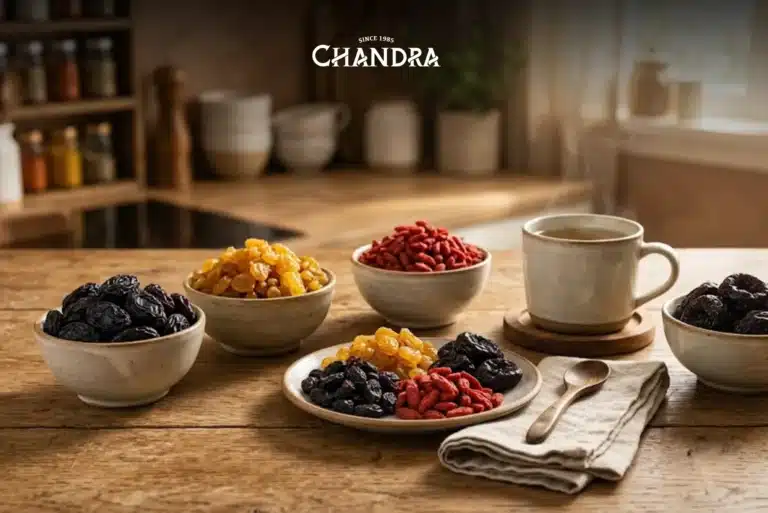
Strip away the tradition and a prune is a dried plum with a few notable features. It’s a source of fibre, and it contains sorbitol, a natural sugar alcohol that draws water into the gut. That combination is why prunes come up so often in conversations about digestion. Prunes also carry more fibre than most dried fruit. Golden raisins and other raisins have some, but less.
Good pitted prunes are also sweet enough on their own. Their natural sweetness needs no added sugar, though it’s concentrated, so portion size matters.
Fibre also works best with fluids. General NHS advice for occasional constipation is to eat more fibre-rich foods, drink plenty of water and stay active. Prunes can be one part of that picture. They aren’t a cure, and they’re not a substitute for medical advice.
How to Eat Prunes the Ayurvedic-Friendly Way
The traditional habits are practical: soak, spice and keep the portion small. Here’s how that looks in a normal week:
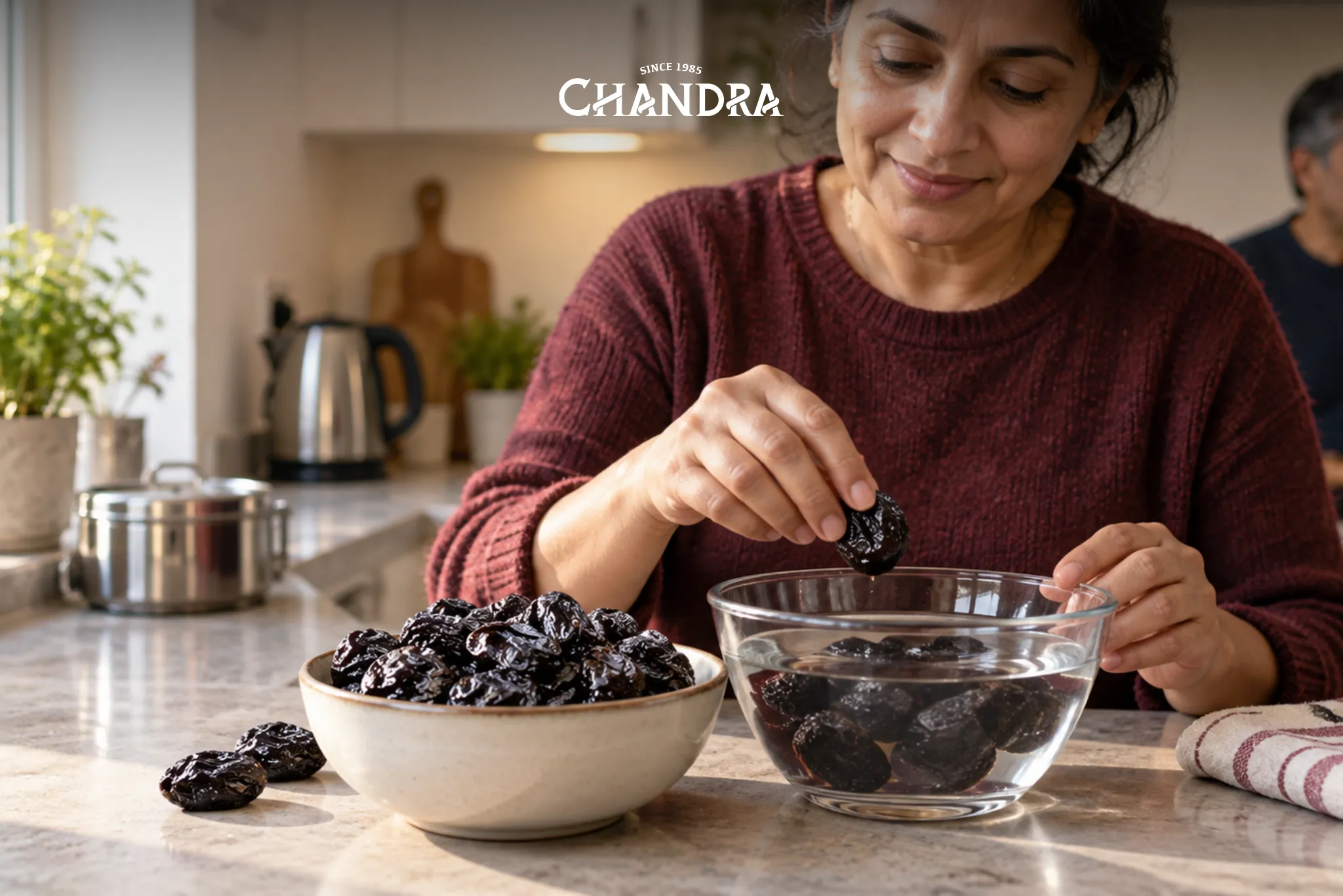
- Soak overnight. Put two or three prunes in a cup of warm water, cover them and leave them until morning. If you like, soak a few almonds alongside, as many Indian households do. The fruit turns plump and soft, and it’s much gentler to eat first thing.
- Add warming spices. Crush a cardamom pod over them, add a pinch of ground ginger or chew a few fennel seeds afterwards.
- Stew them with a cinnamon stick. Simmer soaked prunes gently for ten minutes with a cardamom pod and a cinnamon stick. Spoon over curd or eat warm.
- Stir into porridge. Chop soaked prunes into oats with a pinch of cinnamon and a spoonful of ground flax seeds, which add extra fibre.
- Make a quick chutney. Blend soaked prunes with a little tamarind, roasted cumin and ginger for a sweet-and-sour chutney that works like a date chutney.
- Use them like raisins. Chop a few into kheer or sheera at the end of cooking.
How Many Prunes Is Enough?
Start small. Two or three a day is plenty while you see how your body responds. Increase slowly, and drink water through the day. Too many at once can cause loose stools, wind or cramps, and that’s usually a sign to cut back, not push on.
A few groups should check first. Prunes are high in sorbitol, which is a FODMAP, so they can aggravate symptoms for some people with IBS. They’re also sweet and energy-dense, so anyone managing diabetes should talk to a GP or dietitian about portions. The same goes for children, pregnancy, older adults and anyone on regular medication.
And if constipation is persistent, or comes with pain, blood in the stool or unexplained weight loss, please see your GP rather than relying on food alone.
Buy Prunes Online: What to Check Before You Order
Whether you search “buy prunes online” or “pitted prunes buy UK”, the listings tend to look identical. The differences show once the pack is open. A few things are worth checking:
- Texture. Good prunes are soft, plump and slightly sticky. Hard, dry or sugar-crusted ones are old.
- Ingredients. Look for prunes and nothing else. Some dried fruit contains preservatives, so read the label if you prefer to avoid them.
- Stones. Even pre-pitted prunes can occasionally hold a stray fragment. Check before you bite.
- Pack size. If you’re comparing a pitted prunes 200g price UK listing with larger bags, look at the price per 100g, not the price per pack. And if you’d like pitted prunes bulk, only buy what you’ll finish before the best-before date.
- Packaging. A resealable pouch keeps the fruit soft between uses.
- Allergens. Read the allergen statement, especially if you’re buying for someone with a nut or sesame allergy.
If you’d like to start small, Chandra Foods sells pitted prunes UK households can have delivered, packed in a resealable pouch.
Storing Prunes
Keep prunes in an airtight container in a cool, dry cupboard, away from the cooker and kettle. Use a dry spoon or dry fingers each time. If a batch turns firm, soak it briefly and use it for stewing or baking. If you buy a larger pack, decant a small jar for everyday use and reseal the rest.
The Gentle Way to Use Prunes
Prunes aren’t a miracle food, and Ayurveda wouldn’t call them one. They’re a sweet, fibre-rich dried fruit that works best when it’s soaked, spiced, eaten in small amounts and paired with good habits around meals and water. If you’re exploring dried prunes for digestion, start with two or three, notice how you feel and build from there. To see what else belongs on the dried fruit shelf, browse the full range of dried fruits.
This article is for general information and isn’t medical advice. If you have a health condition or are worried about your digestion, speak to your GP or a registered dietitian.
Frequently Asked Questions
- Are dried prunes good for digestion?
Prunes contain fibre and sorbitol, and they’re a well-known part of high-fibre eating. They aren’t a treatment, and results vary from person to person. Eat a small portion, drink plenty of water and speak to your GP if problems continue. - Are prunes part of Ayurveda?
Not in the classical texts. Prunes (aloo bukhara) arrived in India later, through Central Asian trade. Ayurvedic ideas about digestion, such as soaking, spicing and eating in moderation, can still be applied to them. - How many prunes should I eat a day?
Start with two or three and see how you feel. Increase gradually if you need to, and reduce if you notice loose stools, wind or cramps. - Should I soak prunes before eating them?
It’s optional, but soaking overnight makes them softer and is the traditional way to eat dried fruit. Soaked prunes also blend easily into porridge and chutneys. - Can I eat prunes every day?
Many people do, in small portions. Prunes are sweet and energy-dense, so keep an eye on quantity. If you have IBS, diabetes or another health condition, check with your GP or dietitian first. - How should I store prunes?
In an airtight container in a cool, dry place, with a dry spoon each time. Check the best-before date on the pack.