Building your own healthy snack box sounds simple in theory – grab a handful of this, a scoop of that – but anyone who’s actually tried it knows the results can be hit or miss. Too many nuts and it feels heavy. Too many seeds and it’s all texture, no substance. Get the balance right, though, and a good mixed nuts and seeds box becomes one of the easiest, most reliable snacks to keep around, whether it’s for the desk drawer, the car, or the kitchen cupboard.
If you’re looking into a proper mixed nuts and seeds UK combo, or trying to work out what actually belongs in a healthy snack box rather than just throwing random ingredients together, this guide covers what to include, why the balance matters, and how to put one together that you’ll genuinely want to keep eating.
Why Nuts and Seeds Work So Well Together
Nuts and seeds are often grouped together, but they bring quite different things to a snack mix. Nuts tend to be higher in healthy fats and give a snack its satisfying, satiating quality – the reason a small handful of almonds or cashews keeps you going longer than something like crisps. Seeds, on the other hand, are typically smaller in portion but pack in fibre, minerals, and a different fat profile, particularly seeds like flax and chia, which are known for their omega-3 content.
Combined, the two cover more nutritional ground than either does alone, which is really the whole logic behind a mixed nuts and seeds box in the first place. It’s not just about variety for the sake of it – the combination genuinely rounds out what a single-ingredient snack can’t.
The Core Nuts Worth Including
Not every nut needs to make it into your box, but a handful of staples consistently earn their place.
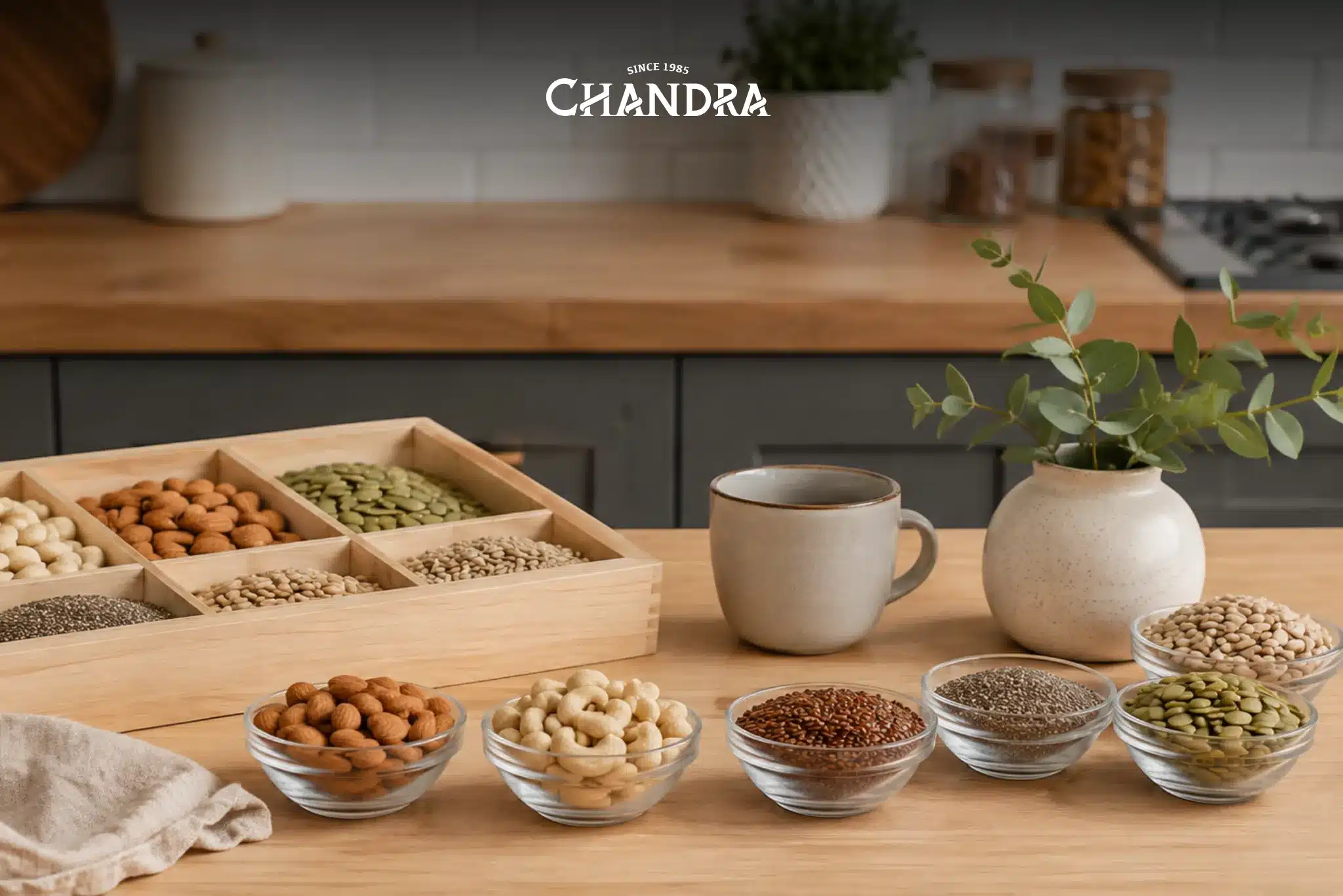
Almonds are usually the backbone of any good mix – mild, versatile, and easy to eat in quantity without becoming overwhelming. Cashews bring a softer texture and a slightly sweeter flavour that balances out anything sharper in the mix. Walnuts add a distinct, slightly bitter note along with a good dose of omega-3 fats, which makes them a common addition to more health-focused blends. Brazil nuts, while usually included in smaller amounts, are worth having in the mix for their selenium content – just one or two a day covers most people’s needs. Pecans and hazelnuts are less essential but add variety if you want a box that feels a bit more indulgent without straying from whole, unprocessed ingredients.
For anyone who’d rather not measure out five or six individual nut varieties every time, a pre-balanced mixed nuts selection takes care of the ratio for you, which is generally the easier starting point if you’re building a box for daily use.
The Seeds Worth Adding
Seeds are where a lot of homemade snack mixes fall short, mostly because people either skip them entirely or add far more than needed. A little goes a long way here.
Pumpkin seeds are one of the most snackable seeds on their own – crunchy, mildly nutty, and easy to eat by the handful. Sunflower seeds offer a similar texture with a slightly different flavour profile and are often a more budget-friendly base for bulking out a mix. Chia and flax seeds are usually too small to eat as a standalone handful, but a spoonful mixed through the rest of the box adds fibre and omega-3s without changing the texture much. Hemp seeds, softer and slightly nutty, are another good addition if you want extra plant-based protein without leaning further on the nuts themselves.
Sourcing these individually can get fiddly, which is exactly the gap a ready-made seeds selection or seed-specific combo fills – particularly useful if seeds are the part of your box that keeps running out first.
Dried Fruit: Optional, But Worth Considering
Not every healthy snack box needs dried fruit, but a small amount can make a noticeable difference to how often you actually reach for the box. A few chopped dates, a handful of dried apricots, or a small portion of dried mango adds natural sweetness that balances out the more neutral, savoury character of nuts and seeds on their own.
The key word here is small. Dried fruit is more calorie-dense than fresh fruit, so it works best as an accent rather than a main component – roughly one part dried fruit to every three or four parts nuts and seeds tends to strike a reasonable balance. Browsing dried fruits individually lets you pick exactly which ones you want to add, rather than committing to a fixed ratio.
Building the Ratio That Actually Works
There’s no single “correct” ratio, but a reasonable starting point looks something like this: roughly 50–60% nuts as the base, 20–30% seeds, and the remaining 10–20% left for dried fruit or something with a bit more sweetness. From there, it’s really about adjusting to your own taste – more seeds if you want extra fibre, less dried fruit if you’re watching sugar intake, more variety in the nuts if you find yourself getting bored of the same two or three.
If you’d rather skip the maths altogether, a premium nuts combo already accounts for a sensible everyday balance, while a dedicated nuts and seeds box leans further toward the seed side for anyone specifically after the fibre and omega-3 benefits seeds bring.
Beyond Snacking: Other Uses for a Good Nuts and Seeds Mix
A well-balanced box isn’t only for eating straight from the container. Nuts and seeds are genuinely useful pantry staples once you start looking at them that way.
Breakfast and smoothies. A spoonful of mixed seeds stirred into porridge or blended into a smoothie adds texture and nutrition without much extra effort. Baking. Chopped nuts work well folded into banana bread, granola bars, or biscuits, and if baking is a regular habit, a baking essentials combo built specifically around nuts suited to that purpose saves picking through a snacking mix for the right ones. Salads. A scattering of toasted seeds or chopped nuts adds crunch to an otherwise soft salad, and it’s one of the simplest ways to make a basic lunch feel more substantial. Yoghurt bowls. Much like porridge, a spoonful of mixed nuts and seeds turns a plain yoghurt into something closer to a full snack or light meal.
Why Portion and Storage Matter More Than People Think
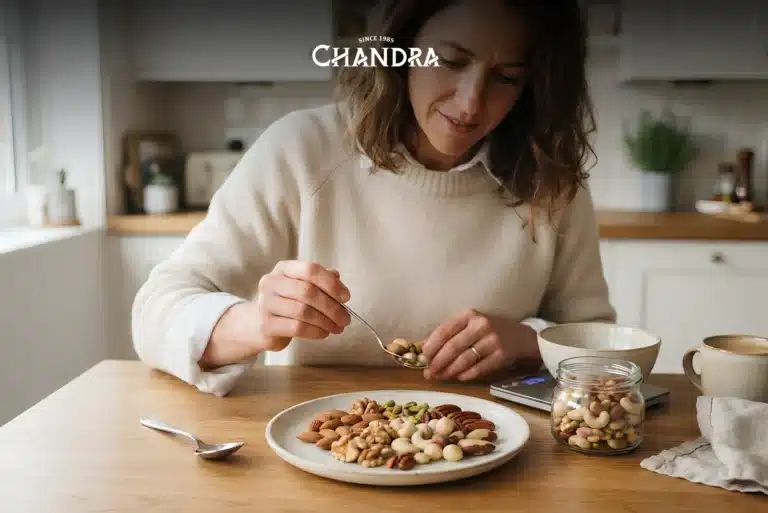
Nuts and seeds are calorie-dense, which is part of why they’re satisfying in small amounts – but it also means portioning matters more here than with lower-calorie snacks. A small bowl or a pre-portioned container tends to work better than eating straight from a large bag, mostly because it’s easy to underestimate how much you’ve eaten when the pieces are small.
Storage is worth getting right too. Nuts and seeds, particularly once a bag has been opened, are best kept in an airtight container away from heat and direct sunlight, since their natural oils can turn rancid faster than most people expect in a warm kitchen. If you’re buying in a larger quantity, decanting into smaller containers for daily use, rather than repeatedly opening and closing one large bag, helps keep the rest fresher for longer. Buying through a bulk nuts option makes sense if you go through your snack box quickly, though it’s worth having a proper storage plan in place before committing to a larger quantity.
Choosing Based on What You Actually Want From It
Not everyone building a snack box is after the same thing, and it’s worth being honest about your own priorities before deciding on a mix.
If you’re after something for the gym or general protein intake, leaning more heavily on almonds, pistachios, and pumpkin seeds, which tend to sit higher in protein relative to other nuts and seeds, makes sense. A protein-focused nut selection is worth a look if this is the main goal.
If digestion or fibre intake is the priority, seeds tend to do more of the work than nuts, so a mix weighted toward flax, chia, and pumpkin seeds is the better direction.
If you’re simply after something raw and minimally processed, checking that your mix is unroasted and unsalted matters more than the specific ratio – a raw nuts selection is the more straightforward starting point here rather than a pre-flavoured blend.
If you’d rather avoid anything treated or sprayed, an organic nuts option narrows things down without requiring you to check every individual ingredient’s sourcing yourself.
A Few Practical Tips
Don’t over-roast or over-salt your own mix. If you’re combining raw ingredients yourself, it’s tempting to roast and season everything for extra flavour, but this adds unnecessary sodium and reduces some of the nutritional benefit that makes nuts and seeds a genuinely healthy snack in the first place.
Rotate your mix occasionally. Eating the exact same combination every day tends to lead to snack fatigue faster than people expect. Swapping in a different nut or seed every few weeks keeps things interesting without needing a complete overhaul.
Keep a smaller “grab and go” portion separate. If your main box lives in the kitchen, having a smaller, pre-portioned version in your bag or at your desk makes it far more likely you’ll reach for it instead of something less useful.
Check for allergies before sharing. If you’re making up a box to share at work or with family, it’s worth flagging nut content clearly, since tree nut allergies are common and not always obvious from the outside of a mixed container.
Putting It All Together
A genuinely good healthy snack box isn’t complicated – it just needs a sensible mix of nuts for staying power, seeds for fibre and extra nutrients, and a small amount of dried fruit if you want a touch of sweetness. Whether you build your own from individual ingredients or start with a ready-balanced combo, the goal is the same: something you’ll actually want to eat regularly, not just something that looks healthy sitting in the cupboard.
For anyone who’d rather skip the trial and error, browsing Chandra Foods for pre-mixed nuts, seeds, and dried fruit combos is the quickest route to a well-balanced box, already put together with the right ratios in mind.
Frequently Asked Questions
- What’s a good ratio of nuts to seeds in a healthy snack box?
- A reasonable starting point is around 50–60% nuts, 20–30% seeds, and the remainder left for dried fruit, though this can be adjusted depending on whether you want more fibre, more protein, or more natural sweetness.
- Are seeds actually necessary in a nut-based snack mix?
- They’re not essential, but they add fibre and nutrients that nuts alone don’t provide as strongly, particularly omega-3s from flax and chia, which is why most well-balanced mixes include both.
- How should I store a mixed nuts and seeds box to keep it fresh?
- Keep it in an airtight container away from heat and direct sunlight. Nuts and seeds contain natural oils that can turn rancid more quickly in warm conditions, so cooler, drier storage extends shelf life noticeably.
- Is dried fruit necessary in a healthy snack box?
- No, it’s optional. A small amount adds natural sweetness and balances the more neutral flavour of nuts and seeds, but it’s easy to build a perfectly good box without it if you’d rather avoid the extra sugar content.
- Can I use a mixed nuts and seeds box for baking instead of just snacking?
- Yes, chopped nuts and seeds work well in baking, smoothies, porridge, salads, and yoghurt bowls, so it’s worth thinking of a good mix as a pantry staple rather than only a standalone snack.
- What’s the best option if I want a raw, unroasted mix?
- Look specifically for raw, unsalted nuts and seeds rather than a pre-roasted or flavoured blend, since roasting and added salt can reduce some of the nutritional benefits that make these snacks a healthier choice in the first place.
Shop the Products Mentioned in This Guide
You can order hazelnuts, pistachios in shell and pecan nuts from Chandra Foods, with free UK delivery on orders over £40.