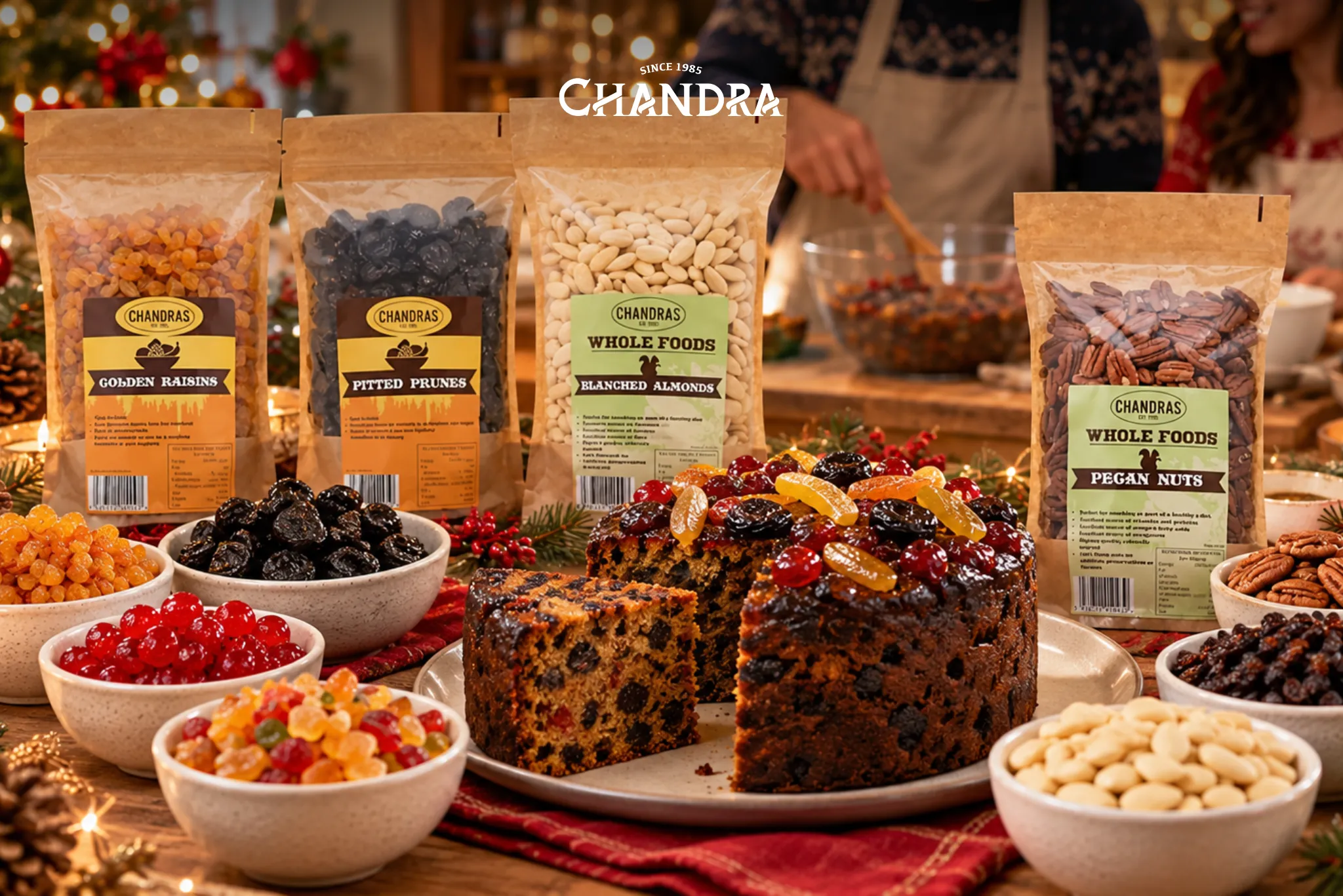
A good Christmas cake is mostly fruit. Flour, butter and eggs are only there to hold it together. So when the cake turns out dry, bland or full of hard little bits, the fruit is usually to blame. Pick the right dried fruit, soak it properly and give it time, and even a simple recipe tastes like something your gran spent a month on.
This guide covers the best raisins for Christmas cake, why prunes deserve a place in the mix, how much fruit you actually need, and how long to soak it. Whether you’re making your cake in November or leaving it until Stir-Up Sunday on 22 November, the same rules apply.
What Dried Fruit Goes in a Traditional Christmas Cake?
A classic British Christmas cake uses a mix of vine fruits and a few richer extras. Most recipes include some combination of:
- Raisins – dark, sweet and the backbone of the fruit mix.
- Sultanas or golden raisins – lighter and slightly tangy, for colour and balance.
- Currants – small and intense.
- Prunes – for depth, moisture and that rich, almost toffee-like flavour.
- Glacé cherries – for colour and a bit of chew.
- Mixed peel – for a bitter citrus note that cuts through the sweetness.
You don’t need all six. The quality of the main fruits matters far more than the number of different ones. Plump raisins and soft prunes will do more for your cake than a long shopping list of cheap, dry fruit.
The Best Raisins for Christmas Cake
Raisins make up the largest share of most fruit mixes, so it’s worth choosing carefully. The short answer is to use a combination of dark and light raisins. Each brings something different.
Black Raisins: For Depth and Sweetness
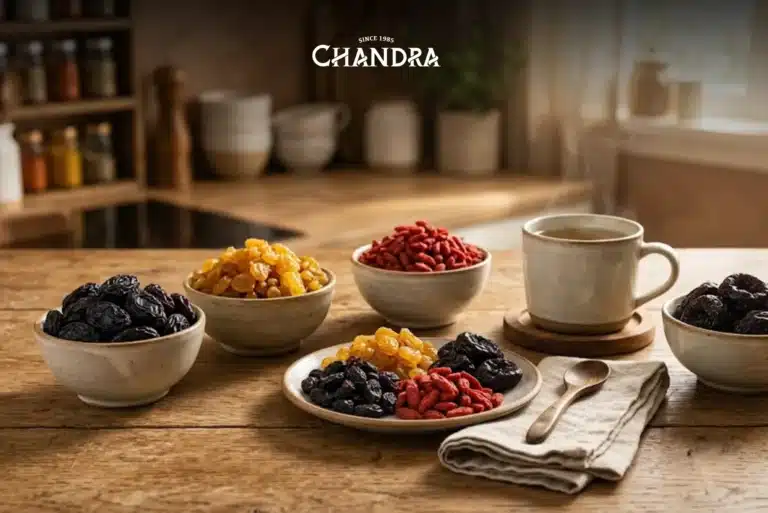
Black raisins give a Christmas cake its deep colour and rich, caramel sweetness. Large, plump ones are best. They hold their shape during the long, slow bake and soak up brandy or juice without turning to mush.
Chandra’s jumbo black raisins are a good example of what to look for: large, soft and naturally sweet. If you’ve ever bitten into a dry, gritty raisin in a slice of cake, you’ll know why size and moisture matter.
Golden Raisins: For Brightness and Colour
Golden raisins have a lighter, fruitier and slightly tangier flavour than black raisins. In a Christmas cake they stop the mix tasting too heavy, and their colour shows up nicely when you cut a slice. They can also stand in for sultanas in almost any recipe.
Chandra’s golden raisins are a lovely option if you want a brighter cake or you’re making a lighter fruit loaf alongside the main bake. If you’re curious how the two types compare, our guide on golden raisins vs black raisins goes into the differences in taste and nutrition.
So Which Is Better?
For a traditional dark Christmas cake, use roughly two parts black raisins to one part golden. For a lighter, fruitier cake, go half and half. Either way, using both gives you a far more interesting flavour than one type alone.
Why Prunes Belong in Your Christmas Cake
Prunes are the ingredient most people forget, and the one that makes the biggest difference. Chopped pitted prunes melt into the cake as it bakes, adding moisture and a deep, almost treacly flavour. They also help the cake stay soft for weeks, which matters if you’re baking early and feeding it until Christmas.
Choose soft, ready-to-eat pitted prunes so there’s no stoning and they chop easily. Snip them into raisin-sized pieces with kitchen scissors. They’re sticky, so dip the scissors in hot water every so often.
Dried prunes also work well in Christmas puddings, mincemeat and fruit loaves. If you have any left over, our prune and walnut brownies are a quick way to use them up between bakes.
How Much Dried Fruit for a Christmas Cake?
As a guide, a 20cm (8 inch) round cake needs about 1kg of dried fruit in total. A 23cm (9 inch) cake needs around 1.3kg. Here’s a balanced mix for a 20cm cake:
| Fruit | Amount | What it adds |
|---|---|---|
| Jumbo black raisins | 300g | Depth, colour, sweetness |
| Golden raisins | 250g | Brightness and tang |
| Pitted prunes, chopped | 150g | Moisture and richness |
| Currants | 100g | Intensity |
| Glacé cherries, halved | 100g | Colour and chew |
| Mixed peel | 50g | Citrus bitterness |
| Total | 950g |
Not a fan of cherries or peel? Swap them for more raisins or prunes. The total weight is what matters for the recipe to work.
How to Soak Dried Fruit for Christmas Cake
Soaking is the step that turns good dried fruit for Christmas cake into great fruit. It plumps the fruit, adds flavour and stops it pulling moisture out of the cake as it bakes.
What to Soak It In
- Brandy – the classic choice, warm and rich.
- Dark rum or sherry – slightly sweeter alternatives.
- Orange juice – the best alcohol-free option, and great with golden raisins.
- Cold black tea – an old-fashioned trick that adds a lovely depth without any sweetness.
Use about 150ml of liquid for 1kg of fruit. Add the zest of an orange and a lemon for extra flavour.
How Long to Soak
- Minimum: overnight, or about 12 hours.
- Ideal: 2 to 3 days, stirring once a day.
- Maximum: up to a week in a sealed container in the fridge.
Short on time? Warm the fruit and liquid gently in a pan for 5 minutes, then leave it to cool completely. It’s not quite the same as a long soak, but it’s far better than none.
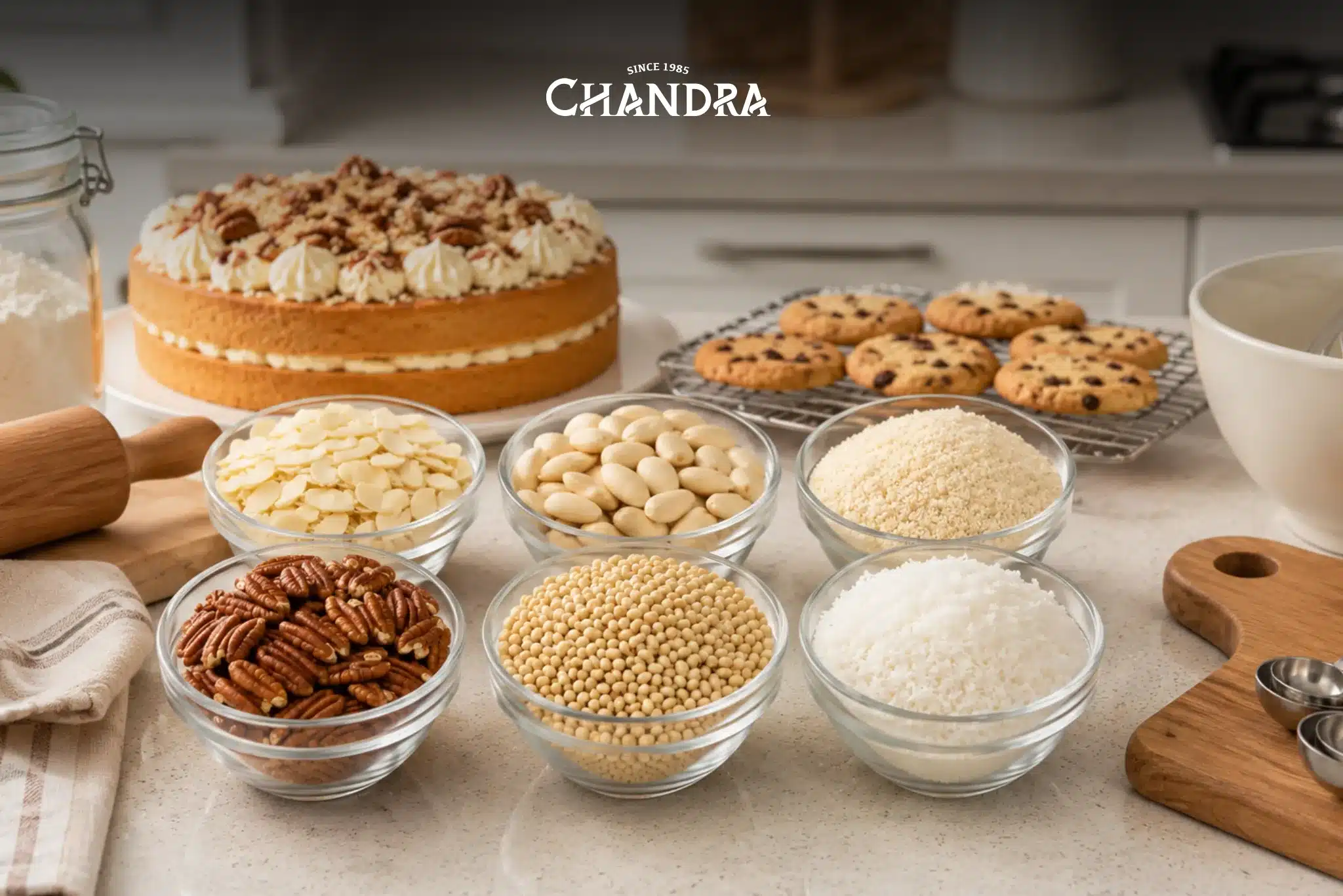
Nuts for Christmas Cake
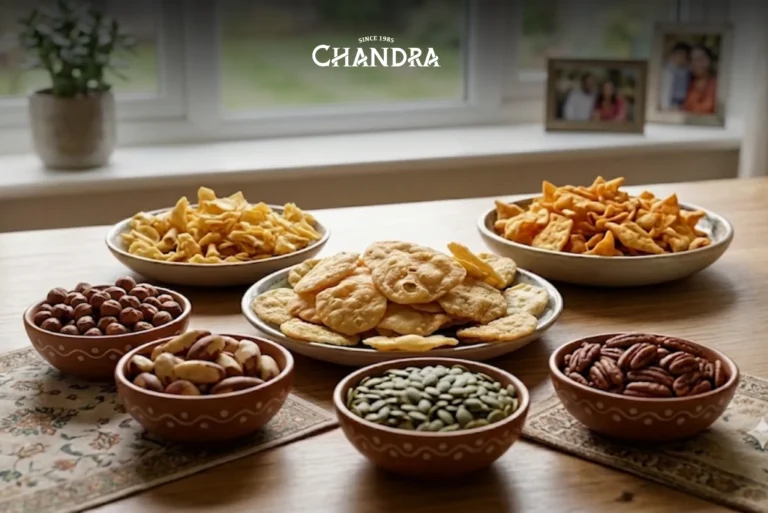
Most Christmas cakes include a handful of nuts for texture. Almonds are the traditional choice. Use roughly chopped blanched almonds in the mixture, and arrange whole ones on top if you’re making an undecorated Dundee-style cake. Walnuts and pecans also work well if you prefer something softer and richer.
For a closer look at which nuts suit which bakes, our guide to baking nuts for cakes and desserts covers the options.
Best Raisins for Baking Beyond Christmas Cake
Once you’ve found raisins you like, you’ll use them all season. The best raisins for baking are always large, soft and evenly moist. They’re perfect for:
- Mince pies – homemade mincemeat with black raisins and prunes is far richer than shop-bought.
- Christmas pudding – the same fruit mix works, with breadcrumbs and suet or vegetable suet.
- Stollen – golden raisins and almonds wrapped around marzipan.
- Fruit scones and tea loaves – quick bakes for using up leftovers.
- Bread and butter pudding – a cosy way to finish any spare raisins.
If you’re planning plenty of baking this season, the Dried Fruit & Nut Box brings together almonds, cashews, raisins and prunes in one 2.2kg order, so you’re stocked up for cakes, puddings and snacking. You can also browse the full dried fruits range to pick exactly what you need.
How to Store Dried Fruit Before and After Baking
- Unopened packs keep well in a cool, dark cupboard until the best-before date.
- Opened packs should go into an airtight jar or container so the fruit doesn’t dry out.
- Soaked fruit keeps for up to a week in the fridge in a sealed container.
- The finished cake should be wrapped in a double layer of baking paper and then foil, and stored in a tin. If you’re feeding it, add a tablespoon of brandy every week or so until you ice it.
The same storage rules apply to the nuts in your baking cupboard. Our guide on how to store nuts and seeds explains how to keep them fresh through the festive season.
When to Make Your Christmas Cake
Traditionally, Christmas cake is made in late October or November so it has time to mature. Many families bake on or around Stir-Up Sunday, which falls on 22 November in 2026. A cake made then and fed weekly will be deep, moist and full of flavour by Christmas Day. If you’re short of time, a well-soaked fruit cake made in mid-December still tastes great. It just won’t have quite the same richness.
Frequently Asked Questions
What are the best raisins for Christmas cake?
Large, plump raisins work best because they stay soft during the long bake. A mix of black raisins for depth and golden raisins for brightness gives the most balanced flavour.
Can I use golden raisins instead of sultanas in Christmas cake?
Yes. Golden raisins have a similar light, fruity flavour and can replace sultanas weight for weight in any Christmas cake recipe.
Should I put prunes in Christmas cake?
Yes. Chopped pitted prunes add moisture and a rich, deep flavour, and they help the cake stay soft for weeks. Use around 150g in a 20cm cake.
How much dried fruit do I need for a Christmas cake?
A 20cm (8 inch) round cake needs about 1kg of dried fruit in total. A 23cm (9 inch) cake needs around 1.3kg.
How long should I soak dried fruit for Christmas cake?
Soak it for at least 12 hours. Two to three days is ideal, and you can leave it for up to a week in the fridge in a sealed container.
What can I soak dried fruit in instead of alcohol?
Orange juice and cold black tea are the best alcohol-free options. Both plump the fruit and add flavour without making the cake taste of alcohol.
What are the best raisins for baking in general?
The best raisins for baking are large, soft and evenly moist. Jumbo black raisins work well in dark cakes and puddings, while golden raisins suit scones, stollen and lighter bakes.
When should I make my Christmas cake?
Late October to late November is ideal, giving the cake time to mature. Stir-Up Sunday, on 22 November in 2026, is a traditional day to bake.