Some snacks are happy to be mildly moreish. Indian spicy snacks are not. They lead with heat, layer in tang and aroma, and have you reaching back into the packet before you’ve quite finished the last handful. If that sounds like your idea of a good time, this guide is for you.
The tricky part, for a lot of people in the UK, is knowing where to start. “Spicy” covers everything from a gentle warmth to a proper chilli kick, and the names on the packets – sev, gathiya, para, boondi – don’t always tell you what you’re in for. So here’s a friendly tour of the bolder end of the snack shelf: what each one tastes like, roughly how hot it is, and what to reach for depending on how much heat you actually enjoy.
Chandra Foods has been making traditional Indian and Gujarati snacks in the UK since 1985, and the examples below come from a range that leans proudly into authentic, home-style spice. By the end, you should know exactly what to add to your basket when you’re buying spicy Indian snacks online in the UK.
What “bold” really means in Indian snacks
Before the recommendations, it’s worth understanding what gives these snacks their punch, because it isn’t only chilli.
The best spicy Indian snacks are built on a few flavour layers working together. Red chilli brings the obvious heat. Black pepper adds a sharper, more rounded warmth that sits differently on the tongue. Then come the sour notes: amchur (dried mango powder) and tamarind, which give that mouth-watering tang that stops a snack from being one-dimensional. Finally there are the aromatics – asafoetida, carom seeds (ajwain), cumin, cloves and ginger – which add depth and that unmistakable “just like home” smell the moment you open the bag.
Most of these snacks start from gram flour (besan), which fries up into a savoury, satisfying crunch and carries spice beautifully. So when a snack tastes complex rather than simply hot, that’s the balance at work: heat, tang and aroma pulling in the same direction.
With that in mind, here’s what to try.
Spicy sev: the classic place to start
If you’re new to bold Indian snacking, sev is the natural gateway. These are thin, crisp strands made from gram flour, seasoned and fried until snappable. They’re endlessly snackable on their own and double as a topping for chaat, so a bag rarely goes to waste.
Ratlami Sev
Named after the town of Ratlam, this is one of the most characterful sevs you can buy. It’s seasoned with a proper spice blend – black pepper, cloves, carom seeds, ginger, cumin and chilli, rounded out with asafoetida. The result is medium-hot and deeply aromatic rather than blunt, which is exactly why it’s a favourite. Eat it by the handful, or scatter it over papdi chaat and bhel to add heat and crunch in one move.
Thikhi Sev
“Thikhi” means spicy, and this one earns the name. It’s the hotter, crispier sibling: a bolder chilli hit with less of the aromatic complexity and more straightforward fire. If you found ratlami sev pleasant but wanted the heat turned up a notch or two, this is where to go next.
Once you’ve found your level, it’s worth browsing the wider spicy sev selection to see which style suits you, from finer nylon sev to the chunkier, spicier cuts.
Spicy gathiya: crunch with a kick
Gathiya are soft-crunchy sticks of gram flour, thicker than sev and with a slightly yielding bite that gives way to a satisfying snap. Plenty of gathiya, like the classic Bhavnagari, is mild and gentle – a lovely everyday tea-time snack. But the spicier versions are where bold-flavour fans should look.
Thikha Gathiya is the one to try. It keeps that traditional Gujarati texture but seasons it with black pepper, red chilli, carom seeds and turmeric, so every stick carries a warm, peppery heat. It’s the sort of snack that’s dangerously easy to keep eating while you chat over tea, and it holds its own on a sharing platter next to sweeter, milder bites.
If you like the style, the full spicy gathiya range is worth a look, since it lets you compare the mild and the fiery side by side.
Spicy para: layered, herby and punchy
Para are crunchy little snacks made from a dough of flour, semolina and gram flour, rolled and fried until crisp. They have a firmer, more biscuit-like bite than sev or boondi, which makes them supremely satisfying.
The standout for heat-seekers is Tikha Para. Alongside chilli and turmeric, it’s made with fresh green chillies, ginger and fenugreek, plus ajwain, cumin and sesame. That fresh, herby dimension gives it a livelier, more complex heat than dried spice alone. There’s also a Salt & Spicy Para for those who want a savoury, well-seasoned crunch that’s bold without being overwhelming. Between the two, you can dial the intensity up or down to taste.
Have a browse of the spicy para options if you like a snack with real structure and bite.
Masala papdi and black pepper papdi
Papdi are crisp, flat discs – you’ll know them best as the base of papdi chaat, but they’re excellent eaten straight from the bag too. The spiced versions turn a simple snack into something with real personality.
Masala Papdi is coated in a savoury spice blend with chilli and black salt, giving it a tangy, moreish edge. Black Pepper Papdi takes a different route, leaning into the sharp, fragrant warmth of black pepper for a snack that’s bold without being fiery. Both are natural partners for a hot cup of chai, and both make a great crunchy layer if you’re building chaat at home.
Masala boondi: little pearls of heat
Boondi are tiny, round droplets of fried gram flour, and masala boondi seasons them with red chilli and black salt for a crunchy, savoury nibble that’s hard to put down. They’re small enough to eat by the fistful, and they earn their keep beyond the snack bowl too: sprinkle them over chaat for texture, or fold them through yoghurt to make a quick boondi raita. A versatile, everyday kind of spicy.
Masala Tum Tum and Fulwadi: for tang as well as heat
If your favourite kind of “spicy” also brings sourness into the mix, these two deserve a place in your order.
Masala Tum Tum balances spicy, tangy and savoury in every bite. The chilli brings the heat, while dried mango powder and tamarind add that mouth-watering sour note, making it the kind of snack that keeps your hand hovering over the packet. Fulwadi, a Gujarati speciality, is a little different: gram flour flavoured with chilli, fennel, sesame, coriander and black pepper for a savoury, aromatic crunch with gentle warmth rather than fierce heat. It’s a good bridge for anyone who wants flavour and interest without going all-in on chilli.
How to build a spicy snack spread
Half the fun of these snacks is putting a spread together, and a few small choices make it better.
For pairing, nothing beats masala chai. The sweet, milky, spiced tea softens the heat and resets your palate between bites, which is why tea-time and spicy snacks go hand in hand. A cold, fizzy drink or a glass of chaas (spiced buttermilk) works just as well if you want to cool things down.
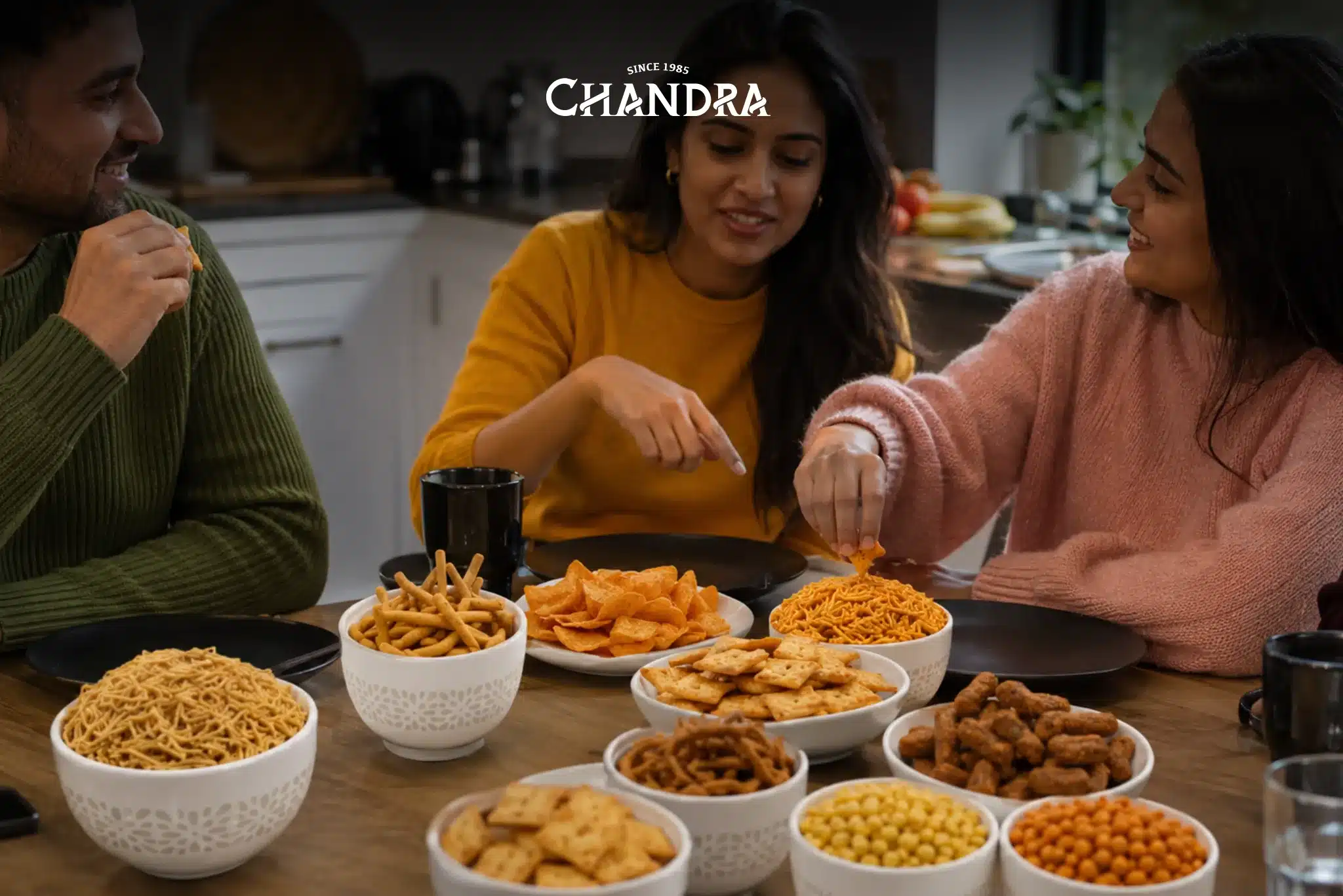
For a sharing platter, mix textures rather than piling on the same thing. A few strands of sev, some crunchy gathiya, a scattering of boondi and a couple of para gives you variety in every scoop. And if you’re making chaat, keep sev and masala boondi on hand as toppings – they add the final crunch and a last hit of spice right before serving.
A simple rule for hosting: put out a mild option alongside the bold ones. Not everyone lives for chilli, and a gentler gathiya or plain sev means the whole table can join in.
Want to try a bit of everything?
If you can’t decide – and honestly, why should you – the Spicy Crunch Combo takes the guesswork out of it. It bundles eight of the bolder snacks together, with two packs of each: Ratlami Sev, Thikhi Sev, Thikha Gathiya, Masala Papdi, Tikha Para, Fulwadi, Masala Tum Tum and Masala Boondi.
It’s the most efficient way to work out where your tastes land. Line them up, see which ones you keep going back to, and you’ll quickly learn whether you’re a fiery-sev person, a tangy-tum-tum person, or someone who wants a bit of each on the plate. It’s also a natural fit for a party or a festival, when you want a generous spread of spicy Indian snacks ready to go.
A quick word on heat levels and allergens
Two practical notes before you order.
First, “spicy” isn’t a single setting. Something like fulwadi or a masala papdi offers a gentle, well-rounded warmth, while thikhi sev and tikha para bring real fire. If you’re unsure, start in the middle with a ratlami sev or thikha gathiya and adjust from there.
Second, do check the details on each pack. Many of these snacks are wheat-based, and some contain sesame or dairy, so it’s worth reading the individual product information if you’re catering for allergies. Everything is made in the UK with no artificial colours, flavours or preservatives, and resealing each pack after opening keeps that all-important crunch intact.
Frequently Asked Questions
- What are the best spicy Indian snacks to buy online in the UK?
- Some popular choices include Ratlami Sev, Thikhi Sev, Thikha Gathiya, Tikha Para, Masala Papdi, Masala Boondi and Masala Tum Tum. Each offers a different balance of heat, spice, tang and crunch.
- Which Indian snack is best for someone who likes spicy flavours?
- Thikhi Sev and Tikha Para are good choices for those who enjoy stronger chilli heat. If you prefer a more balanced spice level with aromatic flavours, Ratlami Sev or Thikha Gathiya are worth trying.
- What is Ratlami Sev and is it spicy?
- Ratlami Sev is a traditional Indian snack made from gram flour and a blend of spices including chilli, black pepper, cloves, cumin and carom seeds. It has a medium-hot, aromatic flavour rather than being purely chilli-hot.
- What are the best spicy Indian snacks for tea time?
- Masala Papdi, Ratlami Sev, Thikha Gathiya, Fulwadi and Black Pepper Papdi are all suitable for tea time. They pair particularly well with masala chai and offer different textures and levels of spice.
- What is the best spicy Indian snack combo?
- The Spicy Crunch Combo is a convenient choice if you want to try several bold Indian snacks together. It includes Ratlami Sev, Thikhi Sev, Thikha Gathiya, Masala Papdi, Tikha Para, Fulwadi, Masala Tum Tum and Masala Boondi.
- Are spicy Indian snacks suitable for making chaat?
- Yes. Snacks such as sev, masala boondi and papdi are commonly used as chaat toppings and bases. They add crunch, spice and texture to dishes such as papdi chaat, bhel and sev puri.
Shop the Products Mentioned in This Guide
You can order boondi, nylon sev and salt and spicy para from Chandra Foods, with free UK delivery on orders over £40.