Ask someone in Britain to name an Indian snack and there’s a good chance they’ll say Bombay mix. Ask an Indian family and you may get a puzzled look, because in India nobody calls it that. If you’re typing “Bombay mix UK buy online” into a search bar, this guide explains what it really is, where the name came from and how it relates to chevda, the snack your grandmother would actually recognise. It also shows you how to build a better mix at home from a few simple pieces.
So, What Is Bombay Mix?
Bombay mix is the name used in the UK for a family of savoury Indian snack mixes. A typical bag is a jumble of crunchy things: fine strands of fried gram flour (sev), fried lentils, peanuts, flaked rice, sometimes corn or chickpeas, and curry leaves. It’s all seasoned with salt, chilli and a blend of spices, then eaten by the handful.
The name points back to Bombay, now Mumbai. In India the same idea goes by other names. You’ll hear chevda, chivda or chevdo in Gujarat and Maharashtra, chanachur in Bengal and Odisha, and simply “mixture” or namkeen in many other places. In Britain, several well-known snack makers grew out of family businesses in the 1970s, and the friendly name “Bombay mix” stuck.
So Bombay mix isn’t a single fixed recipe. It’s a British name for a snack that already existed in a dozen regional versions.
Bombay Mix vs Chevda: What’s the Difference?
Both are crunchy, spiced snack mixes, and the line between them is blurry. But a few things usually set them apart:
| Chevda | Bombay mix (UK style) | |
| Main base | Thin flattened rice (poha), fried until puffed | Sev and fried lentils, with peanuts |
| Flavour | Balanced: salty, spicy and often slightly sweet | More savoury, tangy and chilli-forward |
| Texture | Light and airy | Denser and crunchier |
| Extras | Peanuts, curry leaves, coconut slices, raisins | Lentils, corn, chickpeas, sometimes fried onion |
| Where it’s from | Gujarat and Maharashtra, among others | The UK’s name for a broader mix |
The Gujarati style is the one that surprises people. A pinch of sugar sits in the mix, so the first taste is sweet and the second is salty and spicy. Once you notice it, it’s hard to go back.
The Ingredients That Make a Great Snack Mix
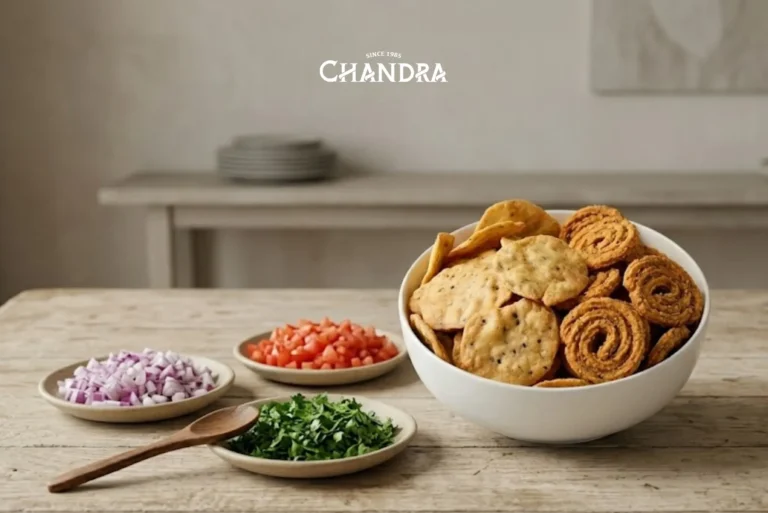
Whether you call it chevda, Bombay mix or namkeen, a good mix works because it balances a few roles. Think of it like a band, where every piece has a job:
- The crunchy base. This is the bulk of the mix. Sev, poha, crushed papdi or broken masala sticks all do the job. Crispy sev is the classic, and it’s one of the key components of Bombay mix. Thicker sev holds up better than very fine sev, which can turn to dust.
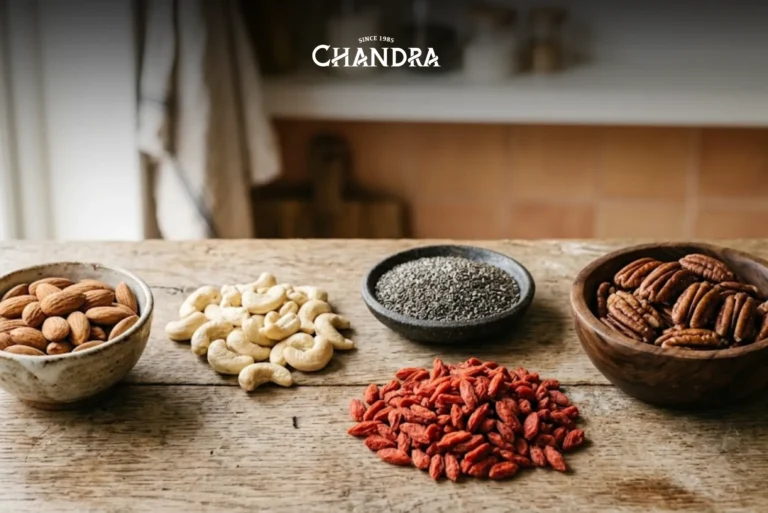
- Something with real bite. Roasted peanuts, cashews or fried lentils give the mix weight.
- A fragrant note. Fried curry leaves and slivers of coconut add aroma and lift the whole thing.
- A little sweetness. A pinch of sugar, or a few raisins, balances the salt and heat.
- The spice. Chilli powder, black pepper, chaat masala and a touch of hing bring it together.
Get the balance right and every handful tastes a little different, which is exactly why people can’t stop eating it.
Masala Sticks: The Crunchy Baton
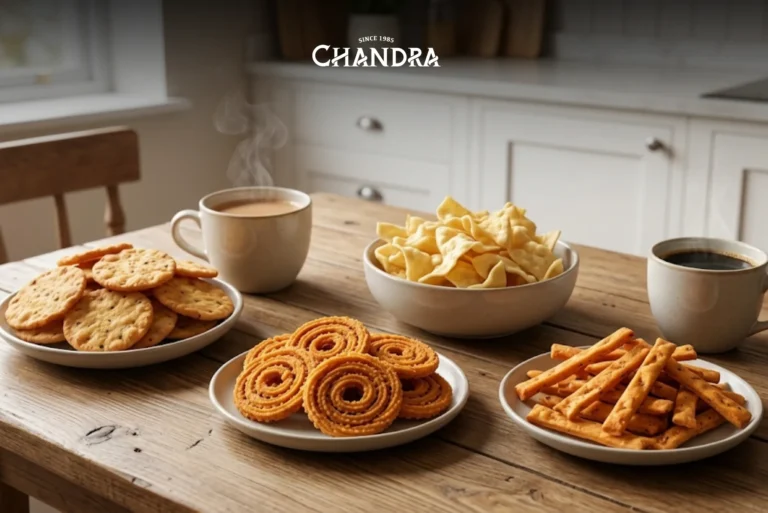
If you look at the ingredient list of many UK snack mixes, you’ll often find something like masala sticks. These are thick, crisp batons made with flour, semolina and gram flour, flavoured with ajwain and spices, then fried until crunchy. They’re a snack on their own and a useful crunchy piece in a mix.
Chandra Foods makes its own crispy masala sticks UK shoppers can order in several flavours: salt and black pepper, chilli and ginger, spicy and sugar-coated. Because they’re made with wheat and sesame, they aren’t suitable for everyone, so read the allergen information before you buy.
How to Build Your Own Indian Snack Mix at Home
You don’t need a factory. A good mix takes about ten minutes, and you decide the heat and the sweetness.
You’ll need (for about eight small bowls)
- 2 cups sev (a thicker style works best)
- 1 cup broken masala sticks, snapped into short pieces (Chandra’s salt and black pepper masala sticks are a good fit)
- 1 cup roasted peanuts
- ½ cup roasted cashews
- 10 to 12 curry leaves
- 1 tablespoon oil
- 1 teaspoon chaat masala
- ½ teaspoon red chilli powder
- ½ teaspoon black pepper
- ½ teaspoon powdered sugar (optional, for the Gujarati sweet-and-salty style)
- A handful of raisins, added at the end (optional)
Method
- Heat the oil in a small pan. Fry the curry leaves for 20 to 30 seconds until crisp, then lift them out and drain.
- In a large bowl, combine the sev, masala sticks, peanuts and cashews.
- Crumble the curry leaves over the top, then add the spices and sugar.
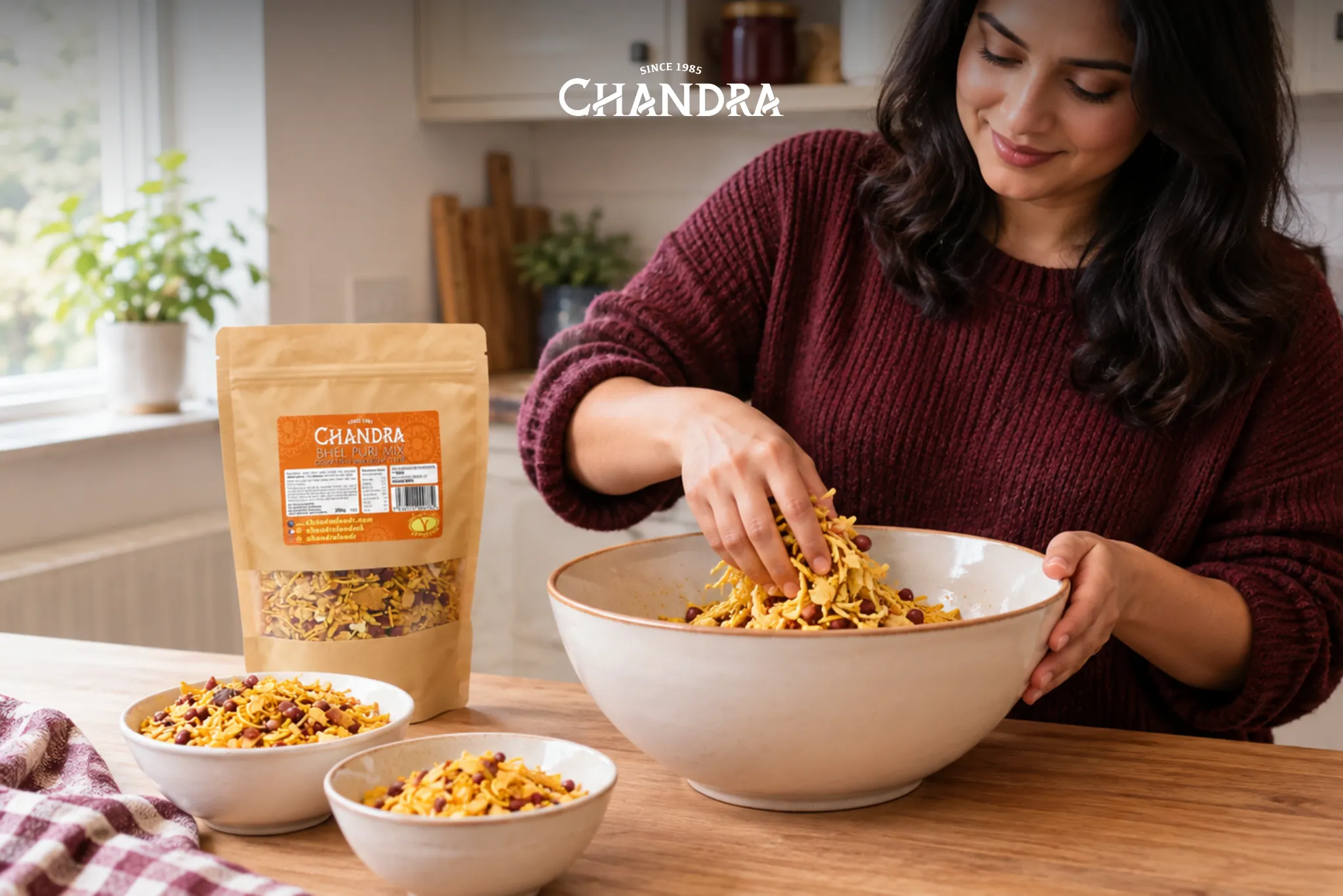
- Toss gently with your hands, so the sev doesn’t break into dust. Taste a piece and adjust. The snacks are already salted, so add salt last, if at all.
- Let the mix cool completely before storing it. Fold in the raisins just before serving.
If you’d rather start with a ready-made mix, farali chevda is a potato-stick mix with roasted nuts, made for fasting days and good enough for any afternoon with tea.
Buying Snack Mixes in the UK: What to Check
If you’d rather buy than make, a few checks help you avoid a bag of filler. Whether you’re comparing snack mixes UK stores sell, an Indian snack mix UK brand or Indian namkeen UK-wide, these points tell you a lot:
- The ingredient list. Short and recognisable is best. If a mix is mostly cheap fillers with only a few nuts, you’ll notice.
- Freshness. Fried mixes go stale quickly. Check the date, and look for pieces that snap rather than bend.
- Balance. Good mixes have a mix of textures. A bag that’s mostly one shape is a warning sign.
- Oil and smell. It should smell of toasted spice, not stale oil.
- Allergens. Most mixes contain peanuts, and many contain sesame, gluten and sometimes dairy. Read the allergen statement.
- Packaging. A well-sealed, resealable pack keeps the crunch for longer.
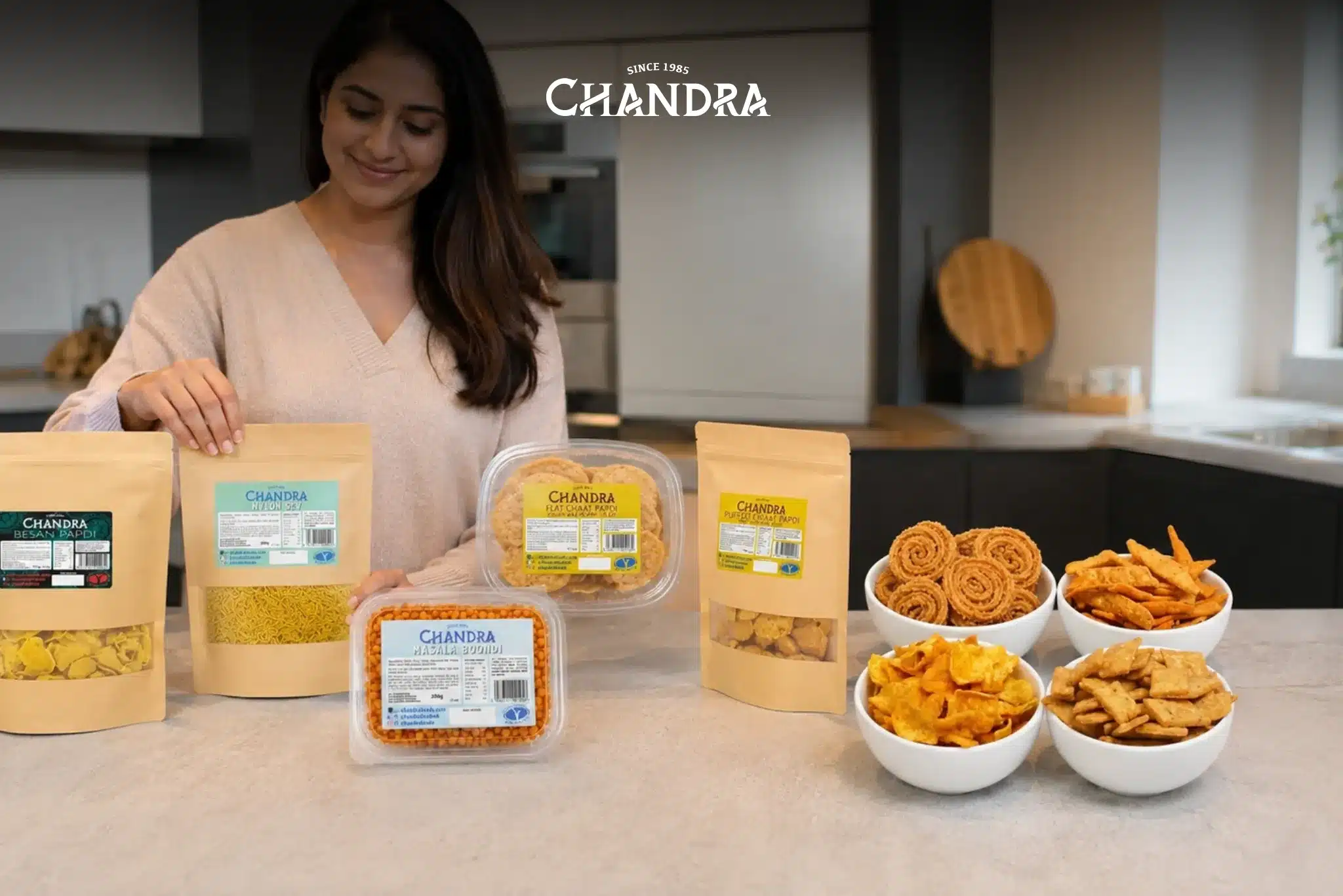
For anyone building a pantry of savoury Indian snacks, Chandra Foods sells the pieces separately, so you can mix your own to taste. You can browse the whole collection of savoury Indian snacks and choose your combination.
Keeping a Snack Mix Crunchy
Store your mix in an airtight container in a cool, dry cupboard, away from steam. Use a dry spoon each time, and keep a small working tin with the rest sealed. Add raisins only to the portion you’ll eat that day, since moisture from dried fruit can soften the crunchy pieces. If a mix goes slightly soft, crisp it in a low oven for a few minutes and let it cool completely.
Bombay Mix, Chevda and the Snack You Actually Like
Bombay mix is the friendly British name for a very old idea: crunchy, spiced, salty-sweet things tossed together in a bowl. Whether you buy a bag or build your own, the trick is balance, so a bit of sev, something with bite, a fragrant note and a hint of sweetness. If you’d like to try a few pieces before you commit, the product packs bundle snacks, nuts and dried fruit in one order, so you can mix and match your own.
Frequently Asked Questions
- What is Bombay mix?
It’s the UK name for a spicy Indian snack mix. It usually contains fried gram flour noodles (sev), lentils, peanuts and flaked rice, seasoned with salt and spices. - Is Bombay mix the same as chevda?
They’re close relatives. Chevda usually has a base of fried flattened rice and often a hint of sweetness. Bombay mix tends to have more sev and lentils and a tangier, more savoury taste. - Where does the name Bombay mix come from?
It’s named after Bombay, now Mumbai. In India the snack goes by other names, such as chevda, chivda, chanachur and namkeen mixture. - What are masala sticks?
They’re crisp, thick batons made with flour, semolina and gram flour, flavoured with ajwain and spices. You can eat them on their own or break them into a snack mix. - Can I make Bombay mix at home?
Yes. Combine sev, broken masala sticks, roasted peanuts and cashews with fried curry leaves, chaat masala and a little chilli. It takes about ten minutes. - Where can I buy Bombay mix online in the UK?
Look for a UK seller with a short ingredient list, fresh stock and clear allergen information. Chandra Foods sells the building blocks, including sev, masala sticks, chevda and nuts, so you can mix your own.