
Almond flour has become one of the most popular alternatives to traditional wheat flour in the UK, especially among people focusing on healthier eating, gluten-free baking, and low-carb lifestyles. Whether you are baking cakes, making pancakes, or preparing keto-friendly recipes, almond flour offers a simple way to upgrade everyday cooking without complicated substitutions.
Made from finely ground blanched almonds, almond flour is naturally rich in nutrients, has a soft texture, and brings a slightly sweet, nutty flavour to food. It is widely used in both home kitchens and professional baking because of its versatility and health profile.
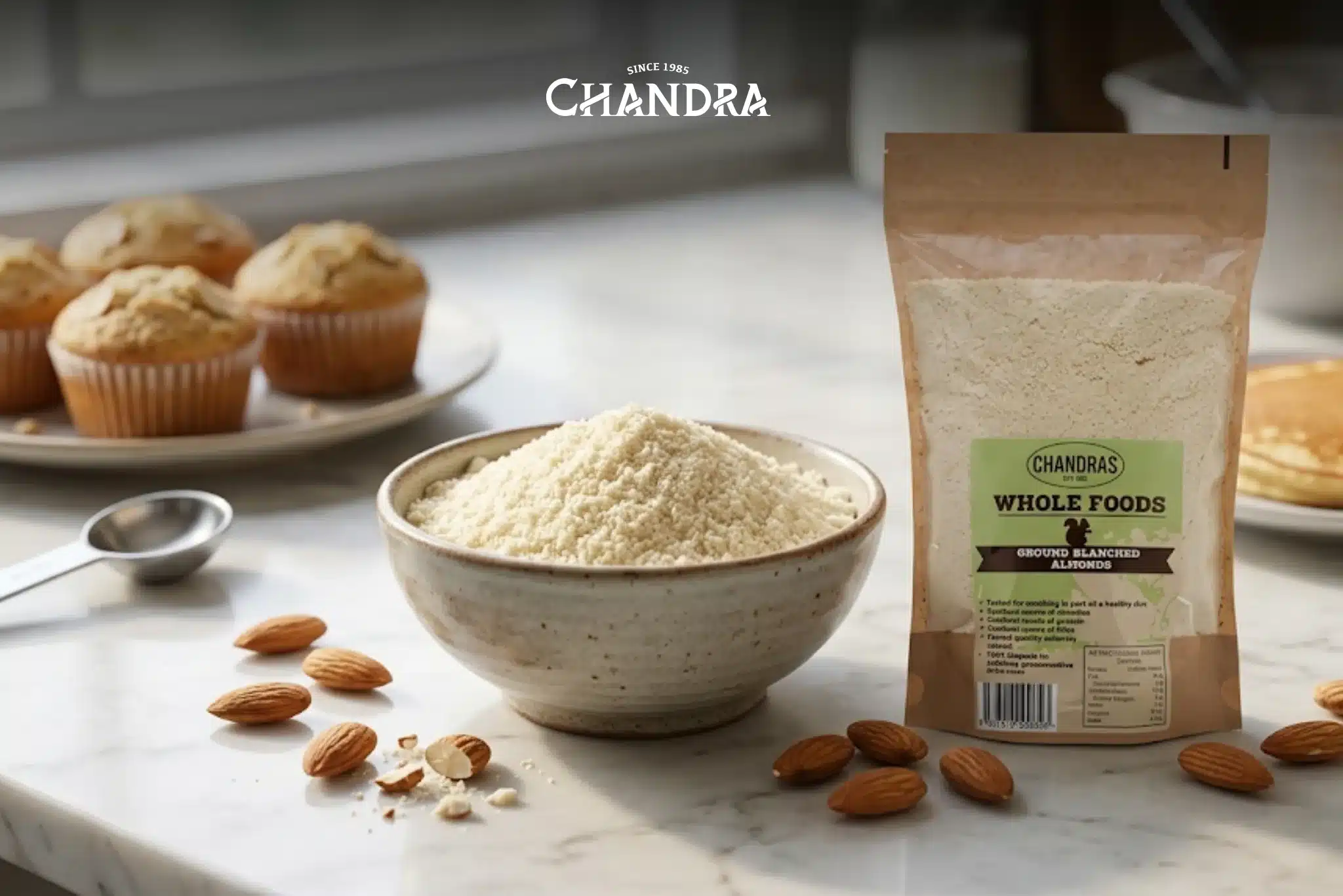
One of the well-known options available in the UK market is the fine ground almond flour from Chandra Foods, which is finely milled and designed specifically for smooth baking results. Chandra Foods Almond Flour
What is Almond Flour?
Almond flour is made by blanching almonds, removing their skins, and grinding them into a fine, soft powder. This process creates a light texture that blends easily into baking recipes.
It is important not to confuse almond flour with almond meal. Almond meal is coarser and usually contains almond skins, which gives it a grainier texture and darker colour. Almond flour, on the other hand, is smooth and ideal for delicate baking like cakes, muffins, and cookies.
Because of its fine consistency, almond flour is often used as a direct substitute for part of wheat flour in recipes or as a full replacement in gluten-free baking.
Almond Flour UK Market and Growing Popularity
In the UK, almond flour has become a pantry essential for health-conscious households. The demand is driven by several lifestyle shifts such as gluten-free eating, low-carb diets, and interest in minimally processed foods.
More UK bakers are now choosing almond flour not just for dietary reasons, but also for its rich flavour and improved texture in baked goods. It has moved from a niche health product to a mainstream kitchen staple.
Nutritional Profile of Almond Flour
Almond flour is considered nutrient-dense compared to traditional refined flour. It is naturally high in healthy fats, protein, and essential vitamins.
Typical nutritional value per 100g includes:
- Healthy monounsaturated fats
- Moderate plant-based protein
- Low carbohydrate content
- Dietary fibre
- Vitamin E, magnesium, and antioxidants
These nutrients support energy levels, heart health, and general wellbeing. Vitamin E in particular plays a strong role in protecting cells from oxidative stress.
Health Benefits of Almond Flour
Supports Heart Health
Almond flour contains healthy fats that may support good cholesterol balance. When used in moderation as part of a balanced diet, it can contribute to overall heart health.
Helps with Blood Sugar Control
Due to its low carbohydrate content, almond flour does not cause rapid spikes in blood sugar like refined wheat flour. This makes it a preferred option for people managing glucose levels.
Naturally Gluten-Free
Almond flour is naturally gluten-free, making it suitable for people with gluten intolerance or coeliac disease. It allows safe baking without compromising taste or texture.
Supports Weight Management
The combination of protein and fibre helps increase fullness, which may reduce unnecessary snacking and support healthier portion control.
Rich in Essential Nutrients
Almond flour provides vitamin E, magnesium, and antioxidants, all of which support metabolism, immune health, and cellular function.
Almond Flour vs Regular Flour
The difference between almond flour and wheat flour is both nutritional and functional.
Wheat flour contains gluten and is high in carbohydrates, which helps create structure and elasticity in baking. Almond flour is gluten-free, lower in carbs, and higher in fats and protein.
Key differences include:
- Almond flour creates soft, moist baked goods
- Wheat flour produces light and structured textures
- Almond flour is more nutrient-dense
- Wheat flour is more versatile for traditional baking methods
Because of these differences, almond flour often performs best in recipes specifically designed for gluten-free or low-carb baking.
How to Use Almond Flour in Baking
Almond flour is versatile, but it behaves differently from wheat flour. Understanding its usage helps achieve better results.
Cakes and Muffins
Almond flour creates moist, soft baked goods with a rich texture. It works well in banana bread, sponge cakes, and cupcakes.
Pancakes and Waffles
It adds natural richness and a slightly sweet flavour, often reducing the need for added sugar.
Cookies and Biscuits
It produces chewy cookies with a soft centre and golden texture.
Keto and Low-Carb Recipes
It is widely used in keto bread, brownies, and protein-based snacks due to its low carbohydrate content.
Coating for Frying
It can also be used as a gluten-free coating for chicken, fish, or vegetables.
Baking Tips for Almond Flour
To get the best results, a few adjustments are helpful:
- Avoid replacing wheat flour in a strict 1:1 ratio
- Use eggs or other binding agents for structure
- Reduce liquid slightly in recipes
- Bake at lower temperatures to prevent over-browning
- Combine with other gluten-free flours if needed
These small changes significantly improve texture and consistency in baking.
Storage and Shelf Life
Almond flour contains natural oils, which means proper storage is important to maintain freshness.
Best practices include:
- Store in a cool, dry place
- Use airtight containers after opening
- Refrigerate in warmer conditions
- Avoid moisture and direct sunlight
When stored correctly, almond flour retains its quality and flavour for a long period.
Why Almond Flour is a Smart Pantry Choice
Almond flour is more than a health trend. It fits into modern cooking habits where people value better nutrition, clean ingredients, and flexible baking options.
It supports:
- Healthier ingredient choices
- Gluten-free cooking
- Low-carb meal planning
- Creative home baking
- Nutrient-rich diets
Frequently Asked Questions (FAQ)
- Is almond flour healthier than regular flour?
- Almond flour is generally considered more nutrient-dense because it contains healthy fats, protein, and vitamins while being lower in carbohydrates.
- Can I replace normal flour with almond flour?
- Not always. Almond flour cannot be used as a direct 1:1 replacement. Recipes usually need adjustments in liquid and binding ingredients.
- Is almond flour gluten-free?
- Yes, almond flour is naturally gluten-free and safe for gluten-free and coeliac-friendly diets.
- What is the difference between almond flour and almond meal?
- Almond flour is finely ground and made from blanched almonds, while almond meal is coarser and includes almond skins.
- Is almond flour good for weight management?
- It may support weight management due to its protein and fibre content, which helps increase satiety.
- How should almond flour be stored?
- It should be kept in an airtight container in a cool place. Refrigeration helps extend freshness.
- Can almond flour be used for baking cakes?
- Yes, almond flour works very well in cakes, muffins, brownies, and cookies, especially in gluten-free recipes.
Conclusion
Almond flour has become an essential ingredient in modern UK kitchens due to its nutritional benefits, versatility, and suitability for a wide range of diets. It is no longer just an alternative to wheat flour but a valuable ingredient in its own right.
Whether you are baking for health reasons, dietary restrictions, or simply exploring better ingredients, almond flour offers a practical and effective solution. When used correctly, it enhances both flavour and nutrition, making everyday cooking more enjoyable and wholesome.